


Remarkable Cemeteries of the Goriška Region – full-day trip
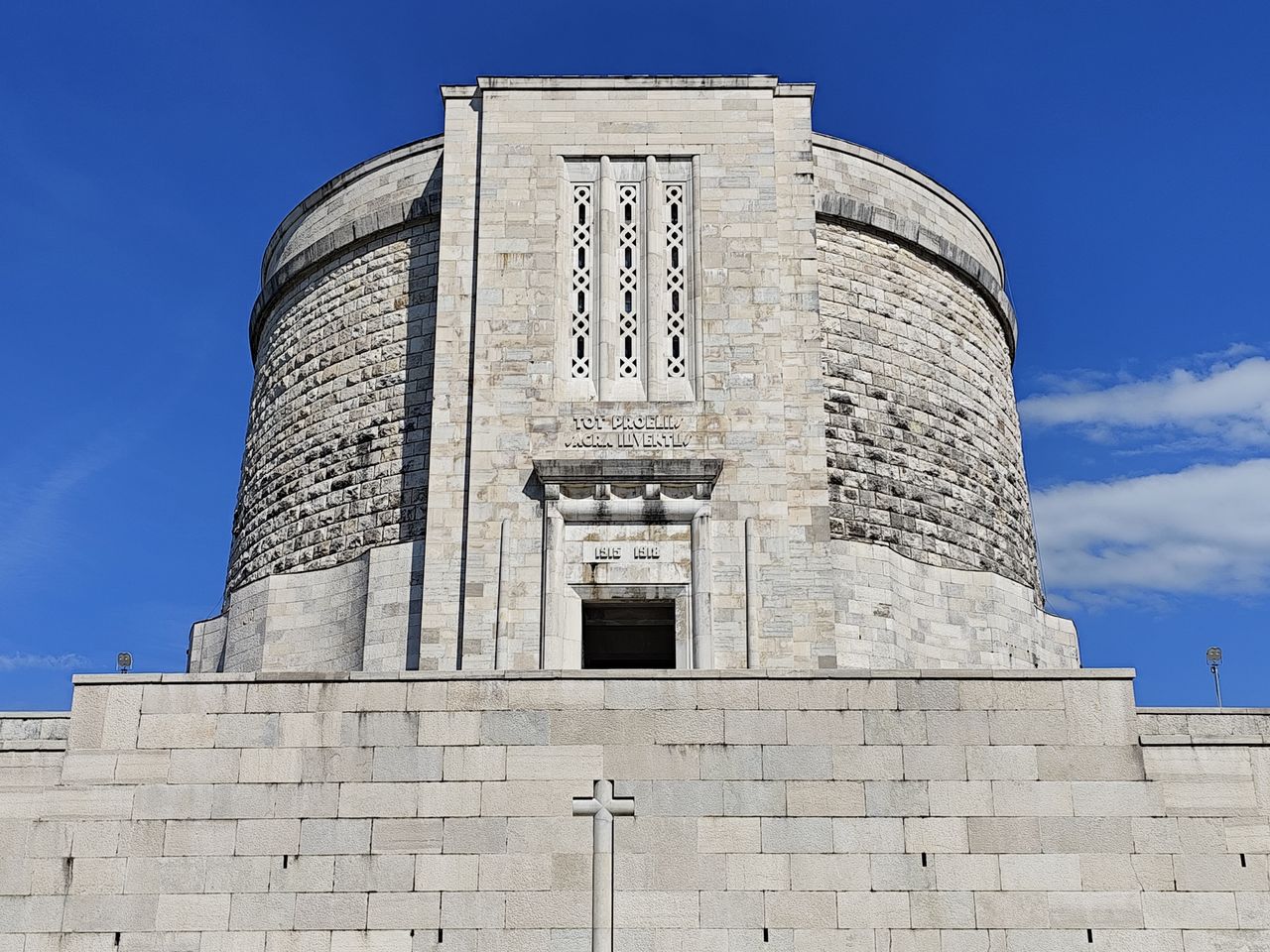
Cemeteries are among the best witnesses to the historical legacy of a place. In the Goriška region, a land at the crossroads of states, languages and political systems, they tell the story of the Habsburg world and a French king in exile, the First World War, Fascism, resistance, the post-war division, the creation of Nova Gorica, and the communities that once shaped multi-ethnic Gorizia.
This full-day tour connects different types of cemeteries and memorial sites that together tell the story of the Goriška region. Through them, we follow the collapse of an empire, two world wars, Fascism, resistance, the creation of a new border and a new city, as well as different ways of shaping historical memory. This is not simply a story about death, but above all a question of how different states, regimes and communities choose whom to remember – and how.
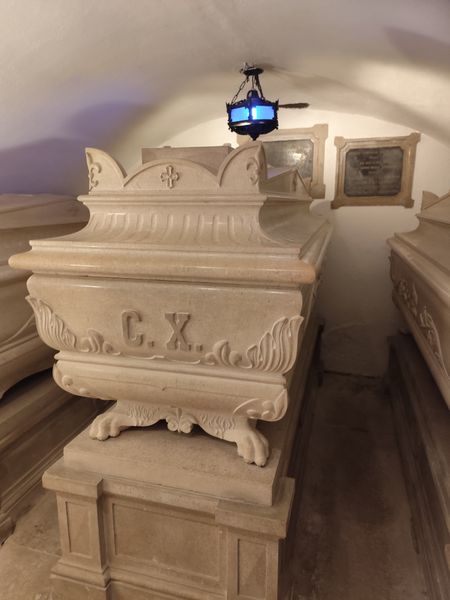
Kostanjevica: The Tomb of the Last Bourbons
We begin the day above Nova Gorica, at the Franciscan monastery of Kostanjevica. Its crypt contains the tomb of Charles X (1757–1836), the last French king of the Bourbon dynasty, together with members of his family. The tomb is also known as the “Little Saint-Denis”, as Charles X is the only French king buried outside France, and the only king ever to have been buried in what is now Slovenia.
Through the story of the French royal family in exile, we discover Gorizia as part of the Habsburg and wider Central European world – a city whose climate, aristocracy and bourgeois culture earned it the nickname “Austrian Nice”. This was a world that would be profoundly transformed by the First World War.
At Kostanjevica, a one-hour tour is provided by a local guide .
https://www.samostan-kostanjevica.si/en
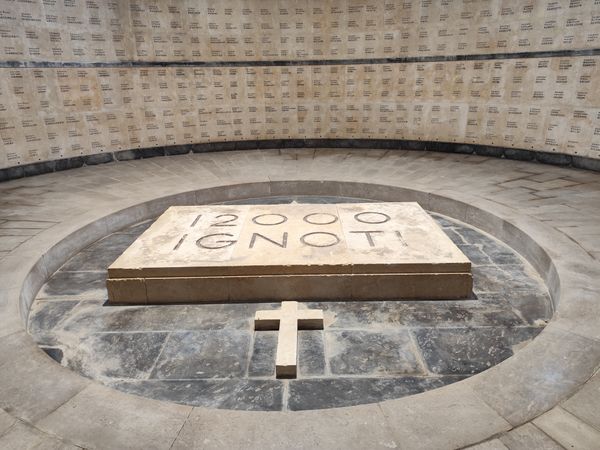
Oslavia Military Ossuary
Above Gorizia stands a monumental ossuary containing the remains of almost 60,000 soldiers of the First World War. But Oslavia is more than a memorial to the fallen.
The ossuary was inaugurated in 1938, during the Fascist period in Italy. Through its architecture and history, we therefore also explore how the Fascist regime transformed the memory of the First World War into a monumental narrative of Italian sacrifice, victory and national territory.
Here, the story of Habsburg Gorizia gives way to the First World War, the collapse of Austria-Hungary, the annexation of the Goriška region to Italy and the Fascist period. War itself becomes an instrument of political propaganda.
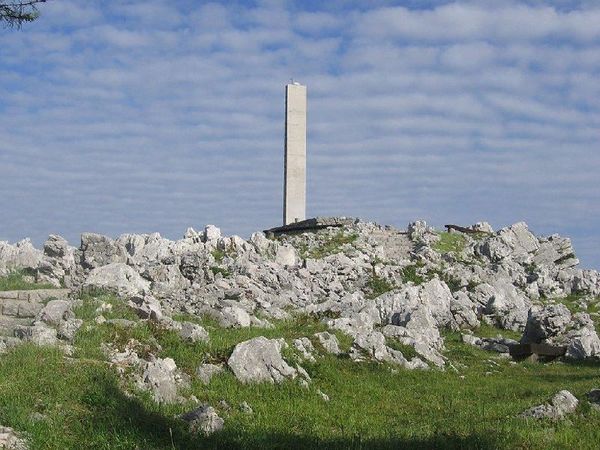
IX Corps Memorial Park in Trnovo
From Oslavia, we ascend to the Trnovo Plateau, one of the key areas of Partisan activity in the Goriška region during the Second World War. Fascist violence and the systematic Italianisation of the Slovene population gave rise to strong resistance. At the end of 1943, the IX Corps was formed in the northern Primorska region, becoming the principal Partisan military formation in this area and taking part in operations towards Gorizia and Trieste at the end of the war.
At Kobilnik near Trnovo stands the tomb of 256 fallen fighters of the IX Corps, designed by Edvard Ravnikar and unveiled in 1958. If Oslavia shows the Fascist monumentalisation of the memory of the First World War, Trnovo reveals how socialist Yugoslavia shaped the memory of the Partisan struggle and victory over Fascism.
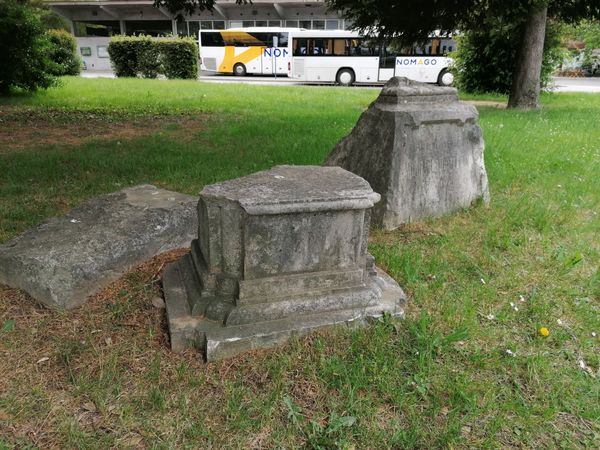
The Former Gorizia Cemetery and the Creation of Nova Gorica
From the Trnovo Plateau, we descend to Nova Gorica and the next major chapter in the history of the Goriška region.
In 1880, Gorizia’s municipal cemetery was opened on the site of today’s Nova Gorica city centre, and around 28,000 people are believed to have been buried there. It was closed in 1916 because of the Isonzo Front, and after the First World War Gorizia established a new cemetery at another location.
By a twist of circumstance, after the post-war division of 1947, this very area was chosen for the construction of the new city. Three surviving gravestones are all that remain today to recall its former use.
As we continue through Rožna Dolina and Gorizia, we visit the Jewish cemetery, today the largest Jewish cemetery in Slovenia and a witness to Gorizia’s once large and important Jewish community, as well as Gorizia’s present-day municipal cemetery, which replaced the old cemetery on the site of today’s Nova Gorica after the First World War.
Miren Cemetery
We conclude the tour in Miren, where the drawing of state borders becomes unusually tangible.
Following the post-war division, the border between Yugoslavia and Italy ran straight through the cemetery and across the graves. Relatives were therefore not always able to freely access the graves of their loved ones. It was only in 1976, with the Treaty of Osimo, that the border between the two countries was finally settled and moved to the edge of the cemetery.
After a day of stories about empire, world wars, Fascism, resistance, new states and the creation of a new city, here grand politics is reduced to a few metres of land.
A border does not divide only territory. It can intrude into everyday life, families, memory – and even people’s relationship with their dead.
This is precisely why Miren provides a natural conclusion to our journey through the famous cemeteries of the Goriška region.
Additional Options for a Longer or More Intensive Programme
Depending on the group’s interests, mobility and the time available, a longer or more intensive version of the tour can include additional cemeteries and memorial sites.
Austro-Hungarian Military Cemetery in Solkan
A smaller military cemetery beside the Soča River, where mainly soldiers of the Austro-Hungarian army are buried, including many Hungarians; the remains of soldiers of other nationalities were later transferred here as well. The stop is particularly interesting as a contrast to the monumental ossuary at Oslavia: rather than a national, Fascist-shaped monumentalisation of memory, it offers a more direct trace of the multinational army of the empire that collapsed during the First World War. It is particularly suitable for groups with a stronger interest in the Isonzo Front and the First World War.
Foiba / Zalesnik Chasm
The Zalesnik chasm is associated with post-war extrajudicial killings and provides a powerful addition to the visit to the IX Corps Memorial Park in Trnovo. While Trnovo tells the story of anti-Fascist resistance, the Partisan struggle and victory over Fascism, Zalesnik also raises the question of violence after the seizure of power and post-war reprisals. Precisely because of this direct thematic connection, the two sites together form one of the most powerful sections of the tour. The visit requires some walking through the forest and is therefore best suited to more mobile groups and appropriate weather conditions.
Nova Gorica Cemetery in Stara Gora
Nova Gorica did not receive its own municipal cemetery until 1977. It was designed by landscape architect Dušan Ogrin, inspired by Northern European cemeteries, as a green, park-like space with low and initially more uniform gravestones. The stop raises an interesting question about the development of a new city: how does a city without a long history gradually acquire its own generations, its own dead and its own place of memory? The visit is particularly suitable for groups interested in urban planning, landscape architecture and Nova Gorica as a planned new city, as the essence of the stop lies in walking through and experiencing the cemetery’s design.
Programme and Practical Information
The tour is led by Blaž P. Kosovel, researcher, editor and author of the guidebook Nova Gorica – A New City on the Border and the Digital Archive of Nova Gorica that you are currently exploring.
Duration: full-day excursion
Walking: mostly on flat terrain
Programme: flexible and adapted to the preferences and interests of the group
Price for guiding and tour organisation: from €350 for the group, depending on group size and specific preferences
Additional costs: Kostanjevica monastery (5-6 EUR), transport and lunch
More about the guide and author of the tour
Contact:
Blaž P. Kosovel
phone: +386 41 521 268