


A Journey Through the History of Gorizia and Nova Gorica – full-day trip
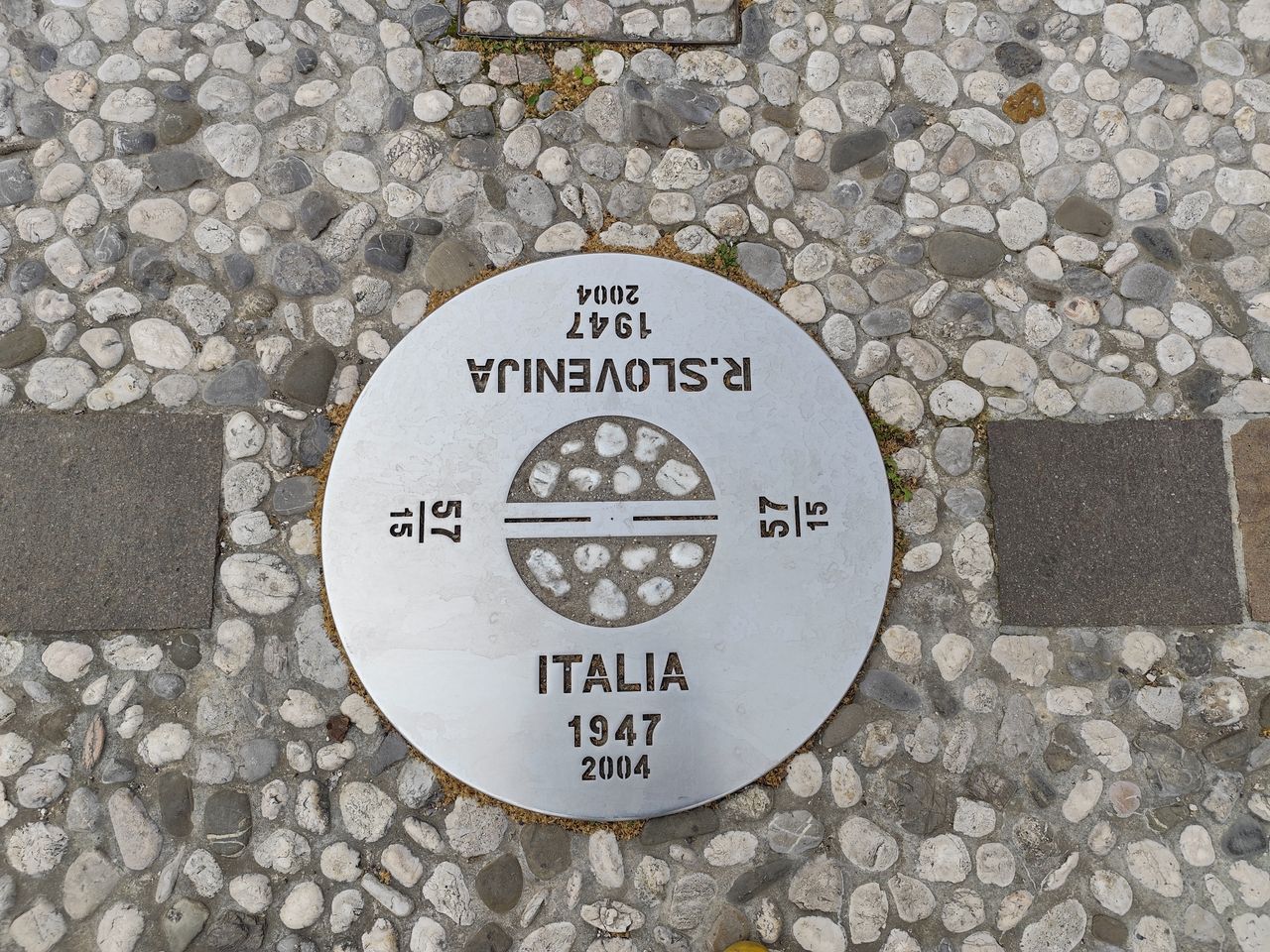
From Thousand-Year-Old Gorizia to Socialist Nova Gorica
How did an entirely new city emerge next to one more than a thousand years old? Why was Nova Gorica built right next to the Italian border? Where can you stand in two countries at the same time on a shared square? And how did two such different cities become the first cross-border European Capital of Culture together in 2025?
Join us for a full-day excursion through Nova Gorica and Gorizia – two cities along the border that are geographically very close, yet very different in their origins, urban development and history.
Gorizia was first mentioned in 1001 and for centuries served as the political, economic and cultural centre of the Goriška region. After the Second World War, the new state border divided the region between Italy and Yugoslavia. Gorizia remained in Italy, while much of its hinterland on the Yugoslav side was left without its historic centre.
The Yugoslav authorities therefore decided to build a new city – Nova Gorica, conceived as a new regional centre and a “socialist showcase to the West”.
Today, within just a few kilometres, we can explore two very different cities: one that developed over centuries and another whose construction began almost from scratch after the Second World War.
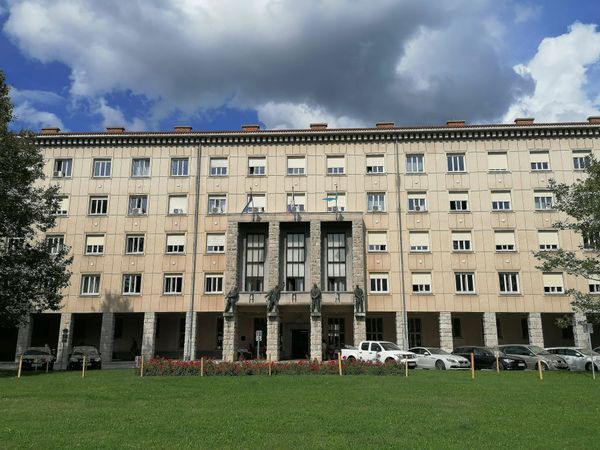
Nova Gorica
We begin with a historical and urban walk through Nova Gorica’s relatively short but turbulent history, full of fascinating stories, paradoxes and ironies.
We start at the model of the original urban plan and the City Hall, before continuing through the first residential blocks and later neighbourhoods. We discover why the decision was made to build an entirely new city, how architect Edvard Ravnikar envisioned it, and why his original plan was never fully realised.
Step by step, we explore how the city changed and why Nova Gorica looks the way it does today.
We learn who built the new city, who its first residents were, why Nova Gorica remains one of Slovenia’s greenest cities, and how industry, the proximity of the border and, later, gambling shaped its development.
We also walk through the first planned pedestrian zone in Yugoslavia and discover stories of cross-border shopping, smuggling, Italian visitors, casinos and everyday life along the border.
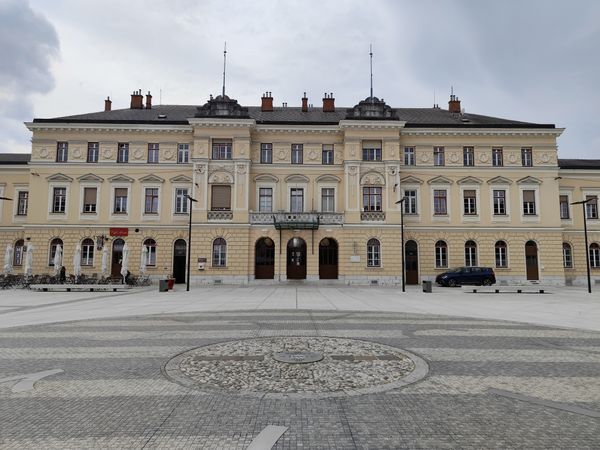
Trg Evrope / Piazza della Transalpina
After exploring the centre of Nova Gorica, we continue to Europe Square in front of the railway station – a shared square between two cities and two countries.
Here we discover the story of the post-war border, the railway station and everyday life along the border, as well as how crossing it changed over the decades.
For local residents, the border was both an obstacle and an opportunity: a line of political division, but also a place of shopping, smuggling, family ties and everyday crossings.
From the post-war division and local border traffic, through Schengen and the temporary closure of the border during the pandemic, we arrive in 2025, when Nova Gorica and Gorizia together became the first cross-border European Capital of Culture.
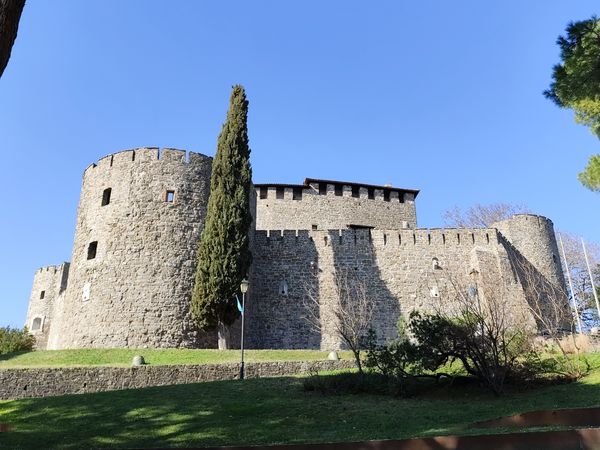
Gorizia
After a short break, we drive to Gorizia Castle, from where we descend through the city and explore its development.
Gorizia is very different from Nova Gorica. It is a city with more than a thousand years of history that for centuries served as the centre of the wider Goriška region.
Walking from the castle through medieval streets and bourgeois neighbourhoods, we discover Gorizia as the seat of the Counts of Gorizia, its long Habsburg period and the 19th century, when its mild climate earned it the nickname “Austrian Nice”.
We also follow the more turbulent history of the 20th century: the First World War, annexation to Italy, Fascism, the Second World War and the post-war division that permanently transformed Gorizia’s role as a regional centre.
We finish our walk in the city’s central square, Travnik / Piazza della Vittoria, where we can stop for a coffee or a spritzer.
Full-Day Programme
A full-day excursion allows us to complement the main tour of the two cities with one or two additional visits and lunch.
The programme is adapted to each group, the time available and its interests. We can place greater emphasis on urban planning and architecture, the history of the border and the Cold War, the First World War and Fascism, everyday life in Yugoslavia, the European Capital of Culture, art or local cuisine.
You choose what interests you most, and based on the date, group size and time available, I put together the complete programme and arrange the necessary reservations.
Optional Additional Visits
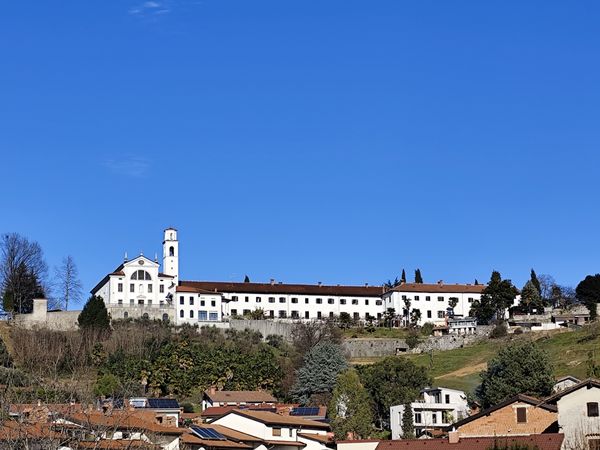
Franciscan Monastery of Kostanjevica
On the hill between the two cities, we can visit the Franciscan monastery, where Charles X, the last French king of the Bourbon dynasty, is buried, as well as its renowned monastery library.
The visit is led by a local guide; I arrange the booking as part of the excursion.
Duration: 1 hour
Additional cost: €5–6 per person for admission and a local guided tour
Link: Kostanjevica Monastery
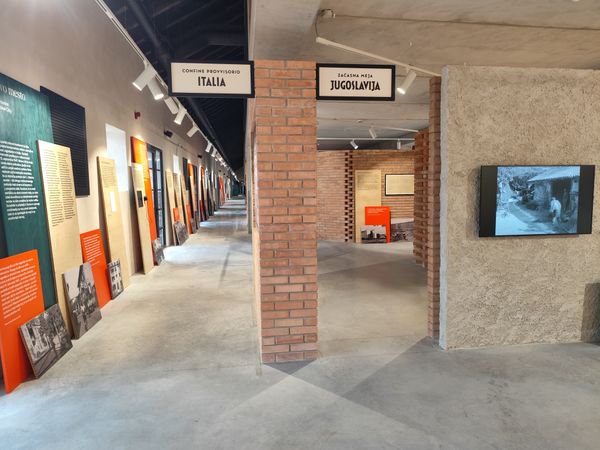
EPIC – The City on the Border
The exhibition next to the railway station presents the history of the border and life in the Goriška region during the 20th century, complementing the stories explored along the route.
The visit is led by one of their guides; I arrange the booking as part of the programme.
Duration: 1 hour
Additional cost: €8–11 per person, depending on the programme and guided tour
EPIC – The City on the Border
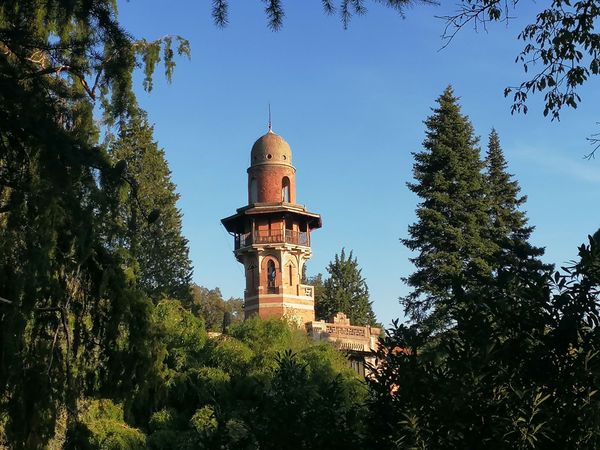
Rafut Park and Laščak Villa
The tour can continue with a walk through the restored Rafut Park, past one of Slovenia’s most unusual villas, designed by architect Anton Laščak in a Neo-Islamic style, and through the remarkable botanical garden he planted around it.
Duration: 45 minutes
I personally guide the visit through Rafut Park, so it can be incorporated directly into the programme without the need for an additional local guide.
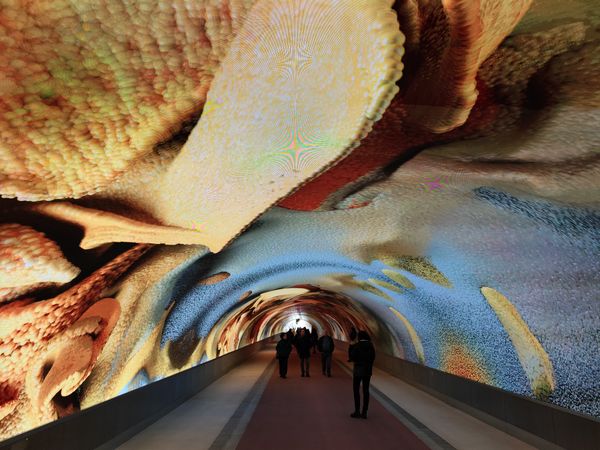
DAG – Digital Art Gallery
Directly from Travnik / Piazza della Vittoria, we can enter the tunnel beneath Gorizia Castle, home to a digital gallery covering approximately 1,000 m² and featuring state-of-the-art curved LED screens.
Admission is free, but advance booking is required:
Book a free visit
Lunch
For lunch, we can choose one of the traditional osmice – seasonal wine taverns typical of the region – a tourist farm, or a restaurant in Nova Gorica or Gorizia.
As the osmice open seasonally, I recommend the most suitable option according to the date of the excursion and can also arrange the reservation.
Practical Information
Duration: full-day excursion
Walking: the basic route covers approximately 6 km, mostly on flat terrain, with a downhill section from Gorizia Castle
Transport: between different parts of the programme, we use the group’s coach or other means of transport. The programme can also be adapted for groups without their own transport.
Guiding and organisation: from €350 per group
Additional costs: entrance fees, additional local guided tours and lunch.
Upon enquiry, I prepare a specific programme and offer for your group, including recommendations for additional visits and lunch.
Half-Day Option
For groups with less time available, the excursion can also be organised as a 3–4-hour tour of both Nova Gorica and Gorizia.
The shorter version includes the main highlights of Nova Gorica, Europe Square / Piazza della Transalpina, and a tour of Gorizia from Gorizia Castle to Travnik / Piazza della Vittoria.
Duration: 3–4 hours
Walking: approximately 6 km, or less when using transport
Price: from €300 per group
The half-day programme can likewise be adapted to the time available and the group’s interests.
More about the guide and author of the tour
Contact:
Blaž P. Kosovel
phone: +386 41 521 268