


The beginnings of the construction of Nova Gorica, the other side – nationalisation and demolitions
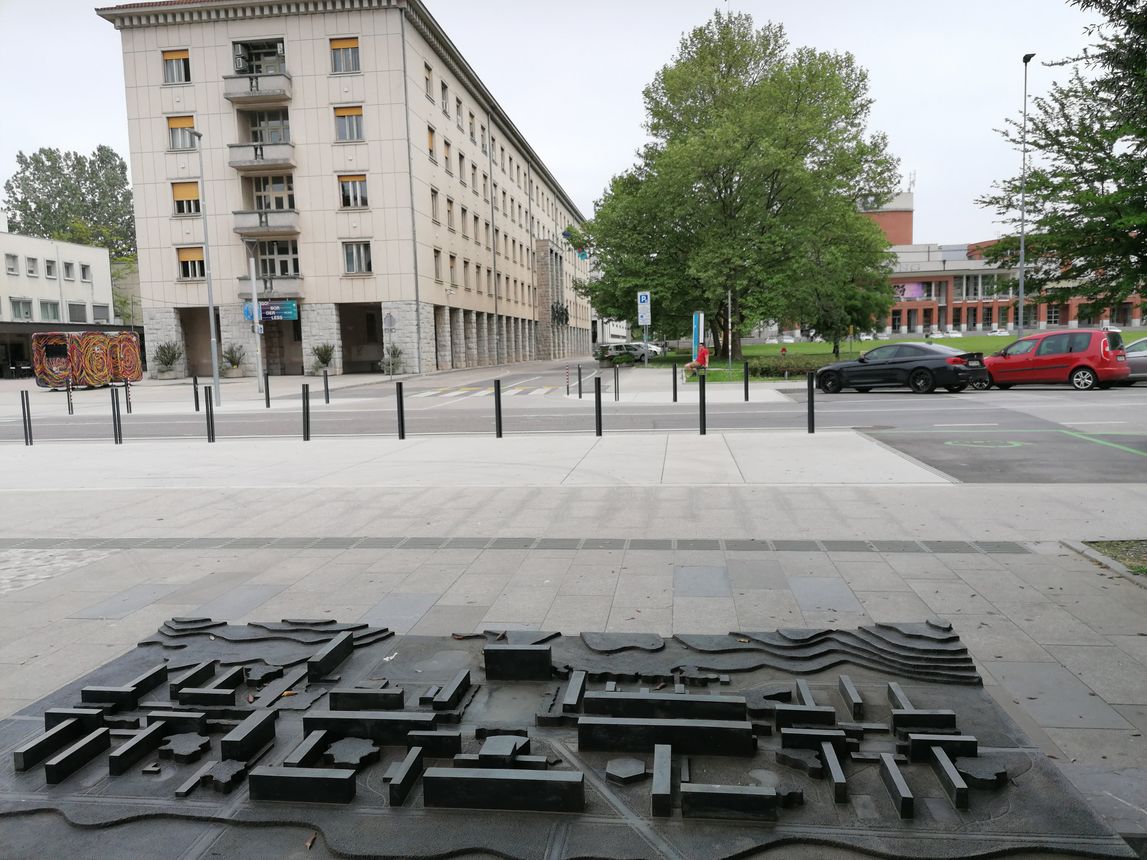
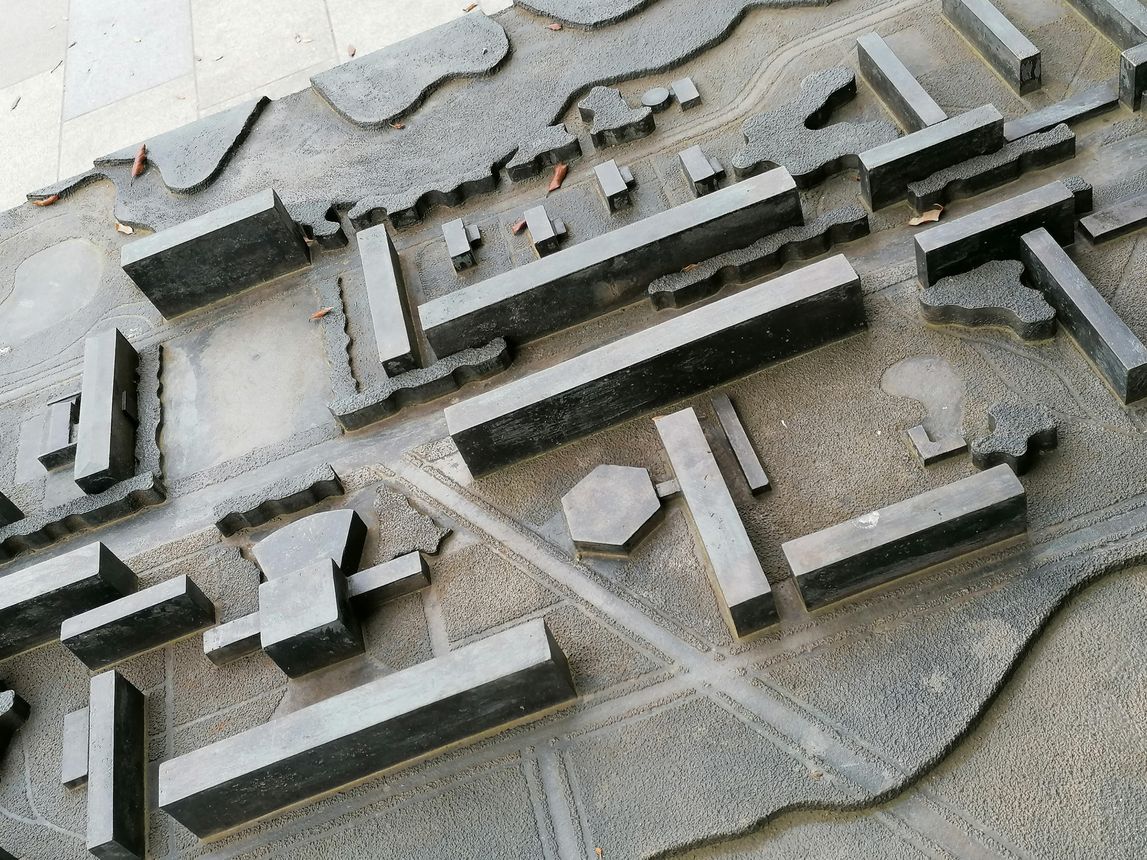
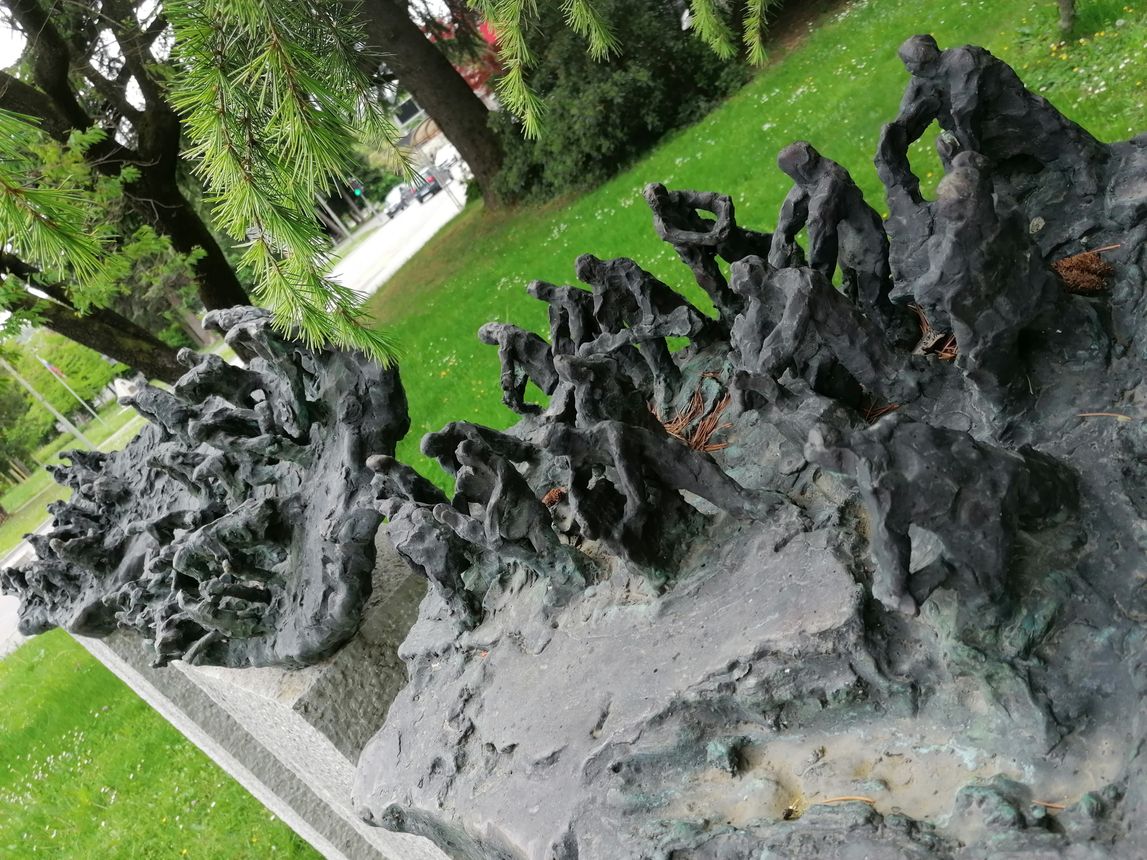
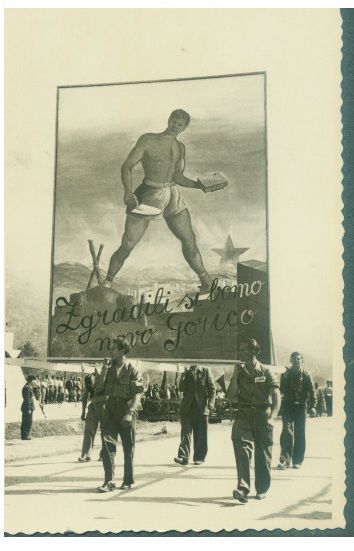
Stories about the construction of Nova Gorica usually reflect pride, courage, enthusiasm, industriousness, and sorrow over the loss of Gorizia to Italy. Less well known, however, are the stories of the nationalisation of land on the Solkan plain, the demolition of farms, and the destruction of fields and orchards. This, too, is part of the history of the new town.
“We must ensure that Nova Gorica will grow here — a town of joyful, free spirit, a town that will draw all hearts from beyond into its bright sphere, a beautiful economic and commercial centre with powerful modern architecture, a stronghold of peace that will testify to our hardened opponents that we truly intend to preserve peace in the world; for whoever plans war cannot calmly and joyfully build, since war can destroy in a single minute what was created through long and difficult effort.”
(Oton Župančič, 15 December 1947, Stopili sta v krog veselega življenja).
With these words, the Slovene poet Oton Župančič addressed newly elected republican deputies from the annexed Littoral in the Slovene assembly. The joy that the Littoral had become part of Yugoslavia was immense. The idea of building a new town — envisioned as a new cultural, economic, and political centre of the former Gorizia region — brought renewed post-war hope. Yet among the local inhabitants, especially landowners and farmers who lived on the Solkan plain, there was far less enthusiasm. To understand the meaning of urban space, one must also consider these personal experiences, which are often lost in collective memory and dominant narratives.
Nova Gorica was built on land that, before the border was drawn, contained a railway station, railway workers’ housing blocks, remnants of a cemetery, a brickworks (Frnaža), farms, fields, meadows, and orchards. These were owned by local inhabitants and partly by the Franciscans of Sveta Gora.
Researcher Katja Jerman notes in her article “On the overlooked aspects of the emergence of Nova Gorica” (2017) that the nationalisation of space began in November 1947. “Under the Basic Law on Expropriation (Official Gazette of the FPRY 28/47), which came into force on 1 April 1947, landowners whose property was designated for expropriation were entitled to financial compensation. In practice, however, the implementation was entrusted to regional courts, which also appointed land valuers. In many cases, land undergoing nationalisation was undervalued” (2017: 118), resulting in lower compensation. “In the case of agricultural landowners, nationalisation began without prior notice and without official documents in December 1947” (ibid.). People therefore recall:
“The brigadiers came in ’48, practically overnight they gathered here. Straight onto the land, without asking, without anything /…/. Only afterwards did a decision arrive from Postojna stating that the land had been nationalised. He showed my mother this paper — an A4 sheet, a few words, no signature, no stamp. /…/ when he left and handed her the paper, my father went into the stable, tears came to his eyes, and it was the first time I saw him crying” (Mesto na travniku, Medved & Velušček, 2004).
Key expropriation decisions were issued only in March 1956. The documents received by landowners most often included the following justification:
“The above-mentioned property is required by the People’s Committee for the construction of Gorizia, the future legal, economic and cultural centre of the Littoral. For the realisation of the plan for the construction of Nova Gorica, various buildings — administrative, residential and others necessary for the town — will be erected on the expropriated land. The implementation of the construction plan necessitates this expropriation, and therefore the act of expropriation is issued in accordance with the provisions of the cited law. Death to fascism – freedom to the people.”
(PANG, OLO Gorizia, 1951–1956; cf. Jerman 2017: 119).
Jerman further notes that no appeal against the decree was possible; property rights were immediately revoked, and the land was reclassified as public property. Compensation was granted, but often paid only up to ten years after expropriation, and was lower if the land had been assessed as low quality. In some cases, farmers were offered substitute land near the town.
Avtor: Jasna Fakin Bajec
Vir:
- Jerman, Katja. 2017. O neizpostavljenih temah ob nastanku Nove Gorice. V: Marušič, Branko (ur.), Narodu Gorico novo bomo dali v dar: Ob sedemdesetletnici Nove Gorice. Nova Gorica: Območno združenje Zveze borcev za vrednote narodnoosvobodilnega boja, str.117-121.
- Medved Anja, Velušček, Nadja. 2004. Mesto na travniku [Videoposnetek] : videoesej o Novi Gorici. Šempas : Zavod Kinoatelje ; Gorica = Gorizia : Kinoatelje.
Vir: [https://365.rtvslo.si/arhiv/dokumentarec-meseca/6807960 (Ogled: 4. 11. 2024).
