


The Town of Roses and the Botanical Garden
Instead of a park city – a forest within the town
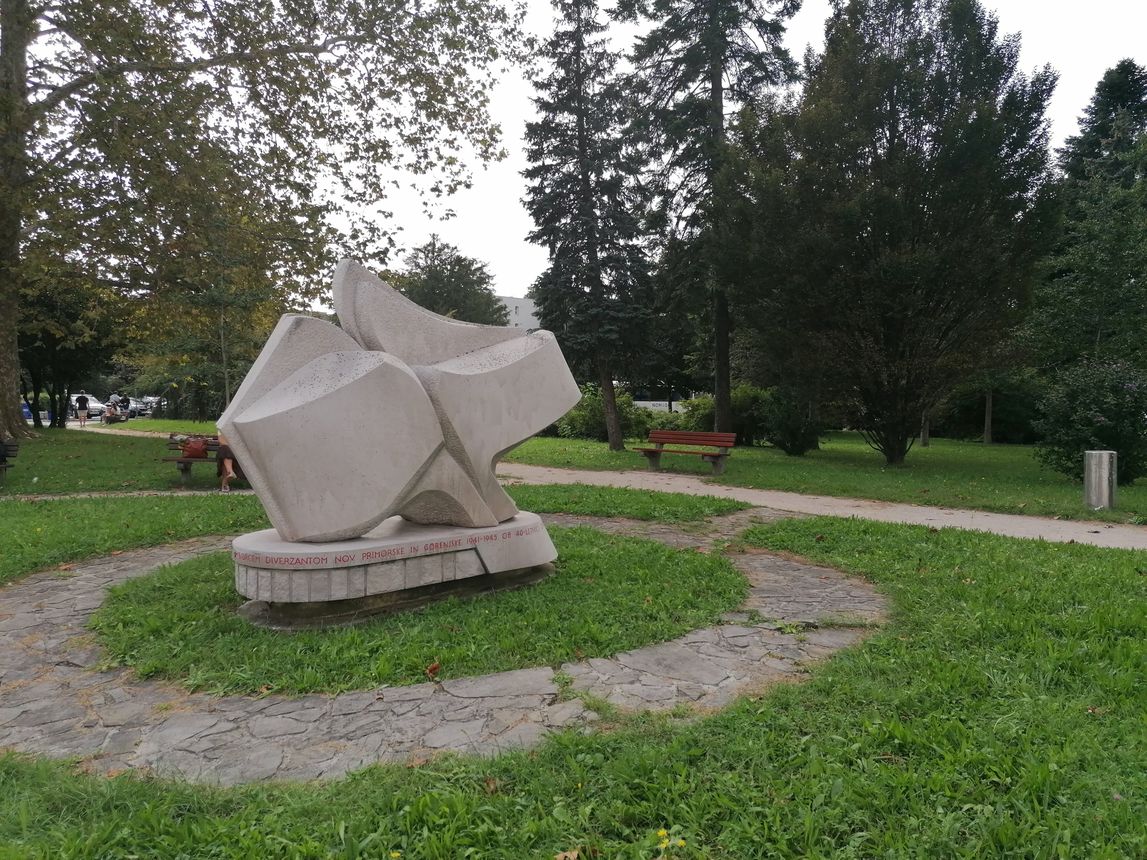
Nova Gorica was planned as a park city, but it has instead grown into a veritable botanical garden. Ravnikar's original plan included a double row of plane trees along the Magistrala, inspired by the Cours Mirabeau in Aix-en-Provence. However, since construction was never completed, the trees remained unplanted.
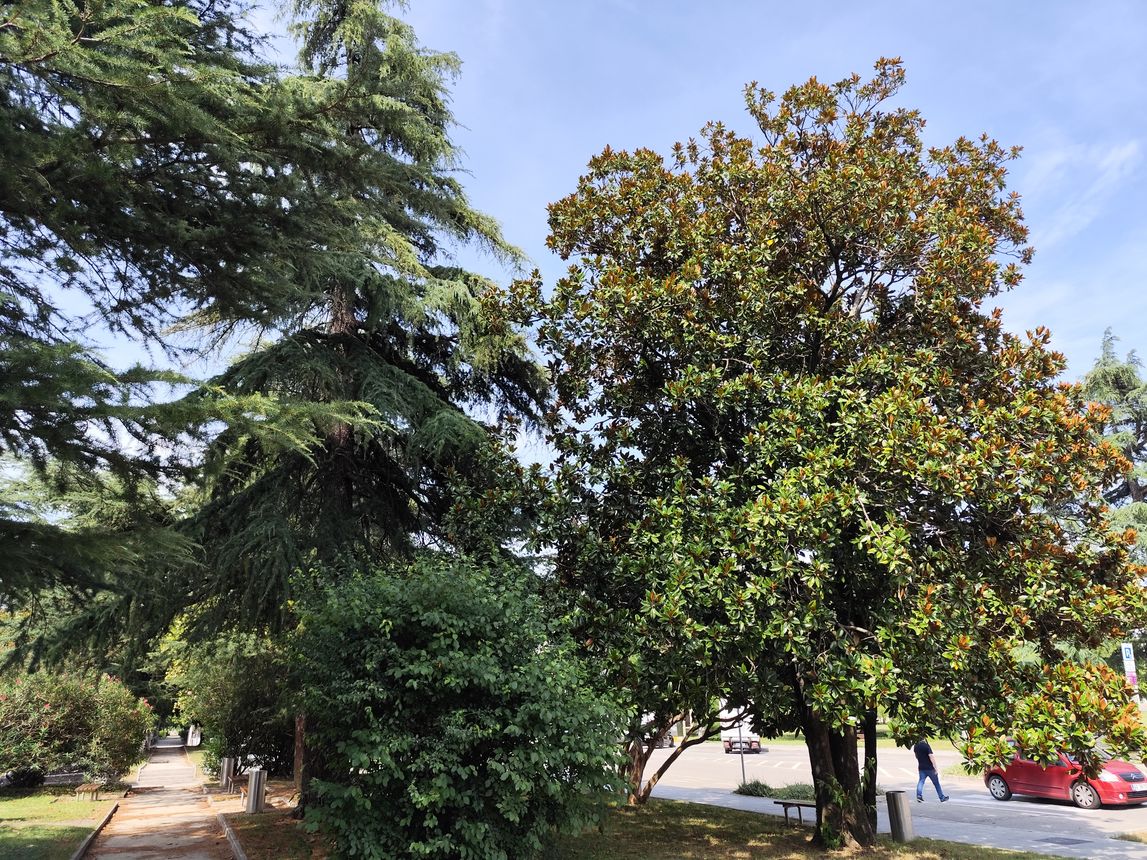
To fill the empty spaces where the town was never realised, various trees were planted spontaneously. Rather than functionalist planting to allow residents to stroll in the shade, the town opted for horticultural planting for aesthetic purposes, contrary to Ravnikar's original idea. These plantings were not organised by the municipal authorities or urban planners but were initiated by Komunala (the municipal services company) director Žarko Bole and his colleague Miha Ogorevc, who later became director of the Volčji Potok Arboretum. At the end of each week, they collected seedlings from various locations, which were then planted by workers during the week.
The emphasis was on diversity: trees from different climate zones were often planted together to reflect Nova Gorica's specific microclimate. For example, a palm tree grows in front of the post office on one side of the entrance and a spruce on the other. Today, the town boasts 141 genera and 256 species of trees, shrubs, and other plants. The most common tree is the Himalayan cedar, followed by the evergreen cypress, linden, and maple-leaved plane. The town is also home to many species not found elsewhere in Slovenia, including the dawn redwood, the Chinese umbrella tree, and the cork oak, which occupies a place of honour next to the Icarus monument (p. 50).
Alongside trees, Bole and Ogorevc also planted various types of roses throughout the town. Today, 12,000 roses covering 1,900 m² can be found across Nova Gorica. This tradition of growing roses originates from the nearby village of Rožna Dolina (p. 121), where the Vortglendar family ran a garden centre in an area now occupied by the border crossing. These plantings are also one of the reasons why the rose was included in the coat of arms of Nova Gorica and why the town is still known today as the “town of roses.” The coat of arms was designed by architect Roni Nemec (1938–2021), who won a competition held in 1968 to mark the town’s 20th anniversary. At that time, Nova Gorica received its first coat of arms, which already reflected the history of the young town.
Not only was Bole the initiator of the tree planting, but he also ensured their preservation. The yew tree next to the bus station is said to be the oldest in the town. During the construction of the bus station, plans were made to cut it down, but Bole managed to have the station relocated to save the tree.
Avtor: Blaž Kosovel
Kraj: Nova Gorica