


The original plan of the new town
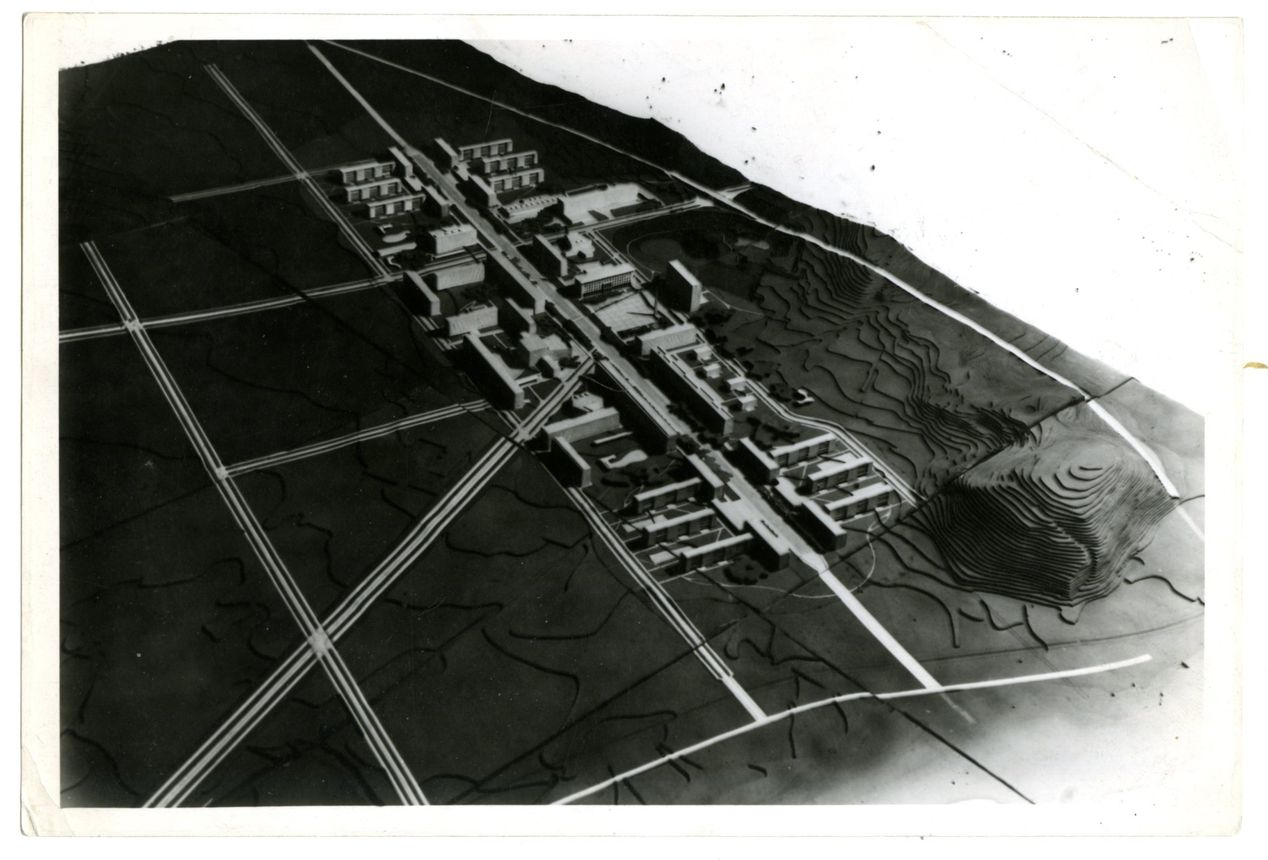
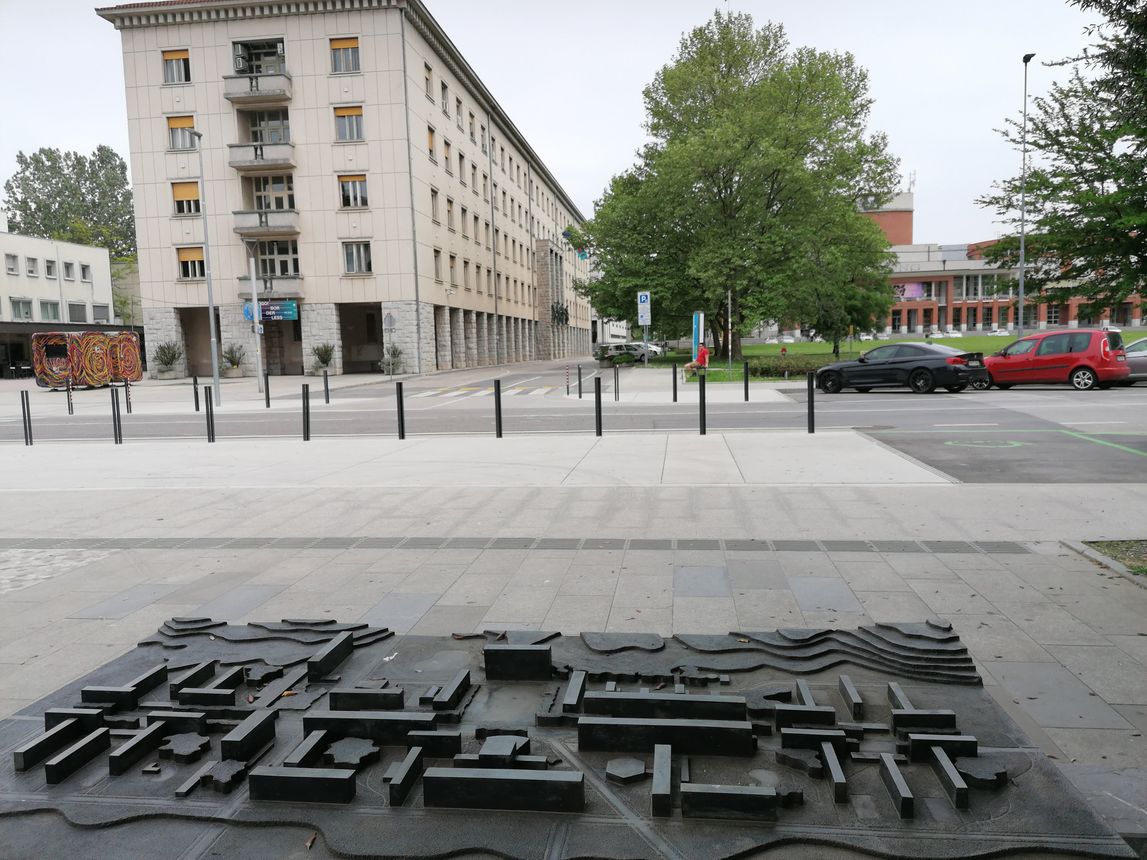
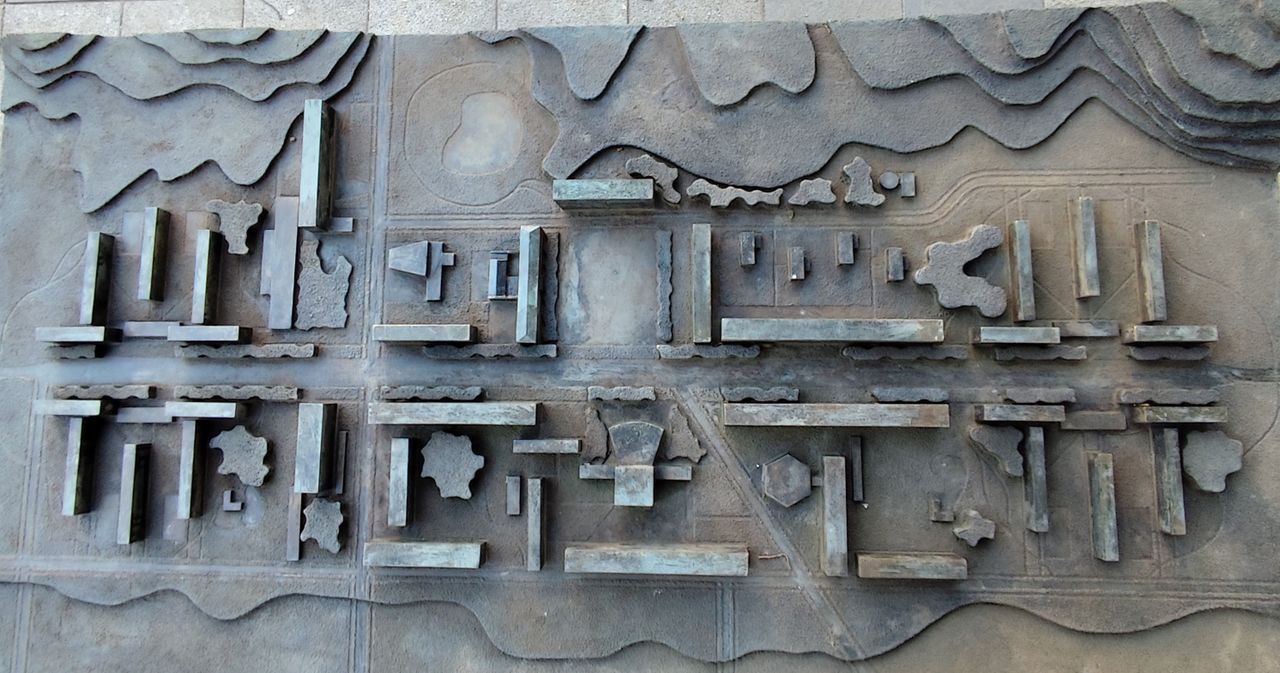
Bronze model of the conceptual design of Nova Gorica
The urban plan for the new town was created by Edvard Ravnikar (1907–1993), a student of Jože Plečnik (1872–1957). Plečnik's work in Ljubljana is now on the UNESCO World Heritage List. Ravnikar, one of the most important architects of his time, also designed Ljubljana's Republic Square and Cankarjev dom — the capital's largest square and its main congress and cultural centre, designed in 1960 and completed in 1982. His plan for Nova Gorica followed the principles of modernist urban planning set out in the Athens Charter. Ravnikar was directly connected to these ideas, having spent several months in 1939 working with Le Corbusier, the author of the charter, in Paris.
The plan was based on zoning, i.e. separating buildings according to their function, with large green spaces between them. A broad avenue, known as Magistrala at the time and now called Kidričeva Street, was intended to run through the centre as the town's main artery. A large square was to occupy the middle of the town, with political and administrative buildings. On the opposite side, a large cultural centre was planned on the site where a church would traditionally stand in the town centre, intended to assume the same role in the new socialist order.
Nearby, a commercial, educational, and health district was also planned. Symmetrically positioned apartment blocks were designed at both ends of the main road, and an industrial zone was planned to the east of the town.
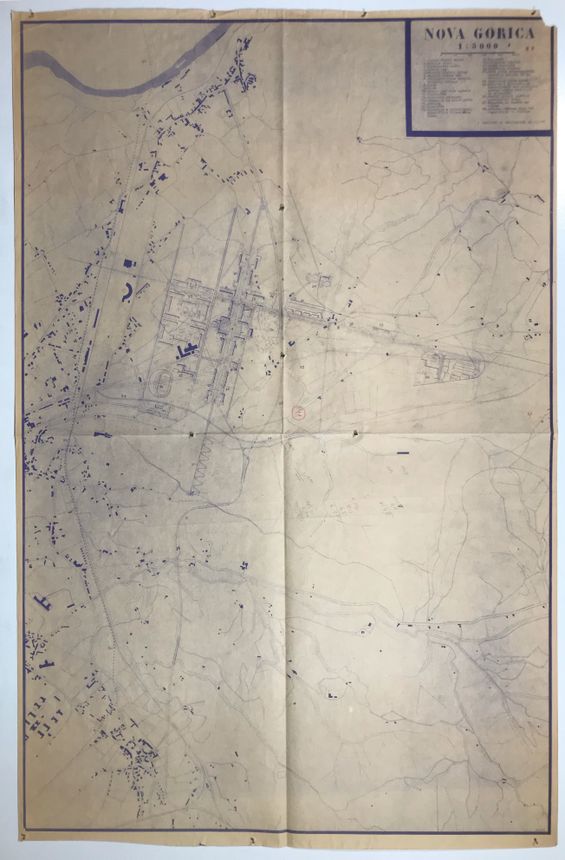
This urban layout is still visible today. However, only eleven buildings were constructed according to Ravnikar's original plan. Nova Gorica is a town literally defined by the border, marked by the railway line. The border itself runs directly across the square in front of the railway station, since the peace negotiations after the Second World War determined that this key infrastructure corridor would belong to Yugoslavia. Once the new border had been established, the Yugoslav army designated a 500-metre strip along it where construction was prohibited.
Ravnikar designed the town so that the Magistrala and the rest of the road network ran either parallel or perpendicular to the border and railway line. The town was thus given a typical modern orthogonal layout. The only exception to this grid is Erjavčeva Street, which predates the town and originally served as the road to the former Gorizia cemetery.
Avtor: Blaž Kosovel
Kraj: Nova Gorica

Tags
