


The Only Border Crossing Between the Two Goricas
Small Border Crossing on Erjavčeva Street
Erjavčeva Street, which ends at the state border between Slovenia and Italy and continues on the Italian side as Via San Gabriele, was marked from the 1980s onwards by a small border crossing for pedestrians and cyclists. It was the only crossing point between the two Gorizias.
From 1980 onwards, the small border crossing on Erjavčeva Street (or Via San Gabriele on the Italian side) represented the only direct connection between Nova Gorica and the “old” Gorizia, as the Italian town was commonly referred to in the Gorizia region, the Vipava Valley, and the Karst. The establishment of the crossing was a result of the Treaty of Osimo (1975), as Yugoslavia—on behalf of the Municipality of Nova Gorica—demanded both the Vrtojba border crossing and a small crossing on Erjavčeva Street.
Jože Šušmelj (1938–2024), who served as president of the Municipal Assembly of Nova Gorica from 1974 to 1982 and contributed significantly to cross-border relations, explained:
“The Yugoslav half of the interstate commission for implementing the Udine Agreement had, since 1965, been demanding the removal of the barrier on Erjavčeva Street. /…/ It was illogical that among 52 border crossings—even in remote areas—there was none within the city itself. The Italians rejected the proposal because the border along Erjavčeva had not yet been definitively established. The barbed wire obstacles were temporarily removed in June 1971, when the Giro d’Italia passed through. However, it took another nine years—and the signing of the Osimo Agreements—before they were permanently removed” (Sardoč 2017).
Although the Slovenian-Italian border had not been marked by an “Iron Curtain” since 1955, crossing it was always subject to strict checks by Italian or Yugoslav police and customs officers. If someone wanted to travel to Gorizia by bicycle, “the shortest route from Nova Gorica led through the never-used second tube of the railway tunnel under Kostanjevica to Pristava and across the border there. It was not possible to go directly from one city to the other” (ibid.).
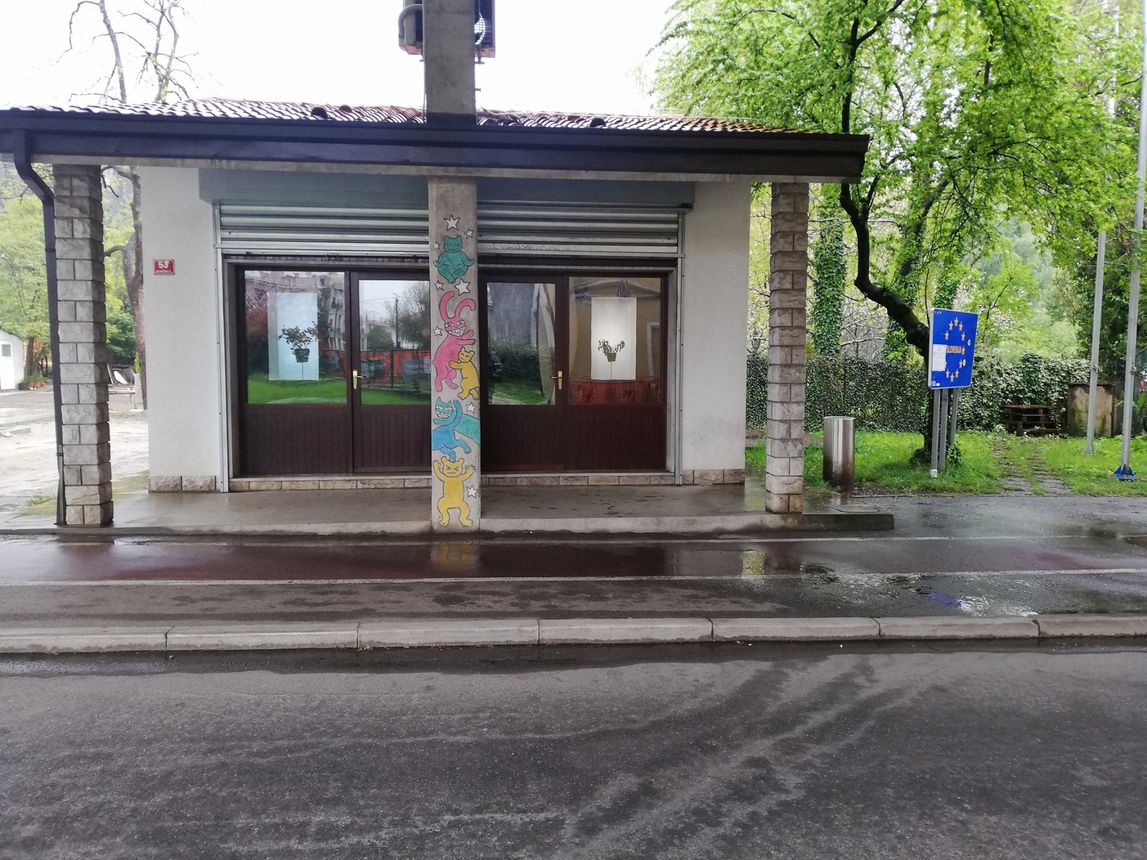
The crossing officially opened in February 1980. It was unique in that both Yugoslav and Italian controls operated under the same canopy. Only pedestrians, cyclists, and motorcyclists could pass through, though bus traffic was also permitted. Customs and police operated only during the day; the crossing was closed at night. Controls were reportedly lenient—“sometimes a person would simply wave their permit” (ibid.). Šušmelj further noted:
“Interestingly, the Italians proposed placing the crossing at today’s Europe Square. Yugoslavia wanted the shortest connection between the centres of both towns to serve all traffic, but the Italians refused, citing safety concerns due to nearby railway barriers, lack of personnel, and opposition from residents of Via San Gabriele” (ibid.).
The crossing strengthened ties between the two towns, facilitated visits to relatives, and stimulated certain activities, such as the development of trade in the centre of Gorizia and the employment of women from Nova Gorica as domestic workers in Italian households. There were also minor offences and instances of smuggling, which required a degree of ingenuity—larger quantities could not be transported by bicycle or moped, so some “smugglers” simply wore the clothes they had bought in Italy.
The crossing remained in operation until the introduction of the Schengen border on 20 December 2007. For many years, only the large canopy, border signage, remains of the customs building, and various cultural and artistic projects testified to its existence. Due to the migration crisis, Italian police officers can once again be seen in the area today, primarily monitoring irregular crossings.
On 20 December 2007, when Nova Gorica found itself without border barriers for the first time in its short history, filmmaker Anja Medved installed a camera, microphone, computer, and curtain in the former customs building. She began recording memories of the checkpoint between two cities, two states, two social systems, and between the Romance and Slavic worlds. People came from both sides, sharing stories and images, collectively creating an archive of memories. In 2010, this resulted in the film Confessions of the Smugglers.
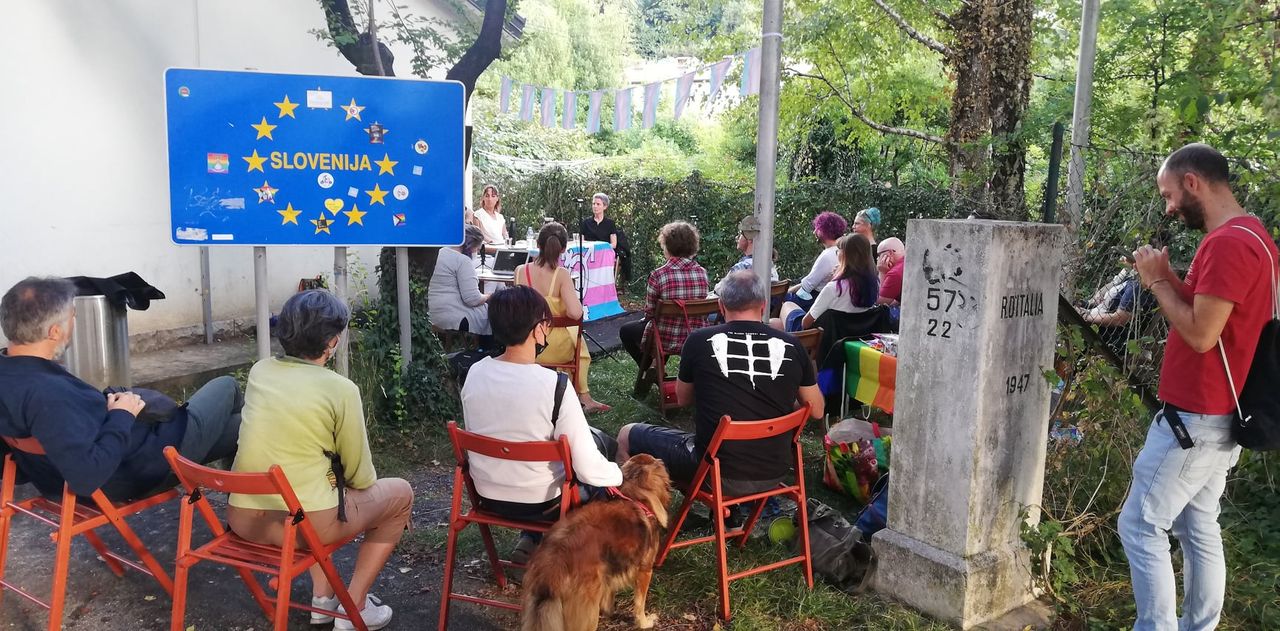
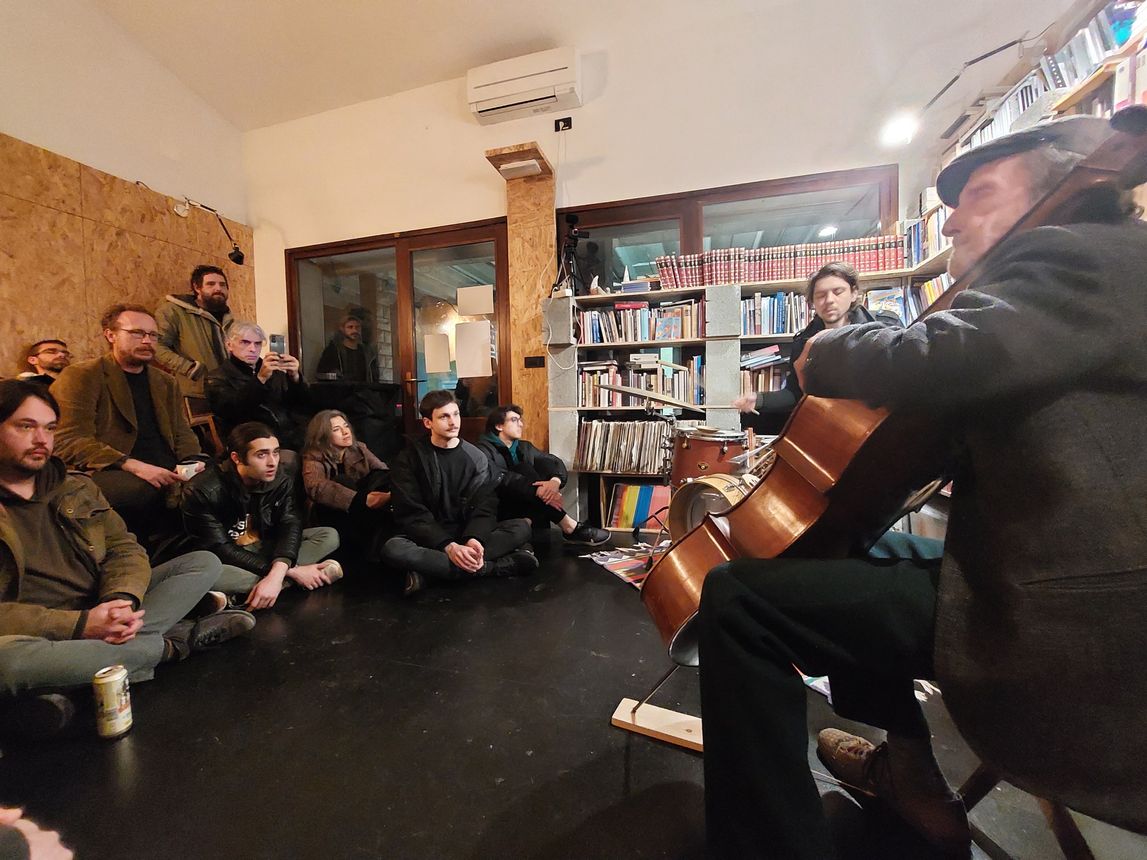
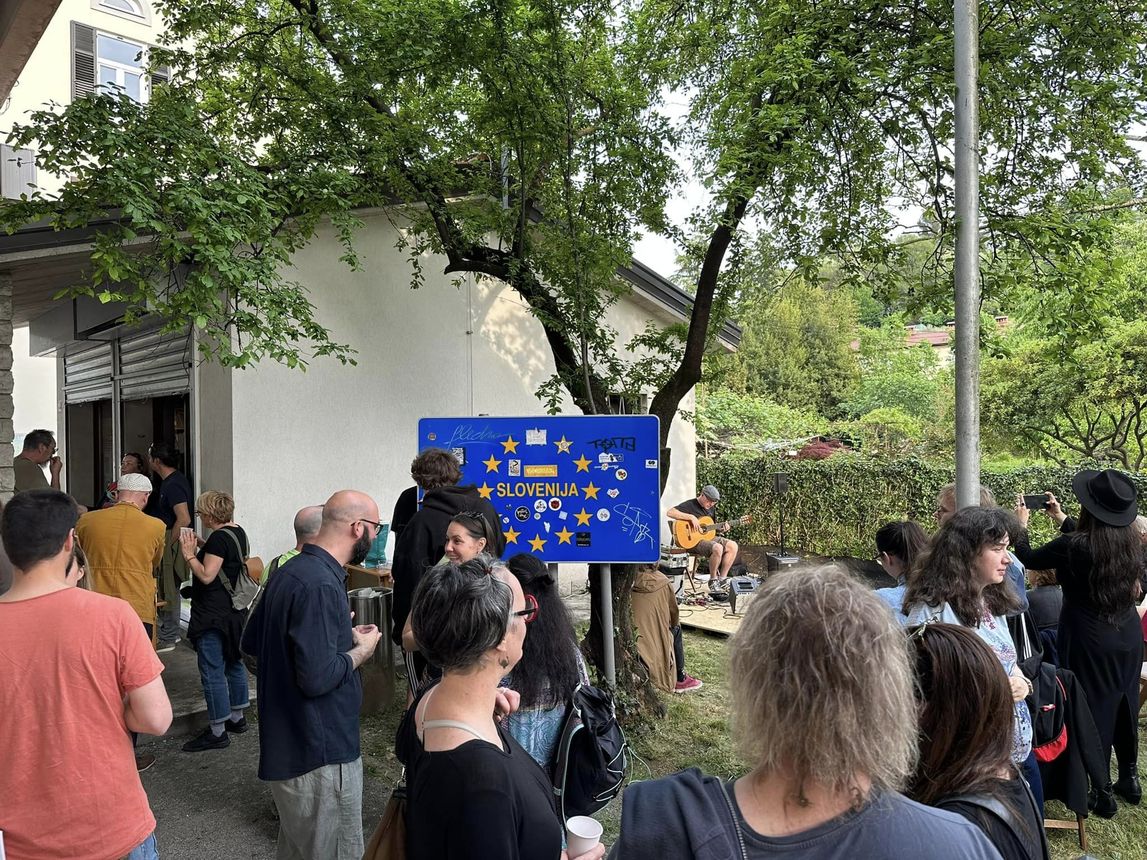
Since 15 September 2016, the former customs building has hosted a space for the development of urban culture—Carinarnica. Five cultural organisations from the Gorizia region (Kinoatelje, the Humanists Association of Gorizia, the Association of Primorska Architects, the cultural association KREA, and Kinokašča) joined forces to create a shared cross-border space of coexistence and co-creation—“to become and remain a link between two states, cultures, cities, and friends.” Today, the space is primarily used by the Goriška Humanist Association.
Avtor: Jasna Fakin Bajec
Vir:
Spletni vir 1: "Otvoritev Carinarnice - bivaka urbane kulture," Kinoatelje, 8. 9. 2016. Vir: https://www.kinoatelje.it/aktualno/2016091014432813/otvoritev_carinarnice__bivaka_urbane_kulture/ (ogled 28. 10. 2024).
Ambrož Sardoč (2017) "Na Erjavčevi si le “pomahal” s prepustnico." Primorske novice, 70. let Nove Gorice, 7. 8. 2017. https://primorske.svet24.si/plus/70-let-nove-gorice/na-erjavcevi-si-le-pomahal-s-prepustnico
Carinarnica na FB: https://www.facebook.com/search/top?q=carinarnica

Tags
Povezani članki
Erjavčeva ulica