


Shopping Street
The First Pedestrian Zone in Yugoslavia
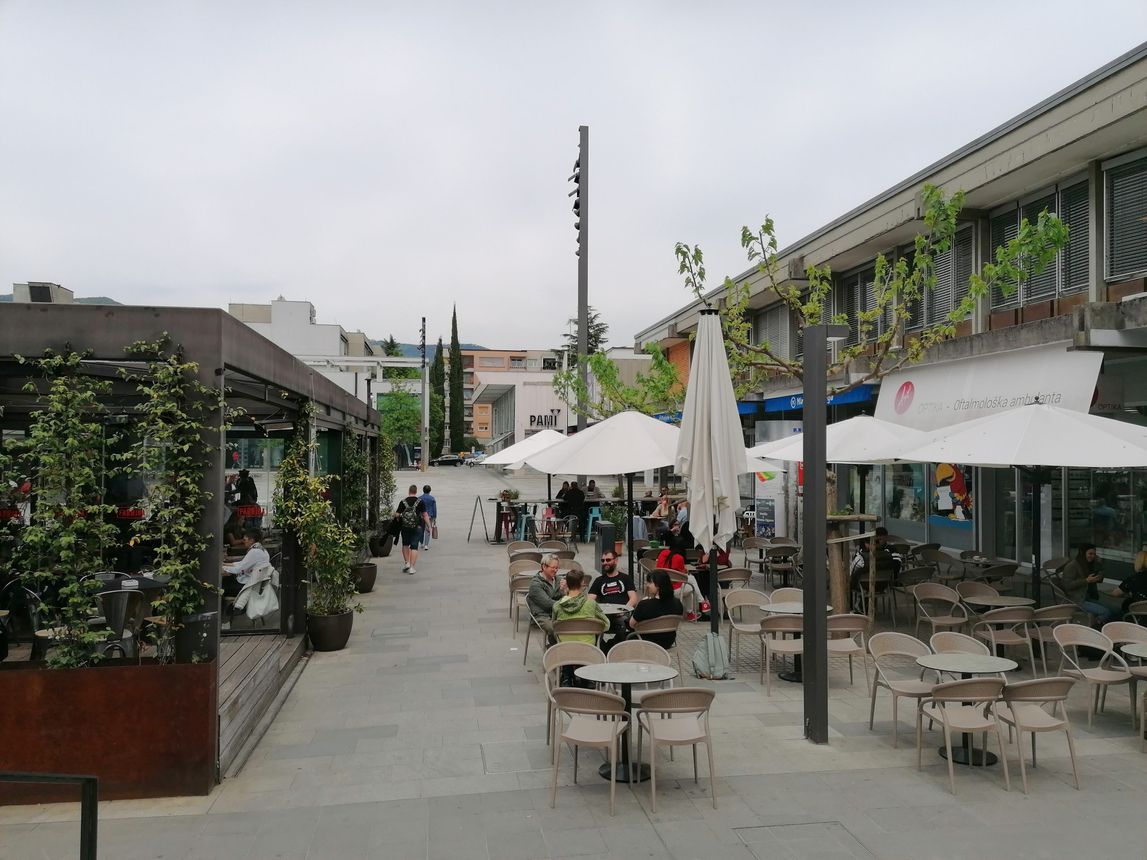
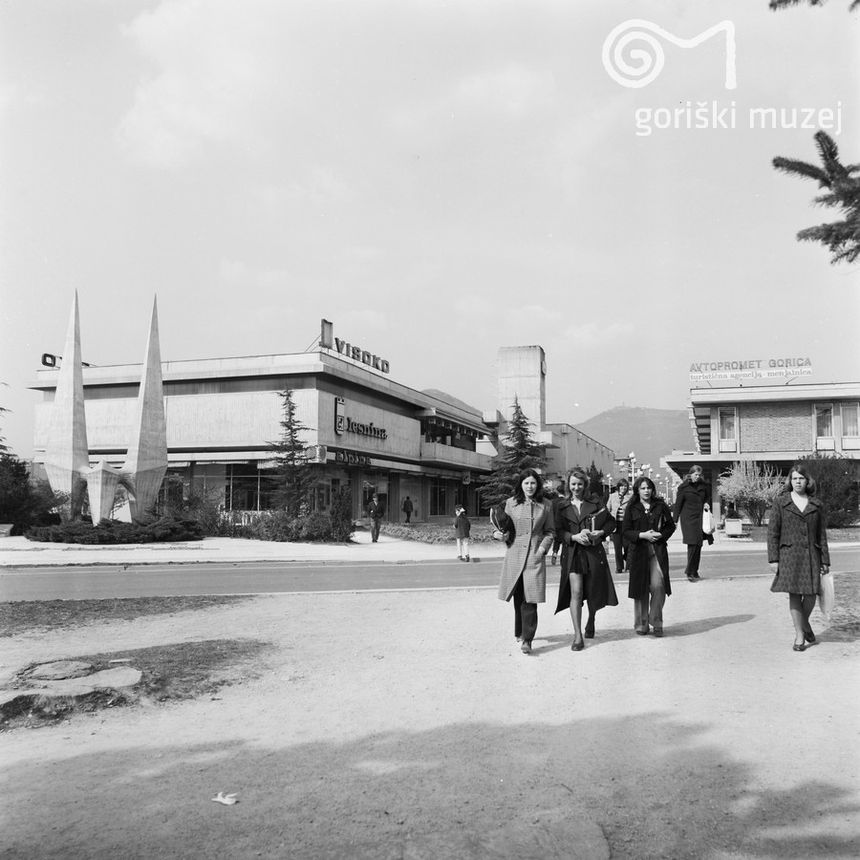
As the city expanded, the need for a new commercial centre emerged in the mid-1960s. In 1966, architect Marjan Vrtovec (1936) designed a new centre as a unified, organically conceived space intended exclusively for pedestrians, aiming to create an intimate, dynamic and attractive environment. It became the first pedestrian zone in Yugoslavia, inspired by Lijnbaan Street in Rotterdam—the first pedestrian street in Europe.
This compact urban structure marked a clear departure from the logic of Ravnikar’s modernist city. Precisely for this reason, however, it finally established a true urban core, which remains highly popular among residents today. The new pedestrian street was conceived as an extension of the main square in front of the municipal building and, on the other side, of what was then still a traffic street, later transformed into today’s Bevkov Square.
Mulberry trees were planted along the central promenade as a reminder of a once common tree in the area. Their cultivation dates back to the second half of the 16th century, while in the 18th century sericulture became one of the first industrial activities in the Gorizia region. The new shopping centre became a focal point of urban life—a role it continues to share with Bevkov Square today.
Avtor: Blaž Kosovel
Kraj: Nova Gorica


Tags
