


Ruski bloki - dediščina mesta
The first plan for the construction of the town was created according to the design of the architect Edvard Ravnikar (1907–1993), one of the most prominent representatives of post-war modernism in Slovenia. He conceived Nova Gorica as a garden city, that is, a city enabling the rational organisation of all urban functions while remaining pleasant to live in. His concept followed Le Corbusier’s vision of the Radiant City (La Ville Radieuse) and the principles of the functionalist city codified in the Athens Charter of CIAM (1933). Emphasis was placed on a healthy living environment, including sunlight exposure, large public spaces, and green areas. However, only 11 buildings were constructed according to his design: six residential blocks with spacious bourgeois apartments, the municipal building, and four blocks near the Koren stream.
Ravnikar planned residential areas along the main avenue; the original plans foresaw 12 blocks, but only six were eventually built, on both sides of the southern end of Kidričeva Street. Locals called them the “Russian blocks.” They are located along the central urban spine of Nova Gorica and represent Ravnikar’s interpretation of the strict construction norms that architects were required to follow when designing housing during the First Five-Year Economic Plan, as well as one of his first major post-war commissions.
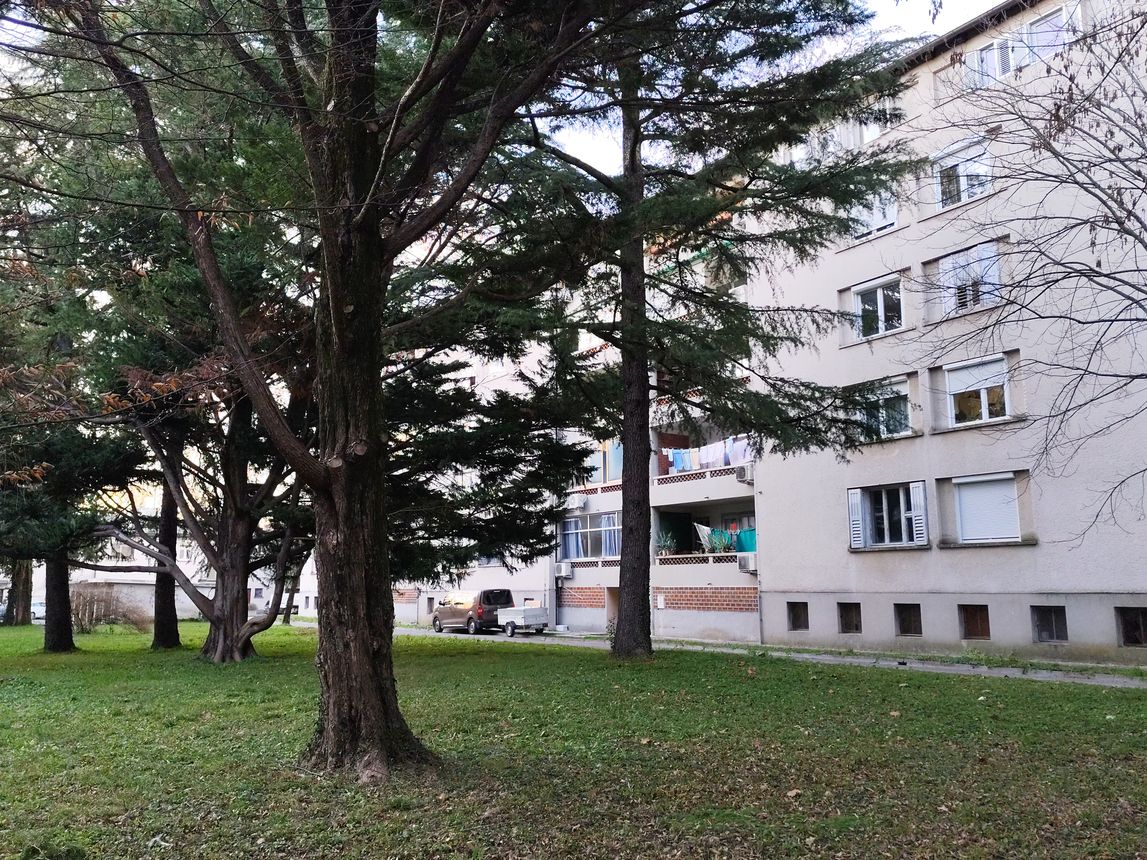
These are five-storey basement blocks, essentially based on the plans for standardised multi-apartment buildings that Ravnikar designed in 1947 for New Belgrade (they share a functional internal layout and sloping roof endings). Attic spaces were later converted into small single apartments (so-called “golobnjaki,” or pigeon lofts), while each floor contained twenty-four very comfortable apartments for the time, each around 100 m² in size. The buildings were constructed traditionally from brick; the floors are wooden, while only the staircases and kitchens have reinforced-concrete flooring (Di Battista 2021). According to Tomaž Vuga, “their true quality of living has only become fully apparent in recent years […] as they correspond to contemporary lifestyles – a small family that wants comfortable living spaces and a large residential balcony …” (Vuga 2018: 111). They are surrounded by extensive public green areas with diverse trees that provide shade in summer, spaces for socialising and children’s play, and in winter allow sunlight to reach the living areas.
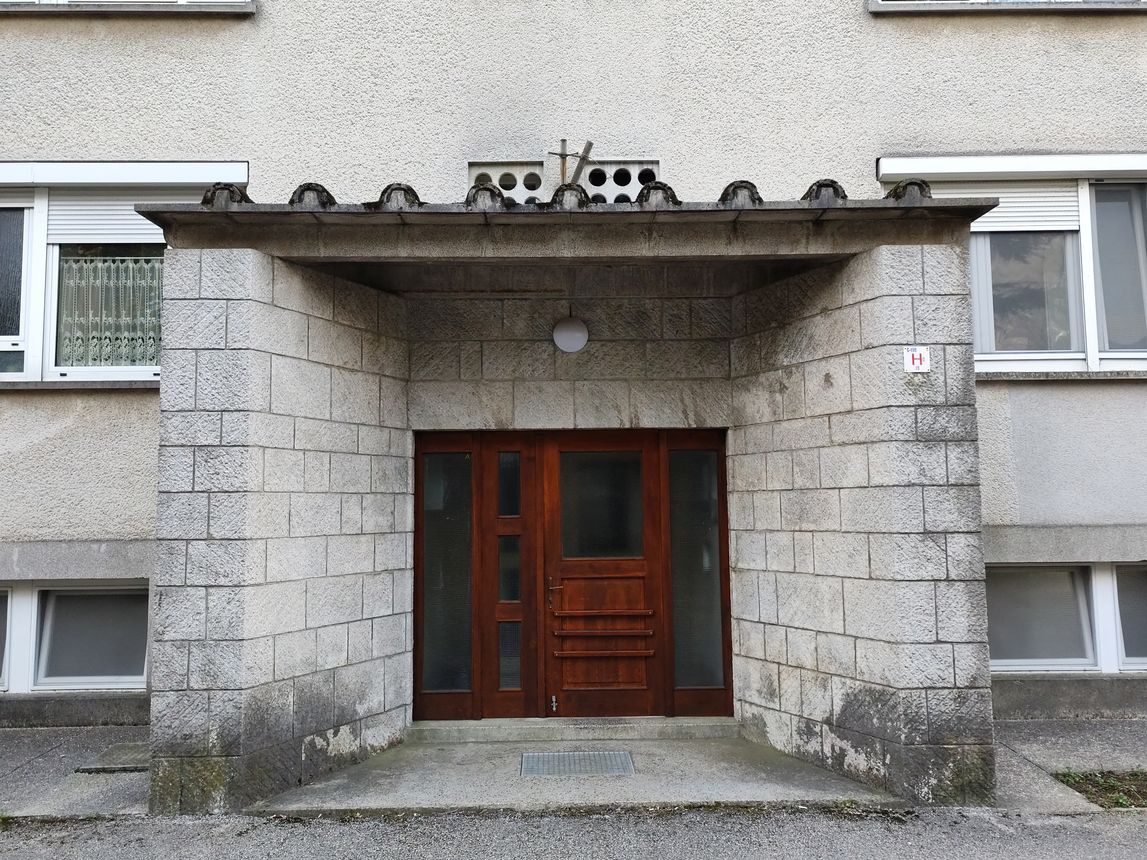
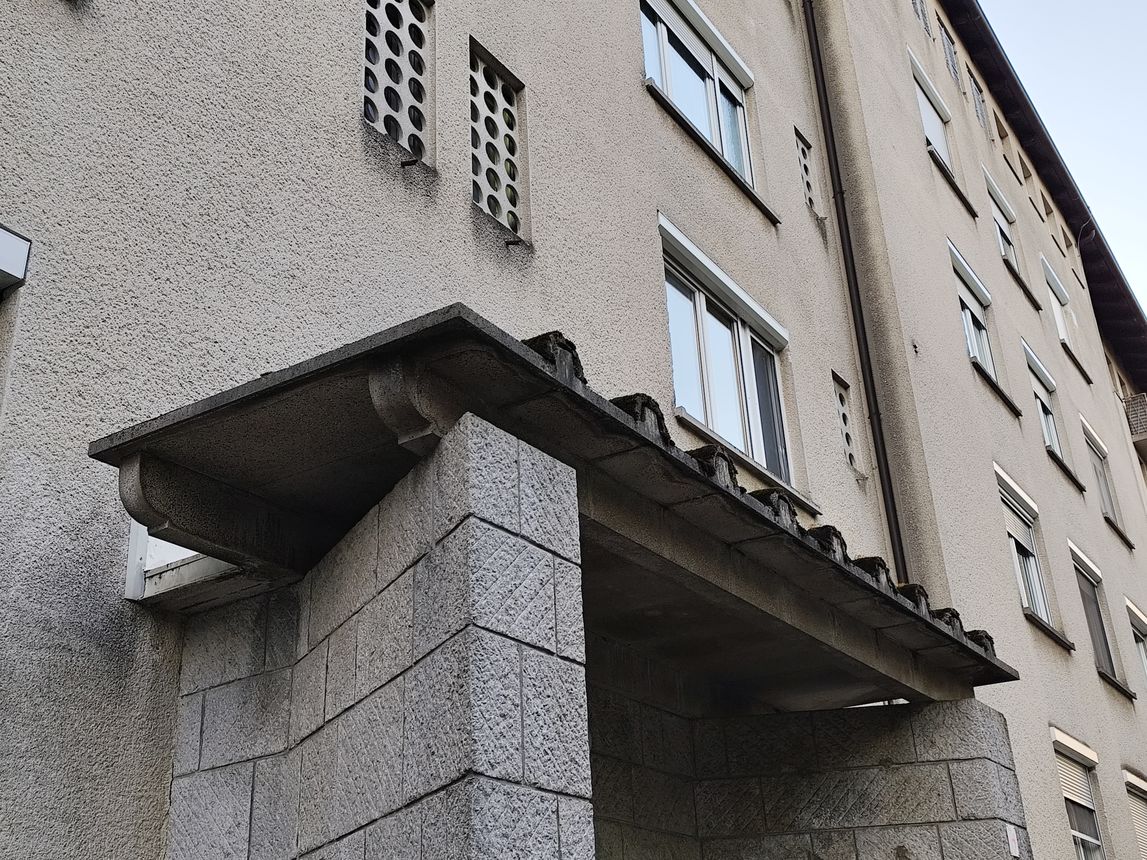
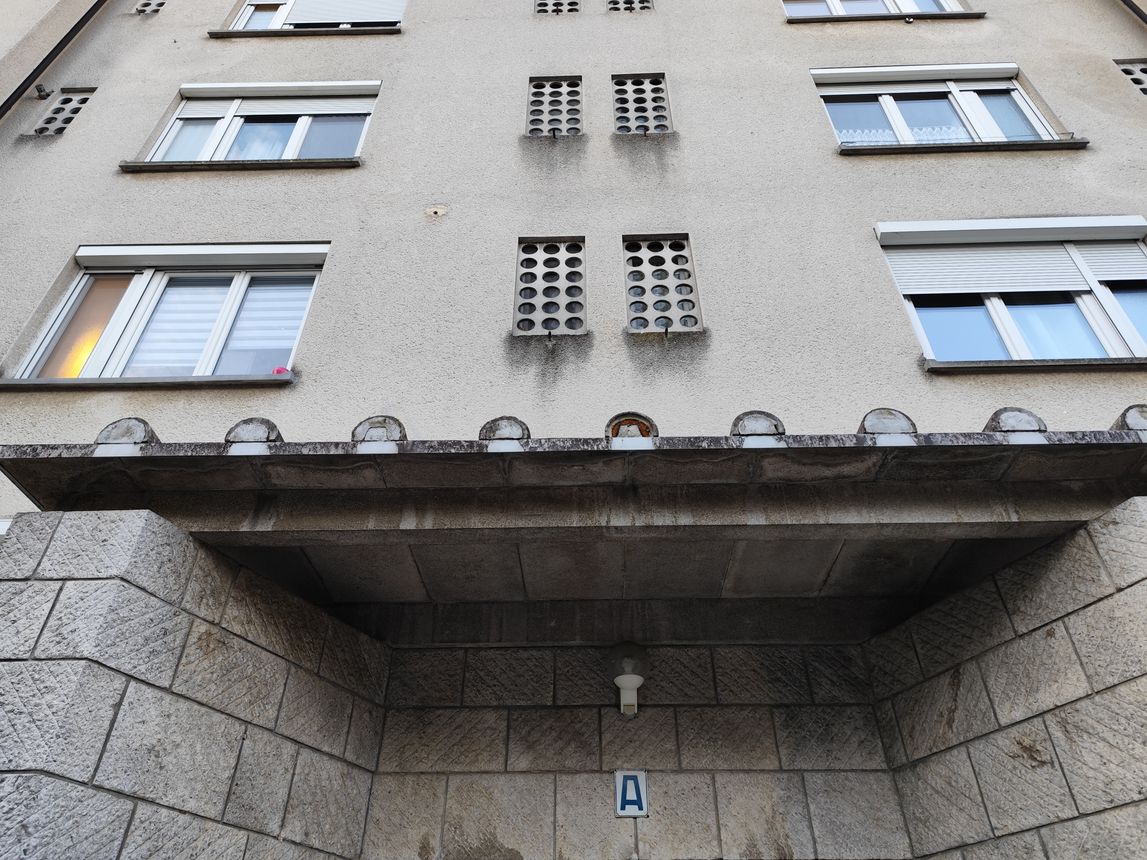
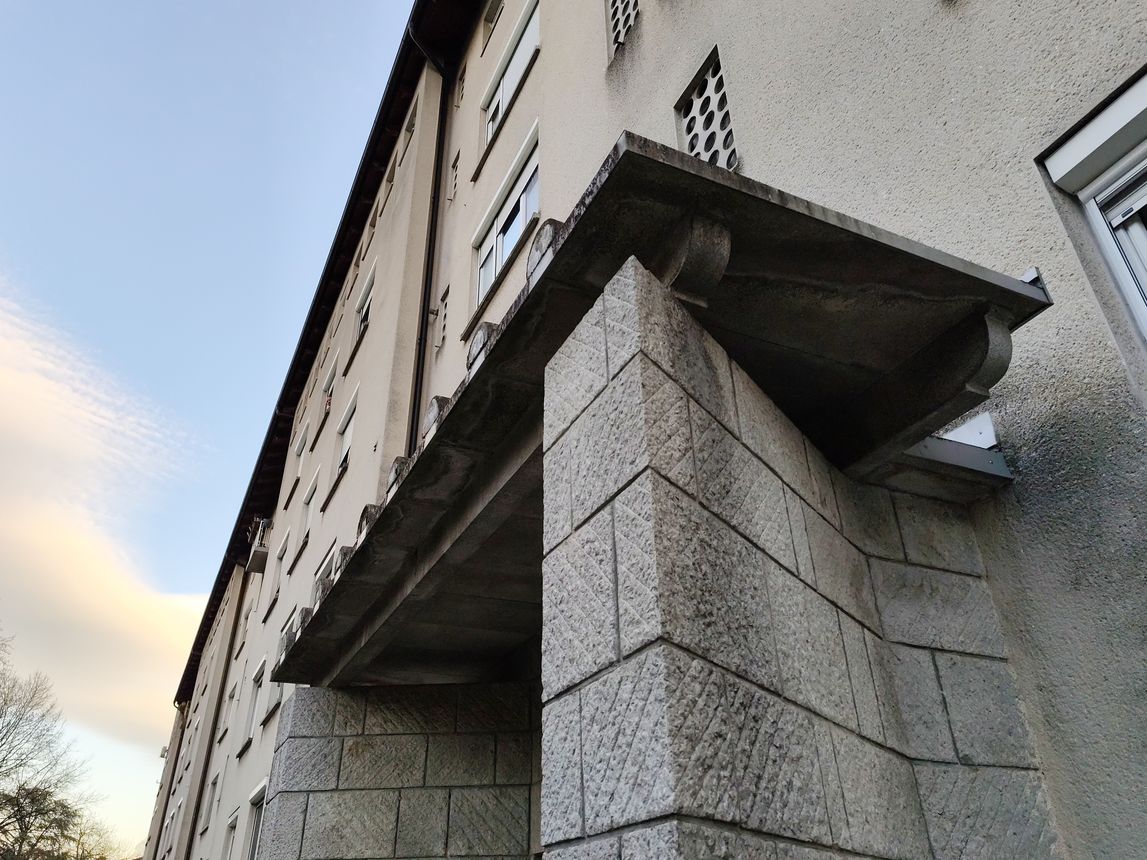
Among their architectural and art-historical features, the buildings stand out due to the dynamic articulation of their exterior (offset façades, protruding entrances, loggias, sloping roof endings, and a variety of materials and details). These elements represent a departure from the strict international principles of modernism, as the architect adapted them to local conditions (for example the use of terracotta roof tiles, shutters for shading, and traditional brick construction with wooden intermediate floor slabs, some of which are concrete). The spacious, high-quality apartments with dual orientation and basement storage spaces also represent an exception compared to most standardised residential blocks built in other Slovenian cities at the time.
Avtor: Jasna Fakin Bajec
Vir:
Alenka di Battista (2021): Ravnikarjevi bloki v Novi Gorici. Založba ZRC, Ljubljana, str. 45-62.
Tomaž Vuga (2018): "Trinajsti blok" In: Projekt: Nova Gorica. Založba ZRC, Ljubljana, str. 110-112.

Tags
