


Nova Gorica Railway Station
![. The railway station shortly after the border demarcation in 1947 ©Postcard from the collection of Regional Archive in Nova Gorica (Pokrajinski arhiv v Novi Gorici). PANG 0667 Nova Gorica: železniška postaja, meja [razglednica]](/img/m3pUJ59x-PTFmn1yP7r5ltjWKkw=/fit-in/1280x860/9918453711872863_4767468_10-1.jpg)
The railway station shortly after the border demarcation in 1947 ©Postcard from the collection of Regional Archive in Nova Gorica (Pokrajinski arhiv v Novi Gorici). PANG 0667 Nova Gorica: železniška postaja, meja [razglednica]
1 / 6
barbed wire runs along the new border between Italy and Yugoslavia.
2 / 6

3 / 6
4 / 6
5 / 6
6 / 6
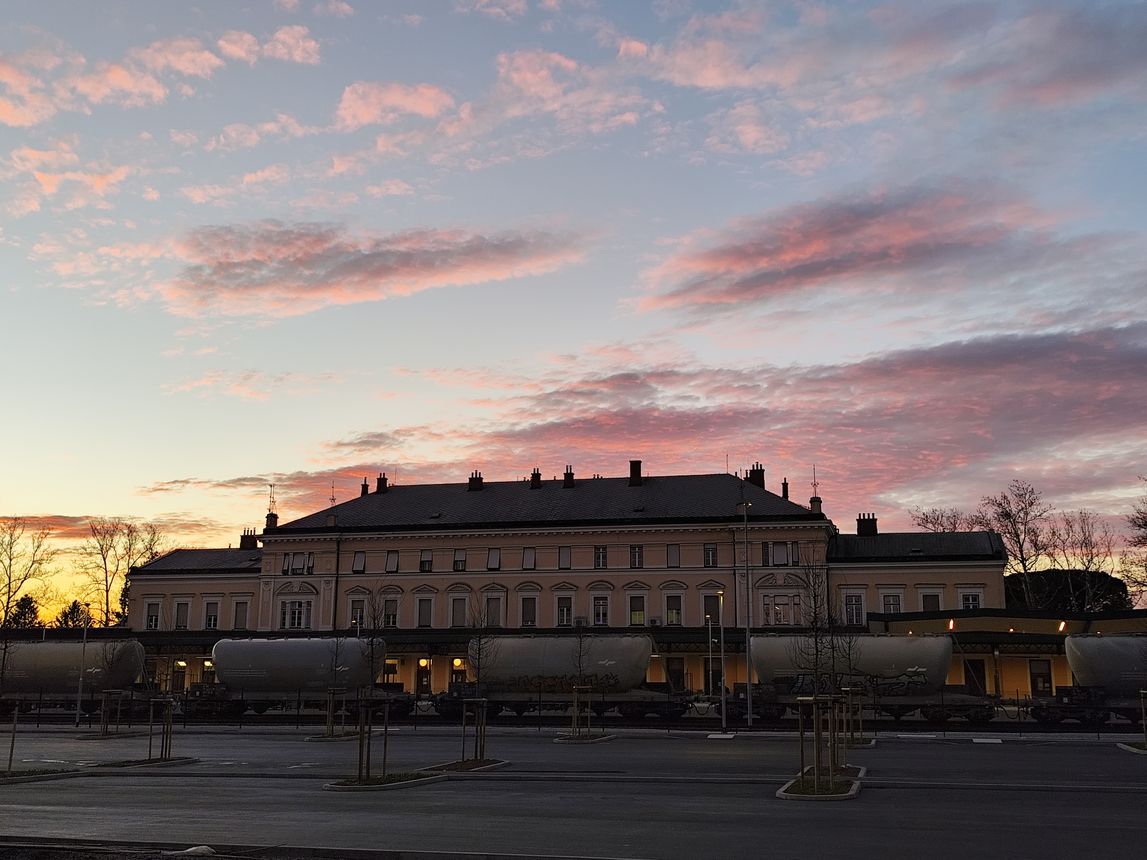
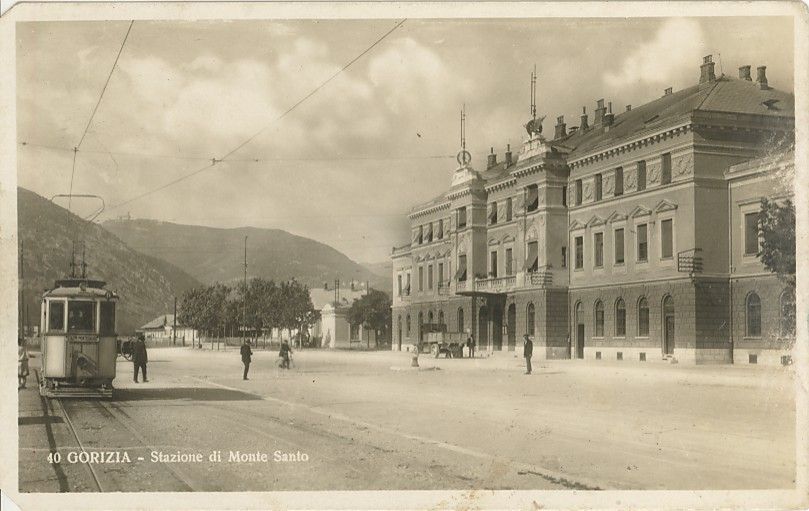
The railway station is the oldest public building in the town. It was built together with the Bohinj Railway between 1903 and 1906. Since 1947 it has been located right next to the border with Italy, in the immediate vicinity of today’s Europe Square.
The station building was constructed in 1906, when the Bohinj line was also opened. The design was contributed by the Viennese architect Robert Seelig, who also designed its terminal station at St. Andrew in Trieste. The ceremonial opening of the railway line took place on 19 July 1906. The station was supposed to be named Görz/Gorizia/Gorica Staatsbahnhof. However, due to pressure from the Italian minority, the situation became complicated and the Slovenian name was omitted.
Because of this, numerous public protests were announced just before the ceremonial opening of the railway line. The delicate situation was resolved by ensuring that on the day of the opening the station building appeared without any inscription (Online source 1). The ceremonial opening was attended by the heir to the throne himself, Archduke Franz Ferdinand (1863–1914). The station was known as the Gorizia State Station, and later also as the Northern or Sveta Gora station.
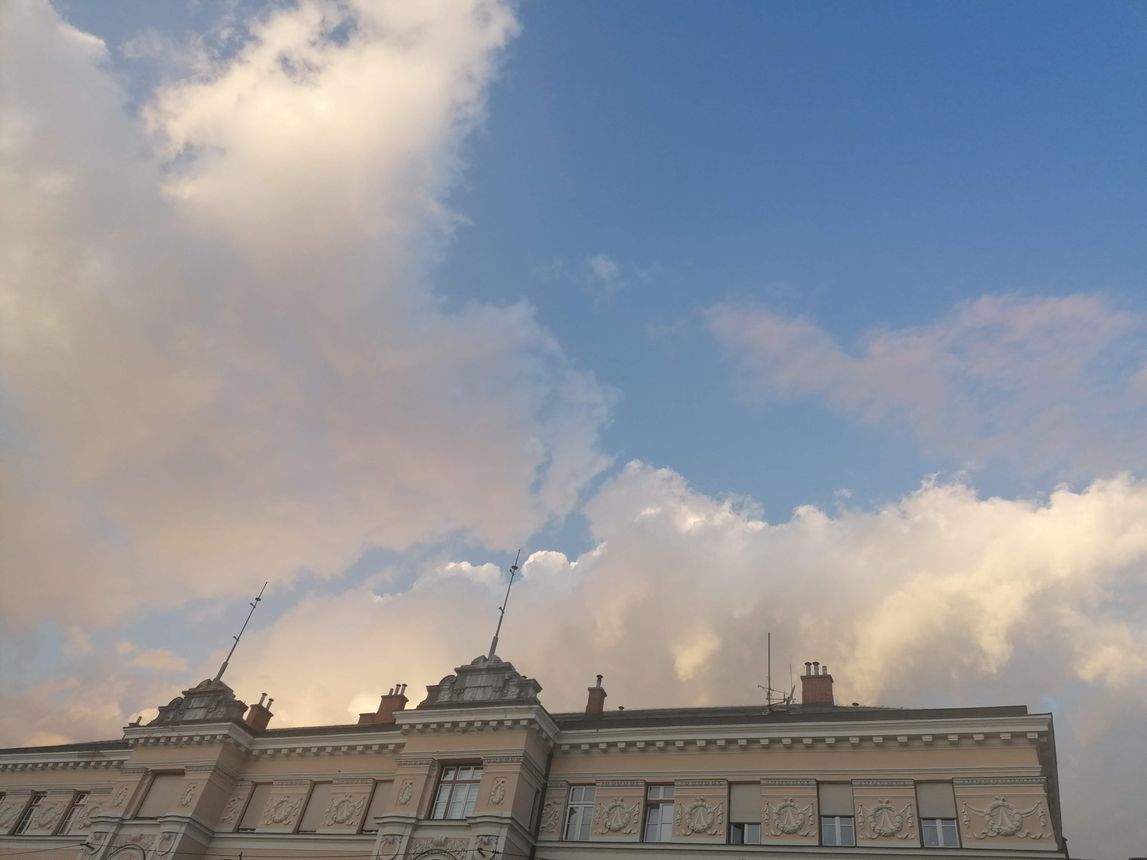
The building, which has been preserved almost in its original form to this day, was constructed in a historicist style with rich Art Nouveau decoration, most prominent on the western façade and in the details of the interior furnishings. In addition, it occupies a relatively large area between the two towns. In the past, lively railway traffic was managed from here; powerful steam locomotives pulled 70 train compositions daily along this line.
Direct express trains ran to Prague, Vienna, Munich, Ostend and Trieste. The locomotives were maintained and prepared for departure in the impressive semi-circular locomotive shed on the eastern side of the station, where the water tower and coal loader are still preserved. The entire railway line from Prague via Linz and Villach to Trieste, also known as the Neue Alpenbahnen or Transalpina, is 717 km long and is considered one of the most beautiful railway lines in Europe (Online source 2). Today only a few local trains depart from here to Sežana, Jesenice and Ljubljana.
In 1974, steam traction was replaced by diesel locomotives, although a steam locomotive occasionally still runs, pulling a museum train. A locomotive manufactured in Naples in 1922, which once travelled from Trieste to Podbrdo, marked with the serial number JŽ 118-005, decorates the platform on the northern side of the station. Next to it stands a stone block with a piece of railing from the Solkan railway bridge, which fell into the river during the Allied bombing on 15 March 1945 (Online source 2).
During the First World War, the station was heavily damaged. It was not spared during the Second World War either, when Allied aircraft, in order to disable the enemy, destroyed 70 percent of the station’s facilities and structures. The locomotive shed that stood on today’s Prvomajska Street, opposite the semi-circular railway building, was also destroyed. After the war, the station became part of Yugoslavia and was cut off from Gorizia. It found itself in the immediate vicinity of the new border, where movement was restricted.
On 30 April 2004, the main ceremony marking Slovenia’s accession to the European Union took place in front of the Nova Gorica railway station. The station provided the historical backdrop for this important European event, when the common square was symbolically handed over to both Gorizias.
The station and its surroundings were completely renovated according to the plans of the architectural office Sadar+Vuga for the opening of the European Capital of Culture on 8 February 2025. During the renovation, the number of railway tracks was reduced and an underpass beneath the railway line was constructed.
Avtor: Jasna Fakin Bajec

Tags
Povezani članki
Trg Evrope/Piazzale della Transalpina