


Municipal Building of Nova Gorica
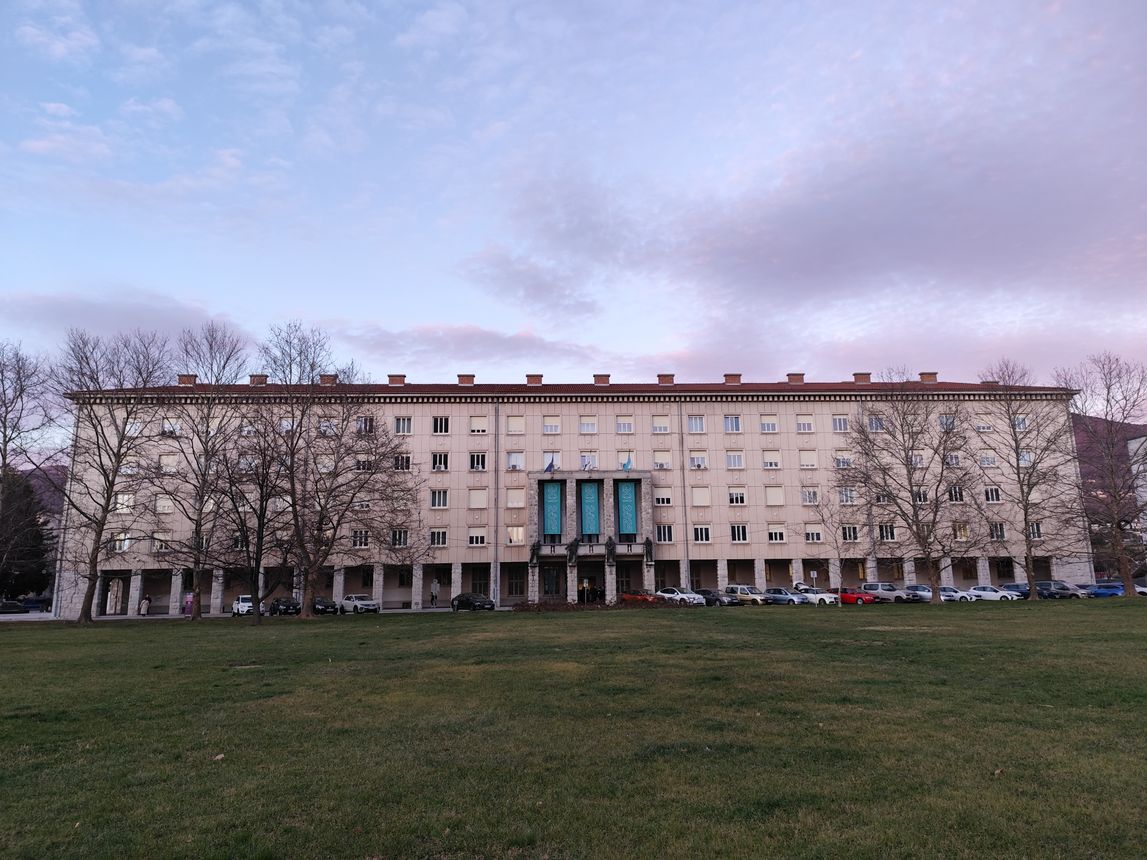
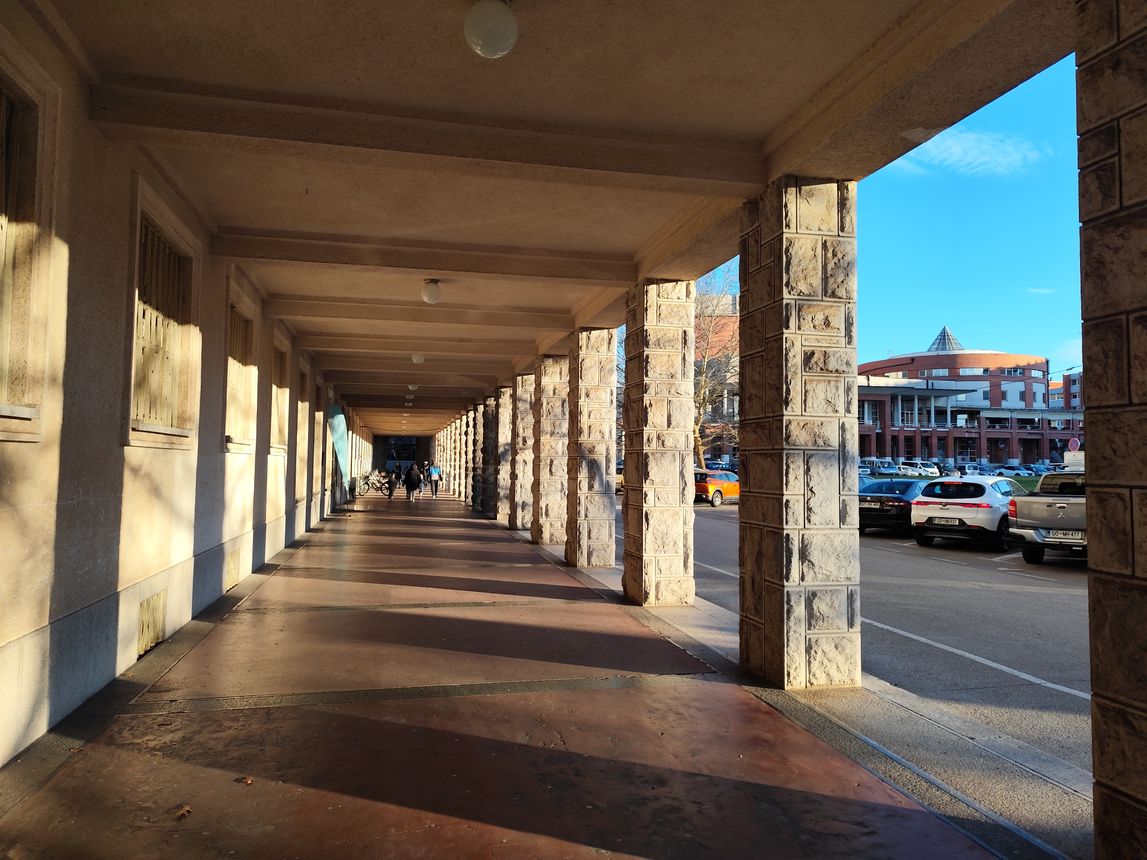
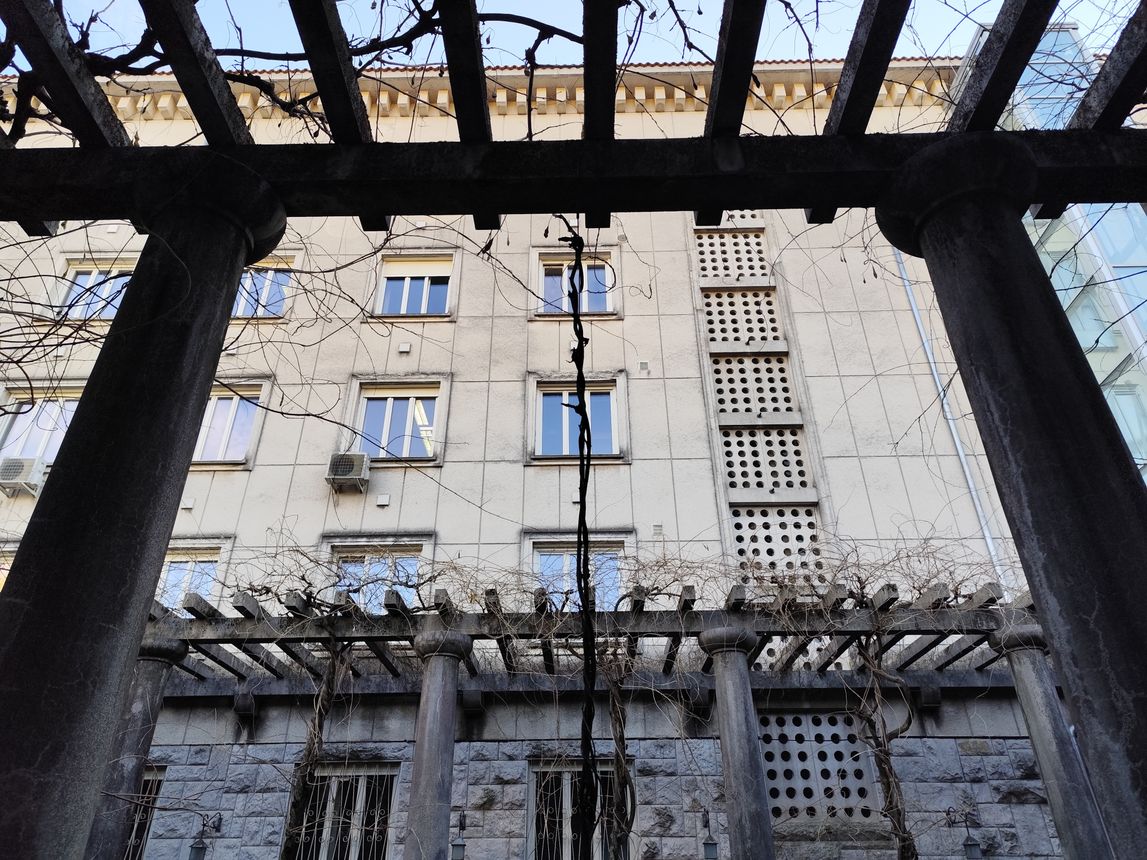
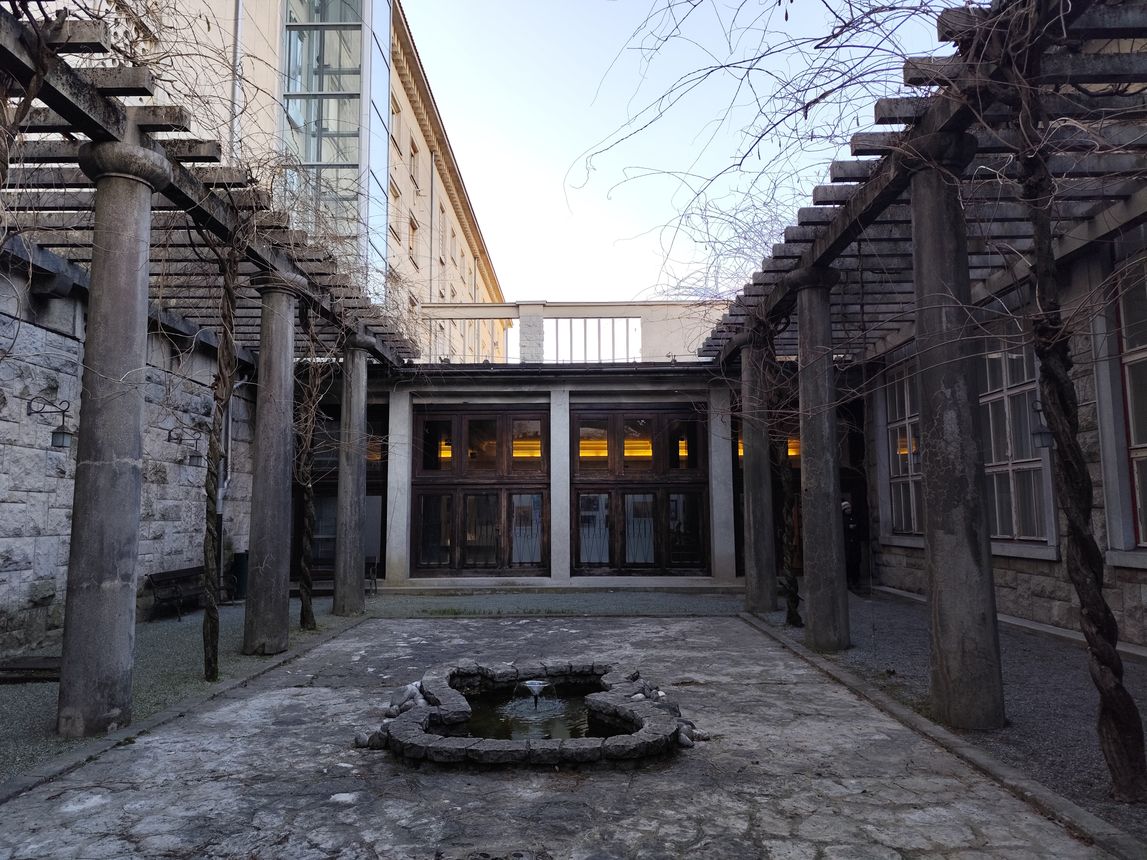
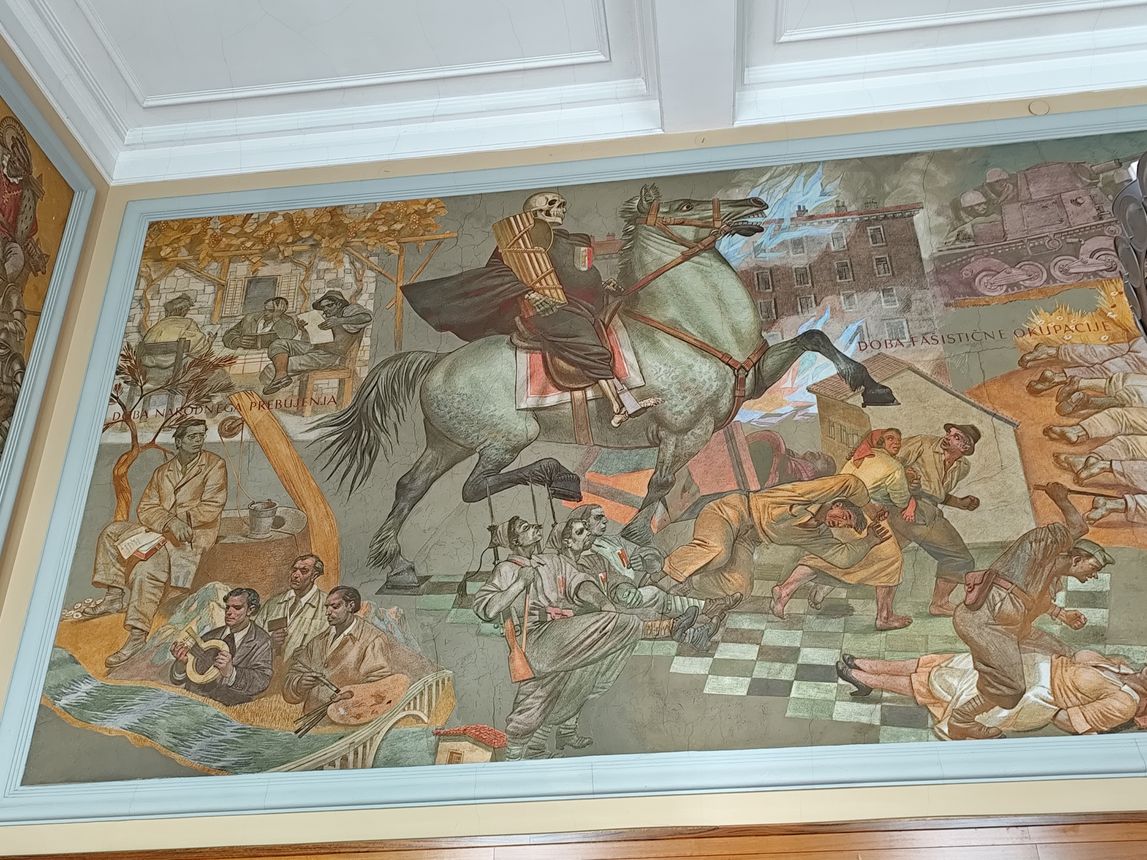
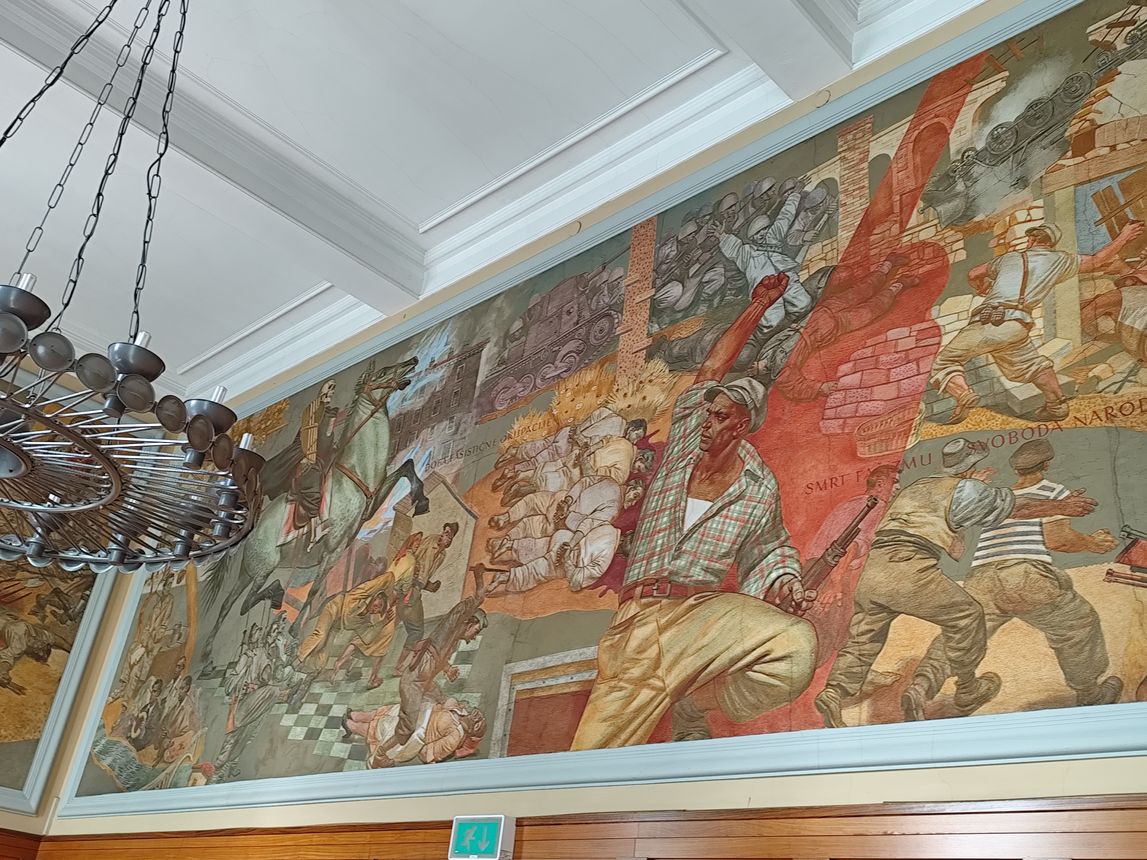
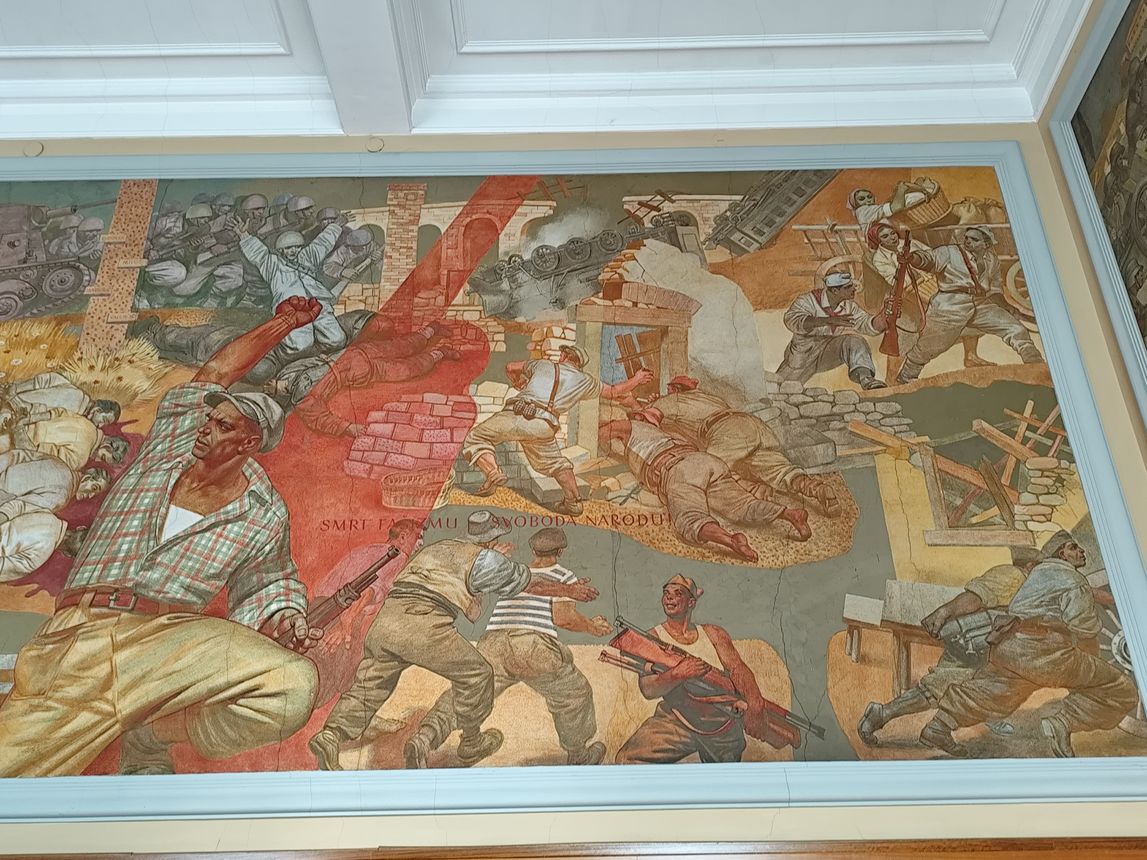
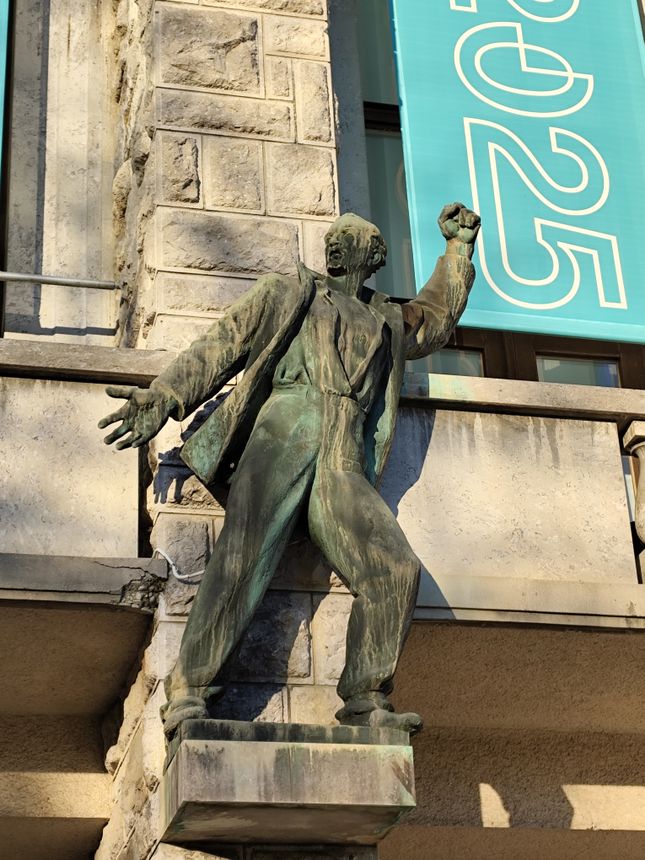
The largest and most impressive building from the early days of the town's development was constructed between 1949 and 1953. Architect Vinko Glanz (1902–1977), a student of Plečnik, was entrusted with the design. Glanz collaborated with sculptor Boris Kalin (1905–1975) and painter Slavko Pengov (1908–1966), who had already proven themselves in the renovation of Villa Bled (1947), then the primary residence of Yugoslav President Tito in Slovenia, and later his Ljubljana residence, Villa Podrožnik (also 1947). Glanz aimed to emphasise the building's Mediterranean character with an external stone colonnade forming an arcade passageway across the entire width of the façade, as well as an internal atrium.
The main municipal hall, where the town council meets, served for many years as a venue for parties and events, and even as a cinema.
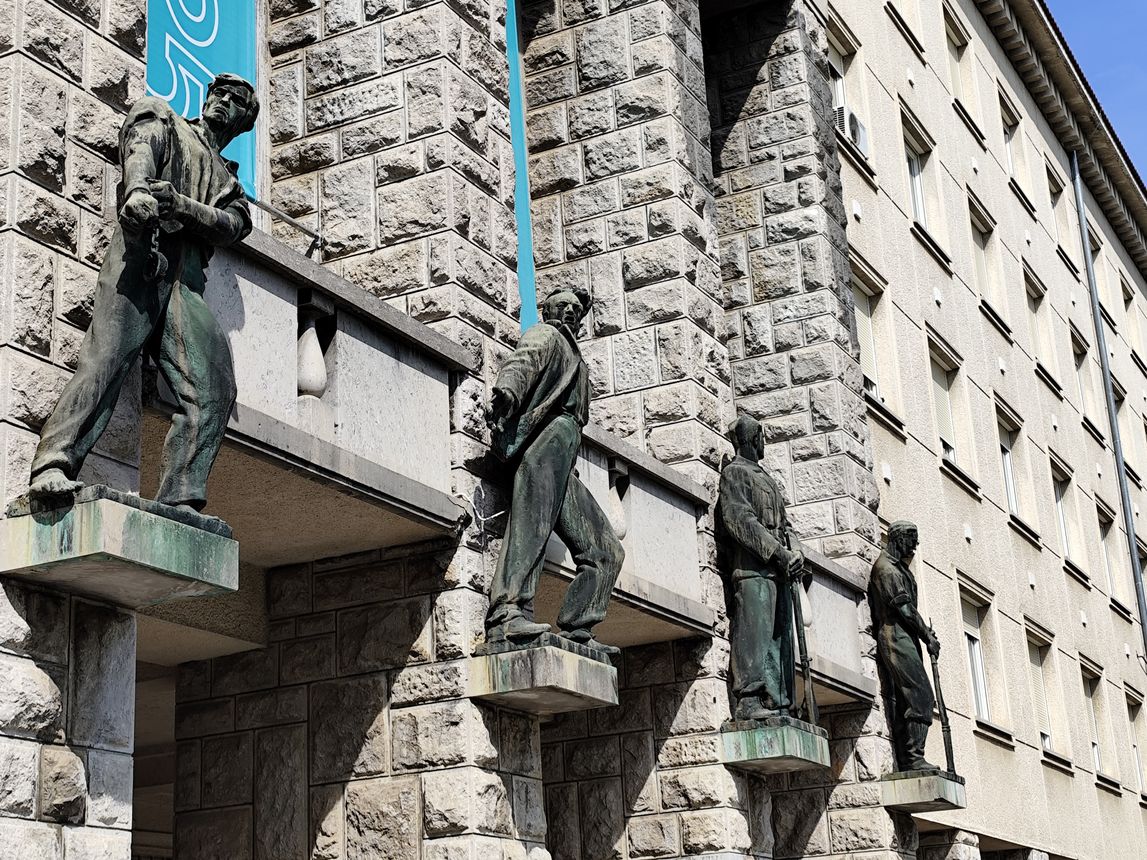
Above the entrance are four allegorical statues by Kalin reflecting the immediate postwar period of Slovenians in the region. Two of the statues face west towards Italy, and two face east. The first depicts a figure breaking free from the shackles of Fascism; the second a figure threatening the lost cities of Trieste and Gorizia; the third a figure standing guard with his gaze fixed on the capital (Ljubljana or Belgrade); and the fourth a figure pruning a vine and looking down at the street, symbolically urging everyone to work together for a better future.
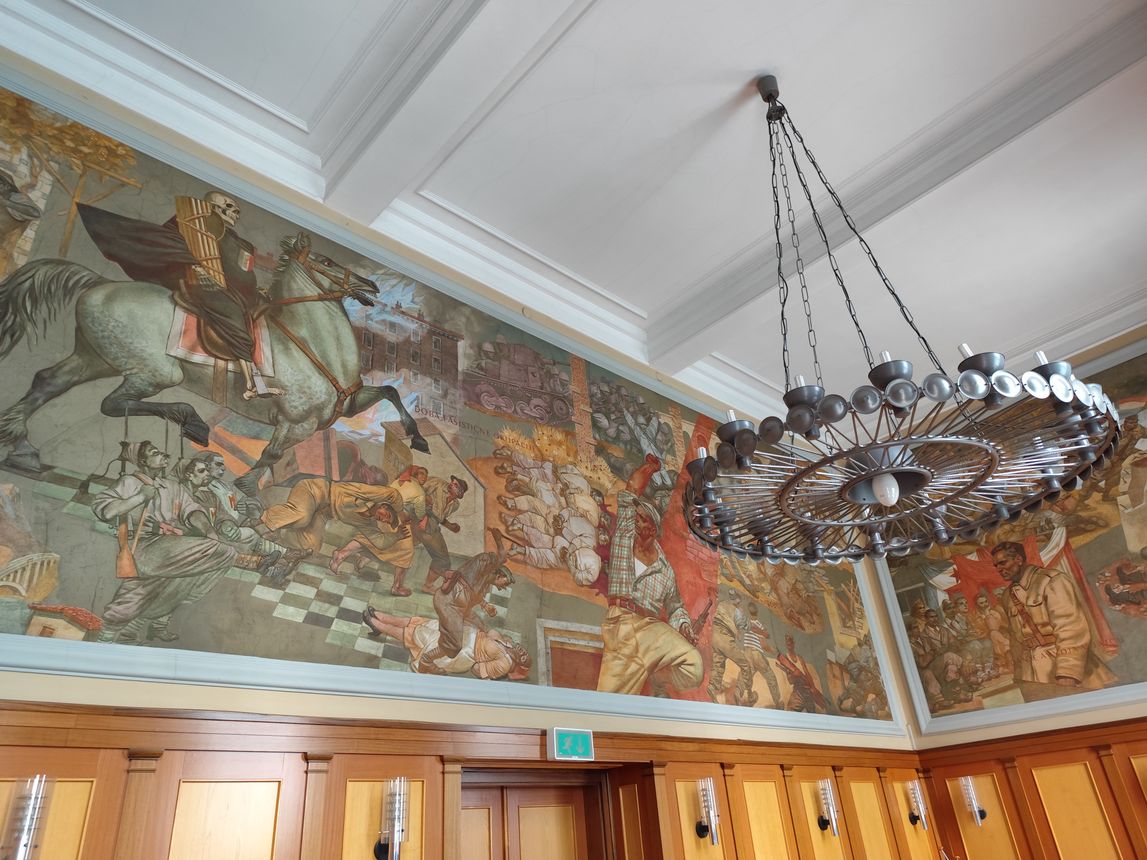
Pengov painted a magnificent fresco depicting the history of Slovenians in the Goriška region in the Green Hall on the first floor. The fresco focuses on the partisans' struggle against Fascism. (The hall can be viewed by arrangement.)
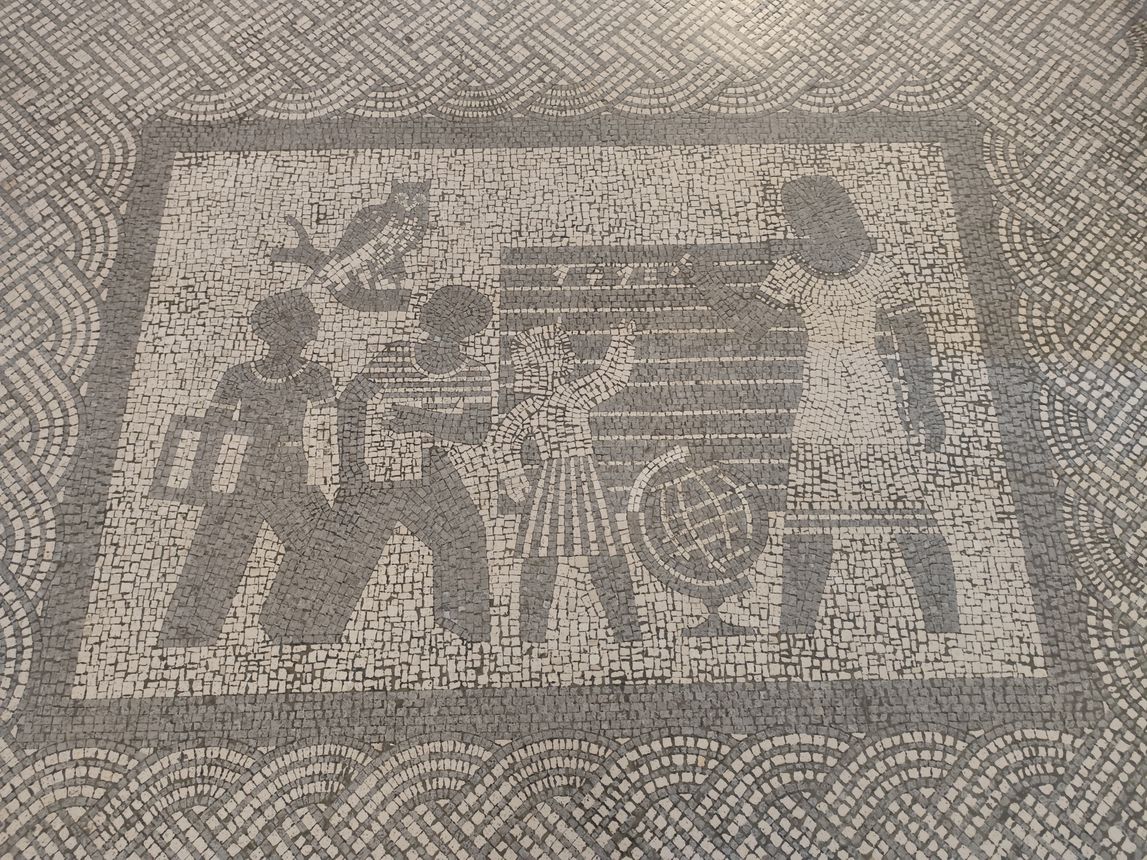
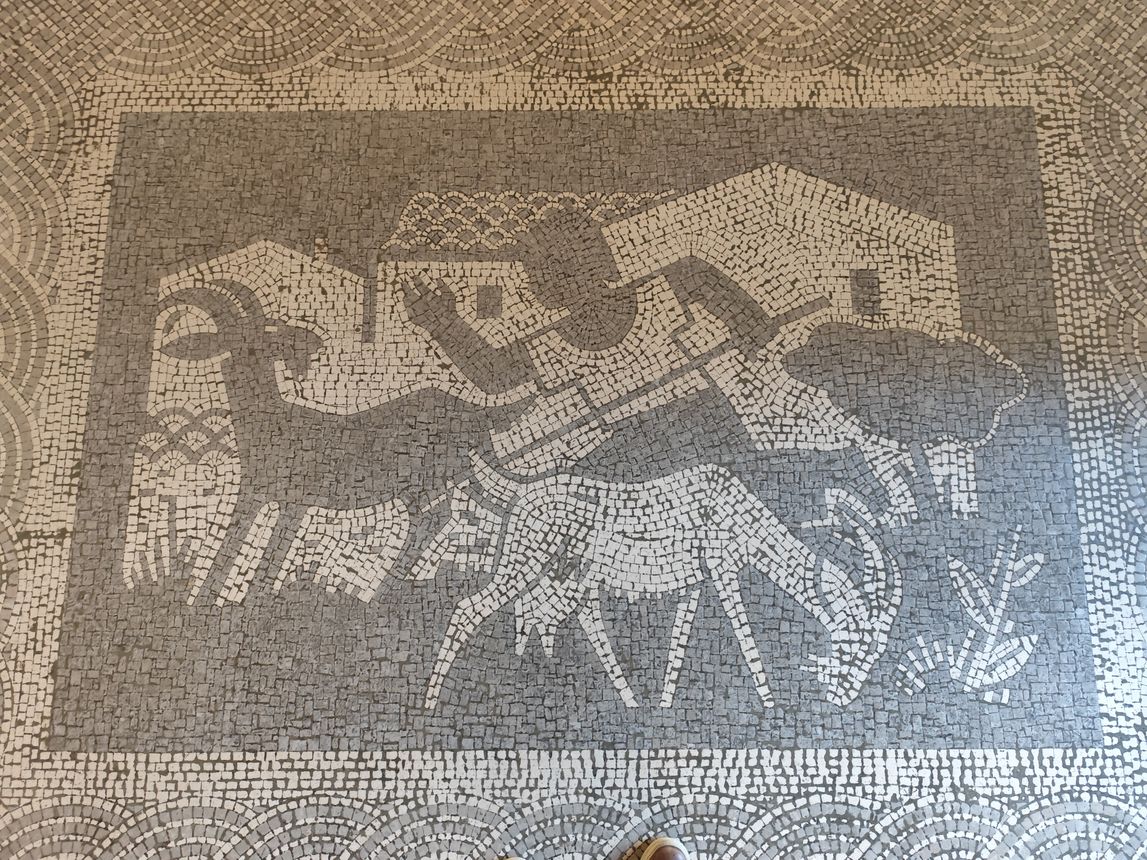
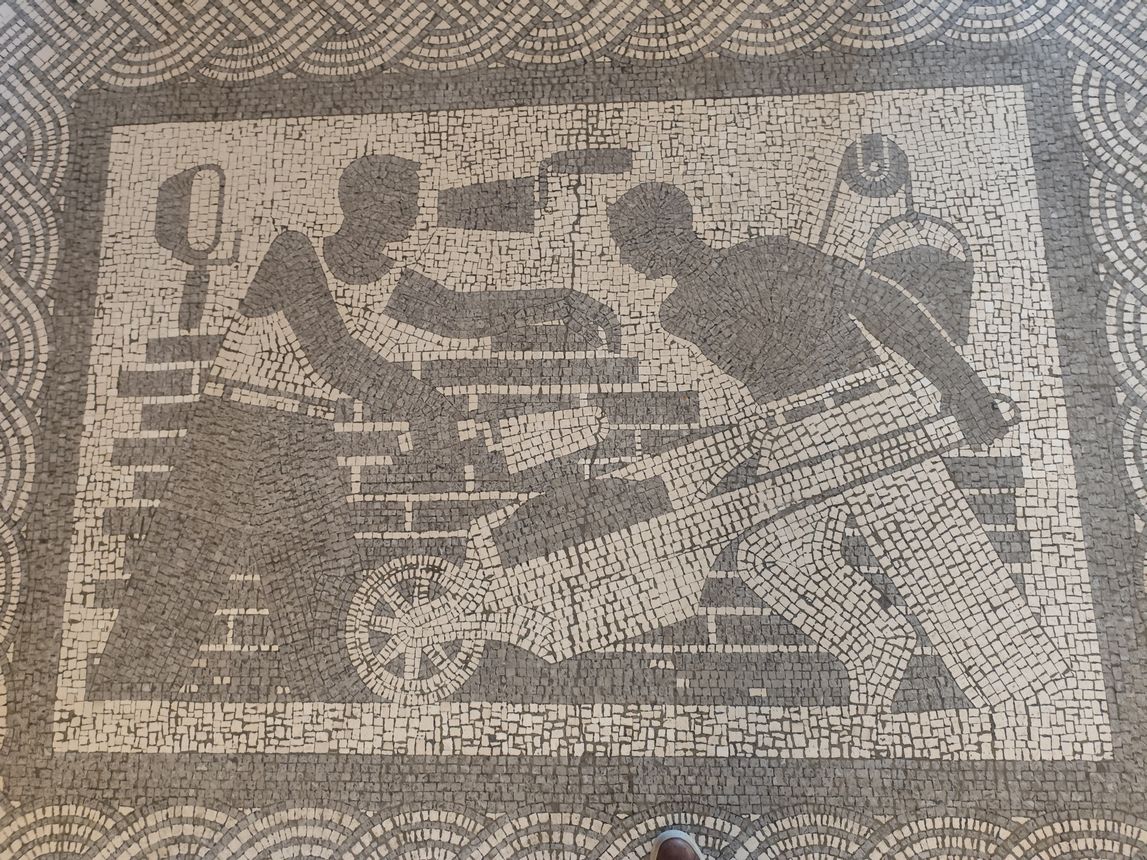
In the entrance hall of the municipality, which is open to the public, there are floor mosaics. The allegorical motifs were painted by Tone Žnidaršič (1923–2007), and the mosaics were created by Alfio Tambosso–Ultra (1914–1992). Ultra was a graduate of one of the most renowned mosaic schools in Spilimbergo, near Udine, and fled Italy to Yugoslavia. He later used his skills to create a large mosaic in the Federal Executive Council building in Belgrade.
Glanz and Pengov also collaborated on the design of the People's Assembly Hall in Ljubljana, which is now home to the Slovenian Parliament (1956). The two buildings are very similar, which is no coincidence, as Glanz initially intended to build the assembly hall in Nova Gorica. The parliament building features statues by Karlo Putrih (1910–1959) and Zdenko Kalin (1911–1990), Boris's brother. Both brothers were born in the nearby town of Solkan (p. 100). The parliament building stands on Republic Square, which was designed a decade later (1961–1982) by Edvard Ravnikar.
Avtor: Blaž Kosovel
Kraj: Nova Gorica

Tags
Povezani članki
Mestna občina Nova Gorica - o nastanku Municipal Building of Nova Gorica Občinska stavba - mozaiki Trg Edvarda KardeljaZgodbe
