


Hotel Park - from an Open Dance Floor to a Casino
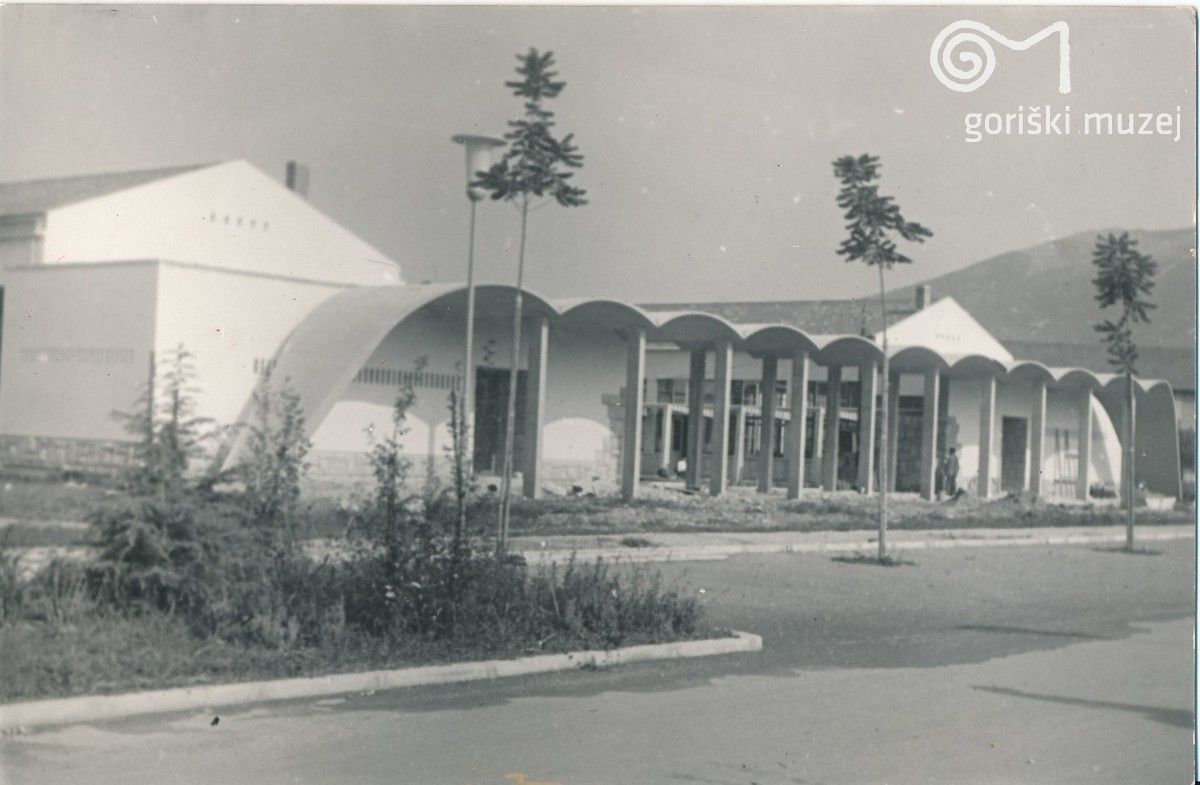
Original design of the café and restaurant. ©Photo from the collection of the Goriški muzej Kromberk - Nova Gorica.
1 / 6
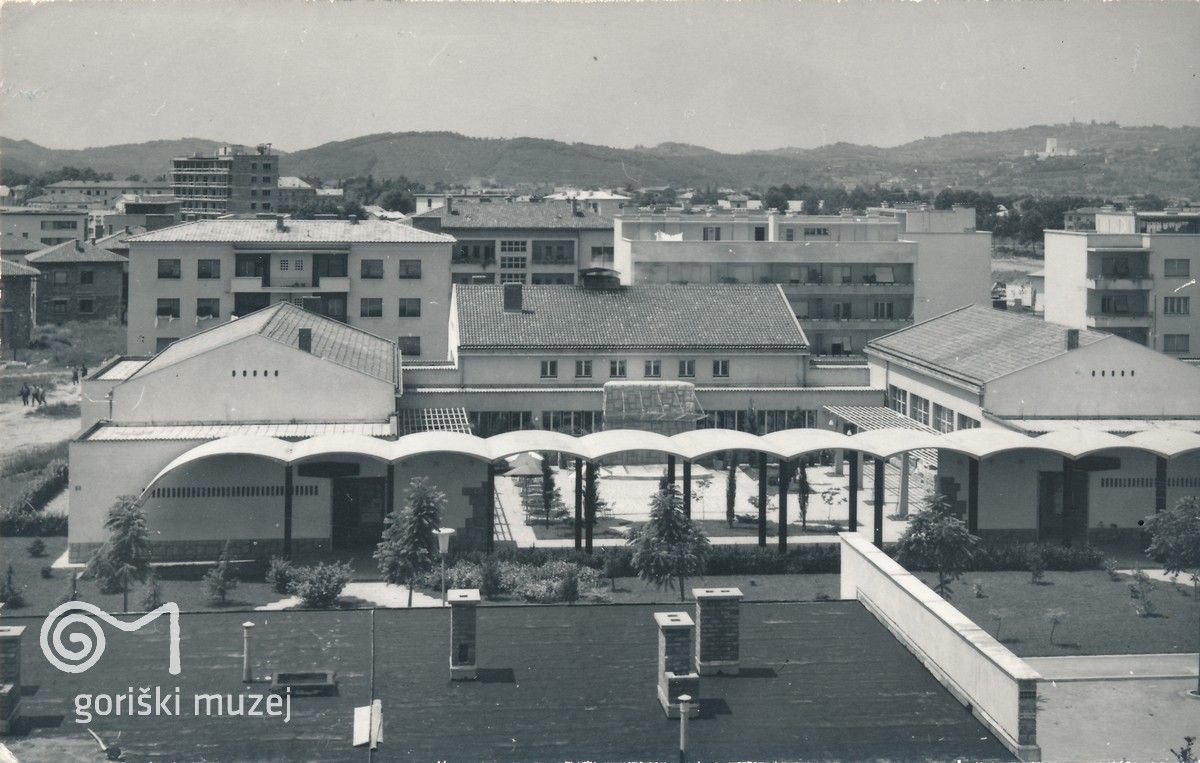
©Photo from the collection of the Goriški muzej Kromberk - Nova Gorica.
2 / 6
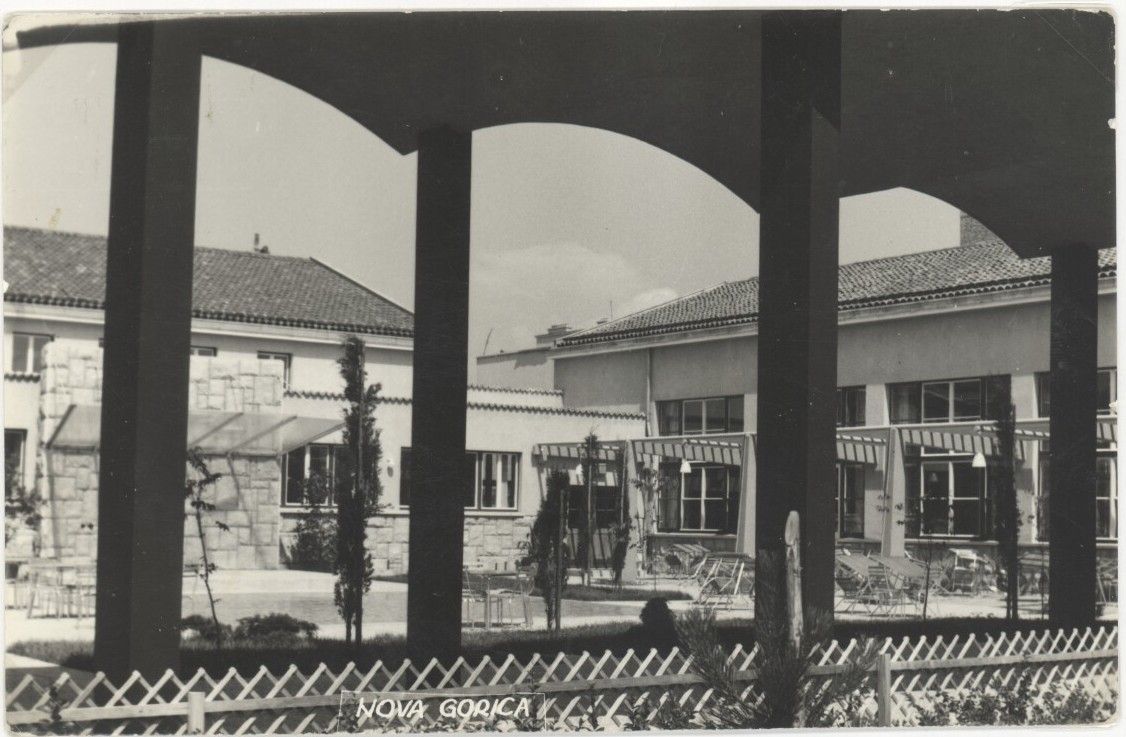
Former wavy concrete roof and open-air dance floor, where the casino stands today. ©Postcard from the collection of Branko Morenčič, kamra.si
3 / 6
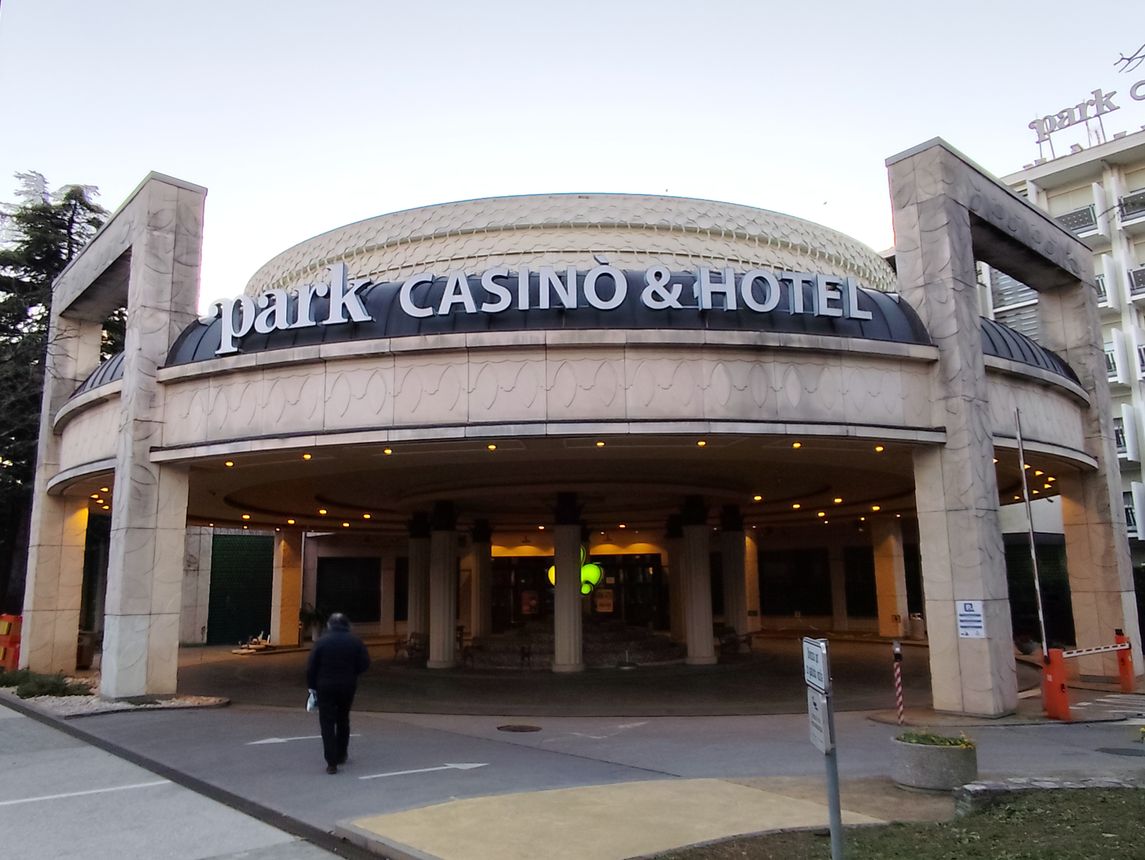
The entrance of Hotel Park today, after a renovation that completely transformed its original appearance. ©Photo: Blaž Kosovel
4 / 6
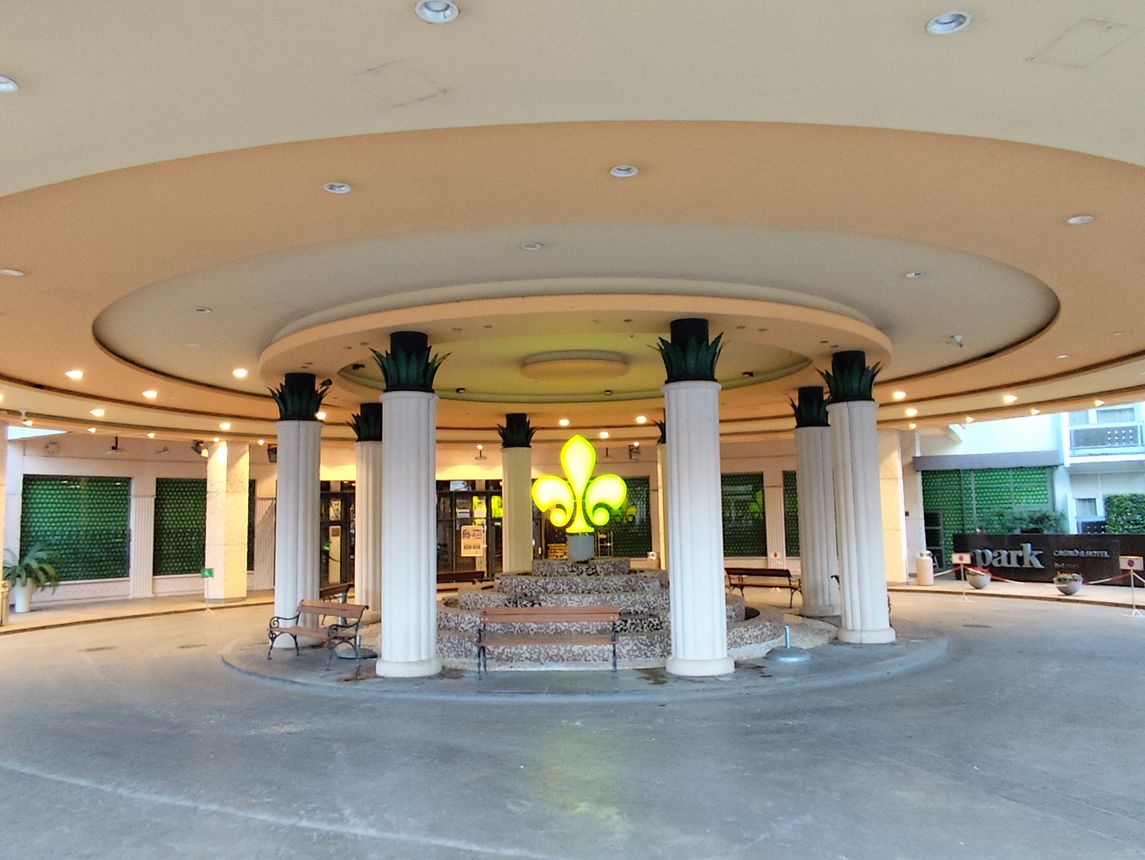
The entrance of Hotel Park today, after a renovation that completely transformed its original appearance. ©Photo: Blaž Kosovel
5 / 6
6 / 6
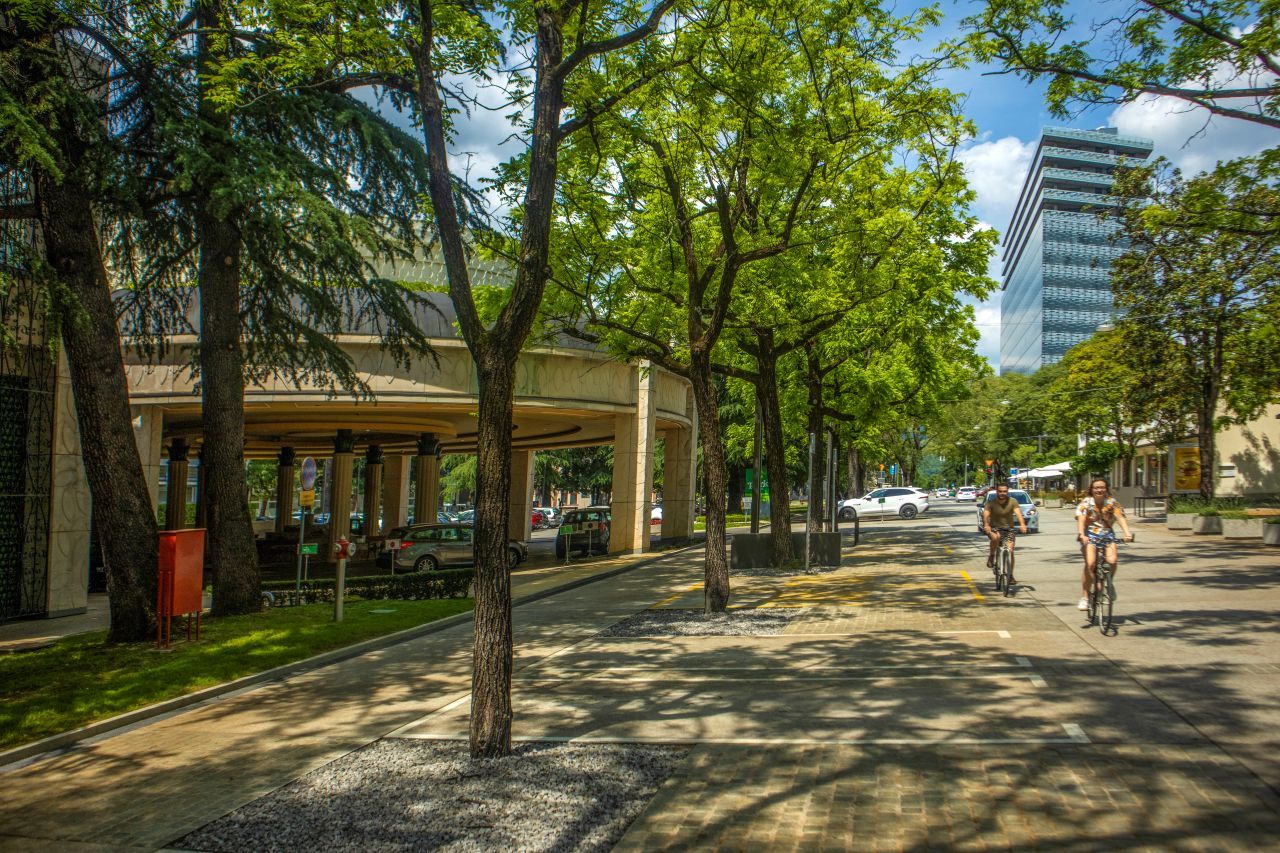
The ambitious Magistrala project, alongside other monumental buildings, also envisaged a large hotel with a café and restaurant. However, due to a lack of financial resources, construction was postponed. Instead, a smaller hotel was built with a café, restaurant, and an open dance floor covered by a striking wavy concrete roof along today's Delpinova Street.
The complex, built between 1951 and 1959 under the direction of architect Stanislav Rohrman (1899–1973), quickly became the town's most popular social venue. Numerous dances with live music and other events were held in the open atrium, and locals recall that in summer, people would dance until dawn on weekends. The restaurant also began to attract the first Italian tourists. In 1966, a nightclub with strippers opened in the hotel's basement, intended to showcase the openness and liberalism of socialist society to Italian visitors.
Seeking to offer their mainly Italian guests even more entertainment — and to maximise profits — the idea of a casino soon emerged. One of the most significant milestones in the town's history occurred in 1984, when the open-air dance floor was closed and converted into a Las Vegas-style casino, designed by Vojteh Ravnikar, who also designed the theatre and library (p. 32). Less elite than other European casinos, it was open to a broad range of visitors, boasting a glittering interior and additional entertainment aimed at those beyond the wealthiest.
The creation of such a comprehensive hospitality and tourism offering led to the establishment of HIT – Hotels, Casinos, Tourism. By 1988, the casino had already surpassed the largest Yugoslav casino centre in Portorož in terms of turnover. The central figure in this transformation was Danilo Kovačič (1940), who was then the director.
With the closure of the dance floor, Nova Gorica lost its most popular social gathering place. From then on, the venue catered primarily to foreign visitors, while the street itself was reduced to little more than a large parking lot.
This marked the beginning of touristification: the space was no longer intended for locals, but only for tourists, ultimately altering the town's pulse in the long run. During a later renovation, the entire casino complex was utterly transformed, leaving only the hotel building to resemble its original state.
Gambling was a double-edged sword for the town. On the one hand, an extraordinary amount of money flowed into the municipality, locals secured well-paid jobs, and HIT financed important cultural events and monuments in public spaces, including the HIT Gorica football club.
However, gambling also had many negative consequences for the town. First and foremost, a large percentage of the population became addicted to gambling. Organised crime spread around the casinos, involving illegal loans and prostitution. The focus on the profitable casino sector stalled the development of other industries for many years, creating a false sense of prosperity and complacency in the town. When the casino sector was severely impacted by the recession after 2010, the town was forced to reassess its identity.
Avtor: Blaž Kosovel
Kraj: Nova Gorica

Tags
