


Hotel Park
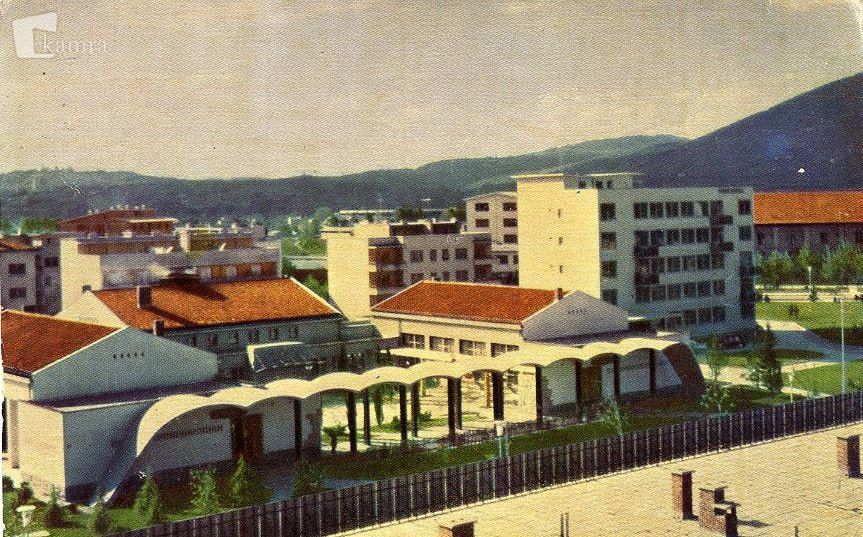
Postcard of the Park complex, 1964 ©from the collection of Sonja Tronkar, www.kamra.si
1 / 4
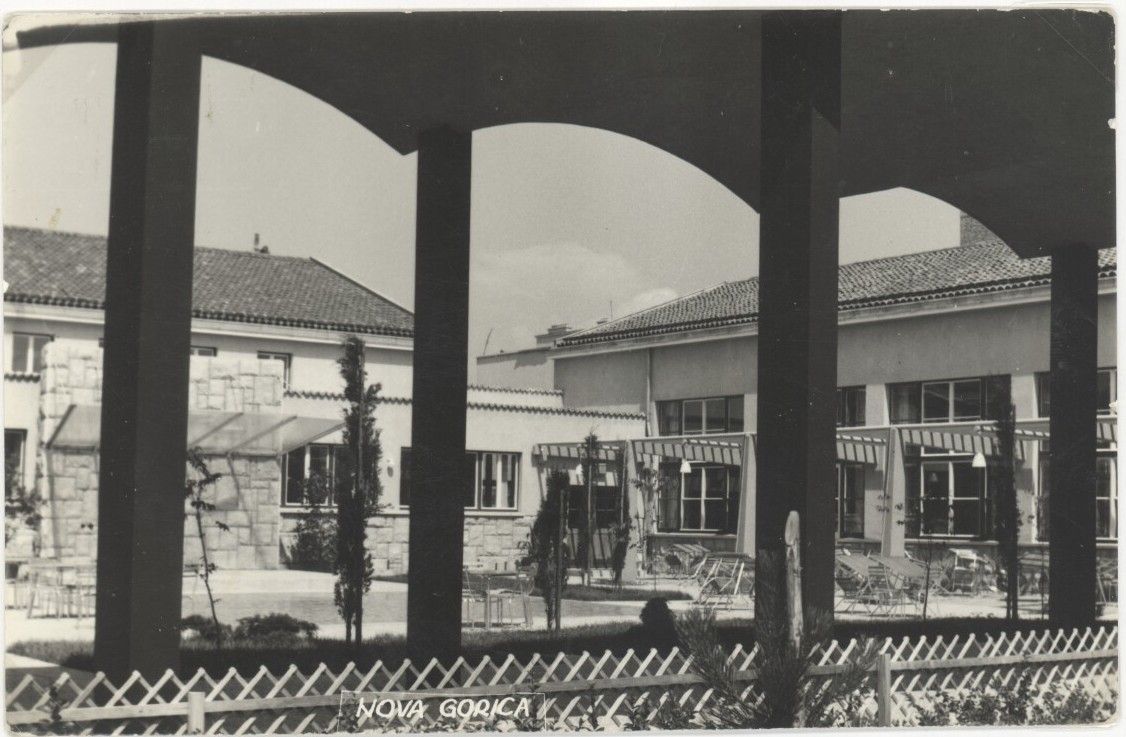
Former wavy concrete roof and open-air dance floor, where the casino stands today. ©Postcard from the collection of Branko Morenčič, kamra.si
2 / 4

©kamra.si
3 / 4
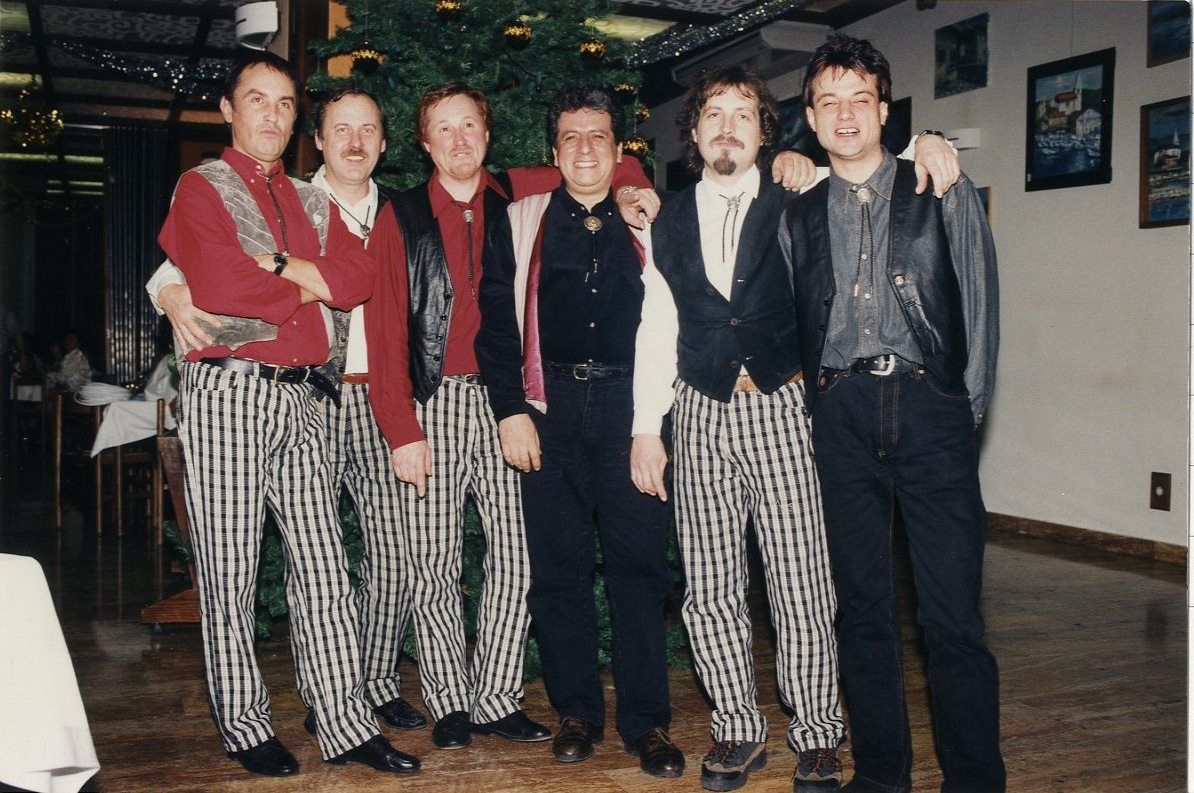
©Vir fotografije: Žarko Stanič, Lapos
4 / 4
"Ah, the Park was wonderful. I still miss it today. Those arches that were there! Inside there was a beautiful square garden, one could call it an atrium. And all kinds of events took place there. There was the event ‘Glas Goriške’ there.”
(Field note, October 2022).
The development of the new town in the 1950s was also signalled by the construction of tourist and hospitality infrastructure, which the planners and municipal decision-makers of the time located along Road No. 5, later named Delpinova Street.
According to the first ideas and plans of the architect Edvard Ravnikar (1907–1993), the café, restaurant and future hotel were to be built along the first main street – the Magistrala. However, this was not realised due to the excessive cost of the project and the lack of the necessary funds (Di Battista 2019).
A new design for the café and restaurant was later prepared by the architect Danilo Fürst (1912–2005), and the project work was subsequently continued by the designer Stanislav Rohrman (1899–1973), who also signed the plans for the Hotel Slon in Ljubljana and had extensive pre-war experience in designing hotel buildings. Construction began in 1951 (Vuga 2018: 129). The city authorities decided that the café and restaurant would be built “at the crossroads of the road by the bakery and the western parallel to the Magistrala, called Road No. 5” (Di Battista 2019: 17).
Due to the lack of financial resources, the construction of the café and restaurant proceeded gradually. This caused dissatisfaction among the locals. During the interruptions in the construction works, the building site became a popular playground for children. Particularly interesting were “the basements, where in complete darkness you had to find your way through a labyrinth of rooms and climb out at the other end of the building” (Vuga 2018: 129).
The café was completed in 1959, with the opening taking place on 3 October 1959. In 1961, a hotel was added north of the restaurant. The plans for it were prepared by Stanislav Rohrman and Mara Cirman from Slovenija projekt. In 1968, a new wing of the hotel with better equipped rooms was added and the existing restaurant and café were renovated. In 1970, the renovation works were completed and the hotel began to accommodate larger and more demanding groups of tourists (Di Battista 2019: 22).
In the 1960s the building became the central social space of the town. On the left wing there was the café with a large central hall where dances were also organised. Young people held their graduation celebrations and prom dances there. At the end there was also a separate room for card players. On the right side was a large restaurant. The two spaces were connected by the only corridor, which later became a passage for visitors, especially during larger events, dances and New Year celebrations.
The hotel was connected with the restaurant and café by a glazed space that served as a banquet hall and breakfast room. Between the two wings there was an atrium, separated from the street by an interesting arched concrete structure. It had a large dance floor and a permanent stage for the band, and on both sides it was covered by a pergola. It was most beautiful in the summer months, when it was full of people and the dance floor was usually too small (Vuga 2018: 129–130).
In 1966, the basement spaces were adapted into a night bar, the design of which was contributed by the architect Ernest Bergant (1921–1982). At first it became an occasional nightclub with the first striptease dancers in Nova Gorica, and later a casino, which gradually became less accessible to locals, while its gaming programme increasingly attracted foreign guests, especially Italians (Di Battista 2019: 22).
In the following decades, a series of renovations took place that gradually distanced the hotel from its original form. “Its present appearance is only a pale trace of its glorious past and the social and entertainment function it had for locals in the 1950s and 1960s” (Di Battista 2019: 23).
Avtor: Jasna Fakin Bajec
Vir:
- Alenka di Battista (2019): "Zametki novogoriškega hotela Park." Izvestje Raziskovalne postaje ZRC SAZU v Novi Gorici, št. 16, str. 15–23.
- Klavdija Figelj (2020): "Hotel Park". Opis na spletni strani modmapng: https://www.novagoricaart.si/spomenik/hotel-park (ogled 25. 7. 2024).
- Miha Kosovel, Eva Sušnik (2017): "Kamor so nas noge peljale iz navade." Razpotja št. 29, posebna številka, str. 50-56.
- Tomaž Vuga (2018): Projekt Nova Gorica. Založba ZRC, Ljubljana.

Tags
Povezani članki
Delpinova ulica Hotel Park - from an Open Dance Floor to a Casino Lapos - prvi novogoriški pop-rock bandZgodbe
