


Beehive
The Beehive
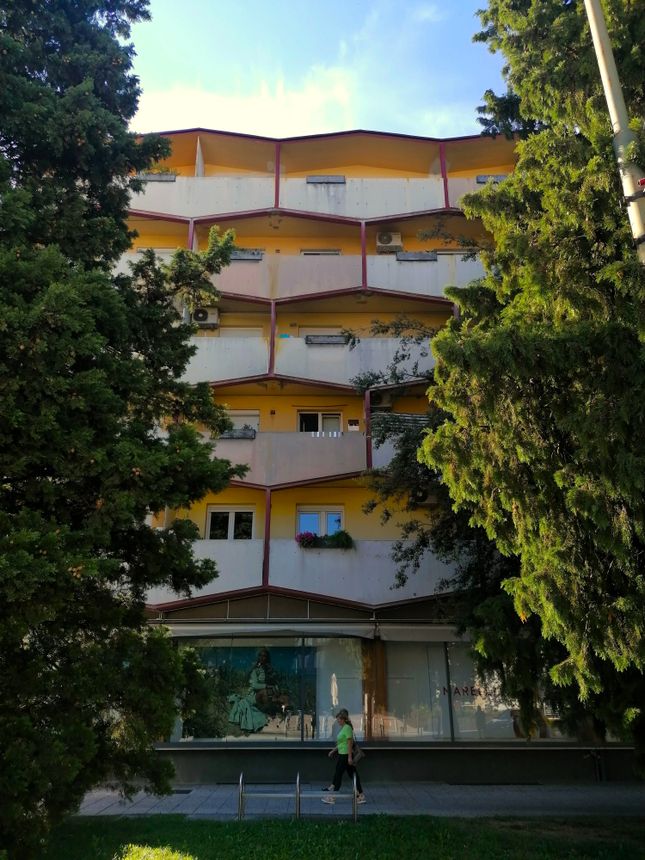
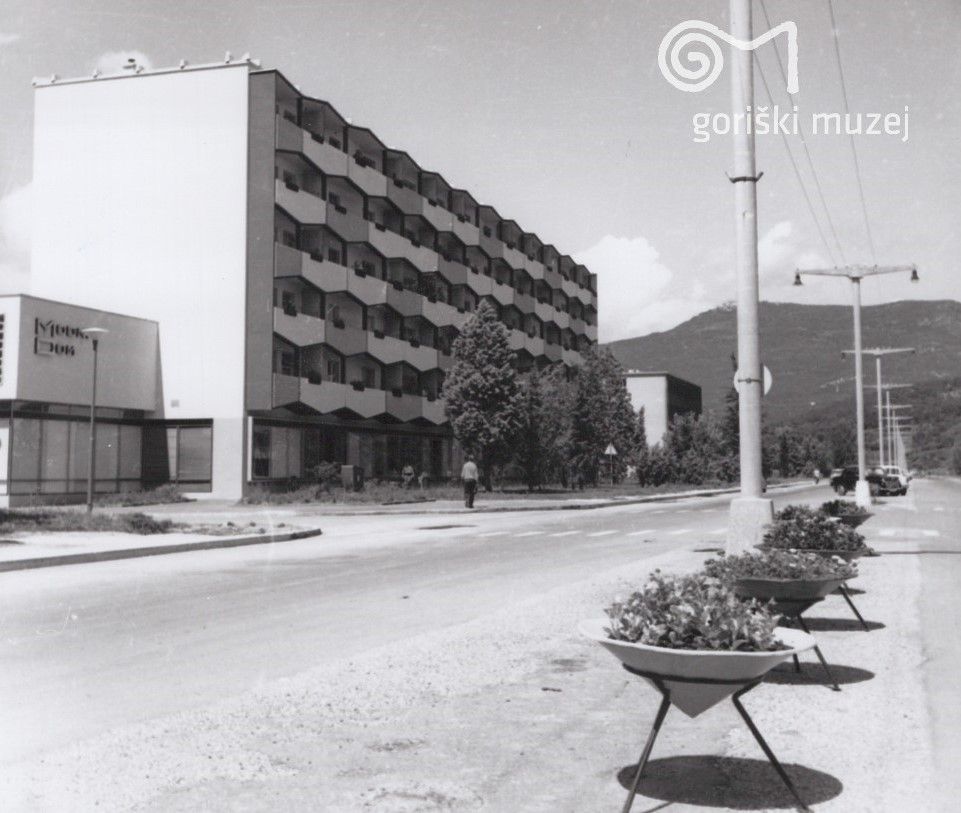
A mixed-use residential and commercial block in the city centre, distinguished by its façade and loggias resembling a honeycomb—hence its nickname, the “Beehive.”
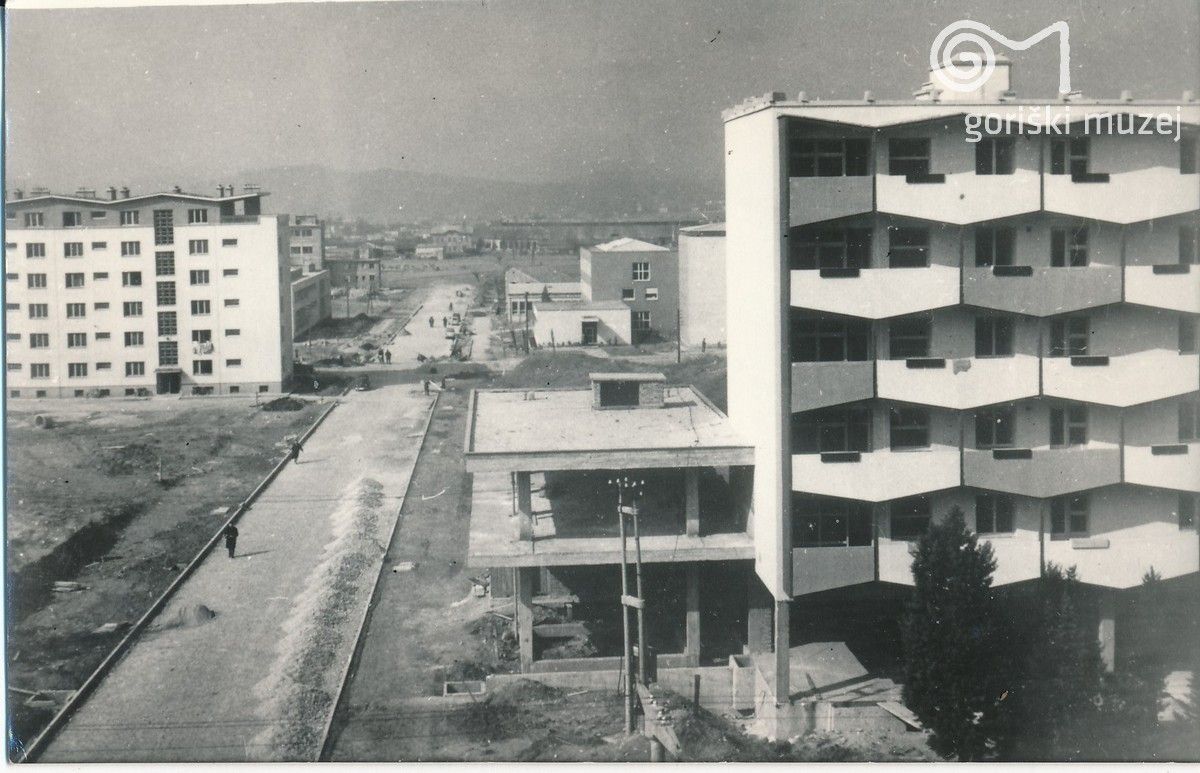
Located in the immediate vicinity of the municipal building, the Beehive was constructed between 1962 and 1963. It was designed by civil engineer Ernest Bergant (1921–1982), then head of the SGP Gorica Design Bureau. Its construction signalled a renewed and more intensive northward expansion of the city. Its precise location, parallel to Kidričeva Street, was determined based on the 1959 urban plan for the city centre by Viljem Strmecki (1914–1990).
In 2022, conservationist and art historian Alenka Di Battista wrote in Outsider:
“Several apartment blocks were built simultaneously along Kidričeva and Gregorčičeva streets, among which Bergant’s stood out particularly due to its mixed-use ground floor and upper levels, as well as its façade design. The ground floor originally housed a footwear shop (Jadran, today Ciciban), showroom spaces for the Nova Gorica furniture factory, the Primorka hardware store, Gorica Avto, and the Naša knjiga bookstore, all contributing to the formation of central urban functions. In contrast to the simply designed inner façade, the street-facing façade was articulated by loggias made of prefabricated concrete elements in the shape of half-hexagons, painted in red and yellow tones reminiscent of a honeycomb, which gave the building its nickname.”
“A similarly decorative function is performed by the prefabricated concrete lattice resembling a honeycomb on the upper floor of the two-storey commercial structure on the southern side of the block, designed by architect Cvetka Šulin, and by the commercial annex by Tomaž Vuga, with a series of vertical relief bands resting on visually striking trapezoidal pillars. Within Bergant’s oeuvre, the Beehive represents one of his more significant works, as it further develops the refined architectural expression already indicated in his earlier projects. These tendencies align with the broader orientation of the Ljubljana architectural school, which emphasised innovative structures and the use of modern materials to achieve both functional and aesthetically accomplished designs.”
Today, the ground floor houses a textile shop originating from Solkan. In the early post-war years, it was not easy to obtain basic goods in the developing city. For a long time, the Frnaža area served as the main commercial hub. However, the economy—and with it trade—developed rapidly, sometimes even outpacing the city itself. One of the earliest textile shops in the region, Manufaktura Solkan, evolved into the company Moda Manufaktura in 1947. After 1951, several other trading companies were established, eventually merging in 1961 into Manufaktura Nova Gorica.
The beginnings were modest: outdated premises and a small workforce. A turning point came in 1963 with the opening of the Modni dom store, located in the newly built Beehive. With 687 square metres of space, the company’s turnover more than doubled shortly after opening.
Avtor: Jasna Fakin Bajec
Vir:
Di Battista, Alenka. 2022. Modernistična dediščina Nove Gorice, revija Outsider, https://outsider.si/modernisticna-dediscina-nove-gorice/
Kam po obleke v mladem mestu. Primorske novice, 70. let Nove Gorice, 24. 7. 2017. vir: https://primorske.svet24.si/plus/70-let-nove-gorice/kam-po-obleke-v-mladem-mestu

