


Sveta Gora
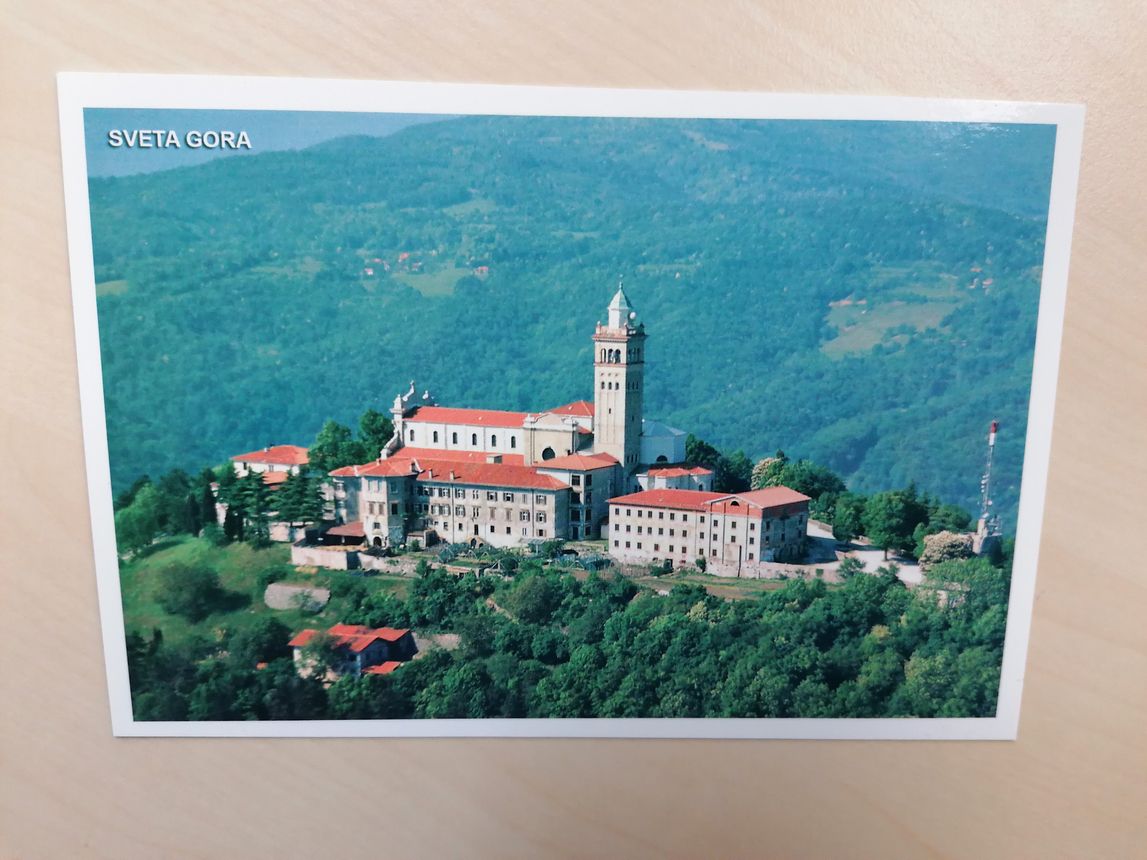
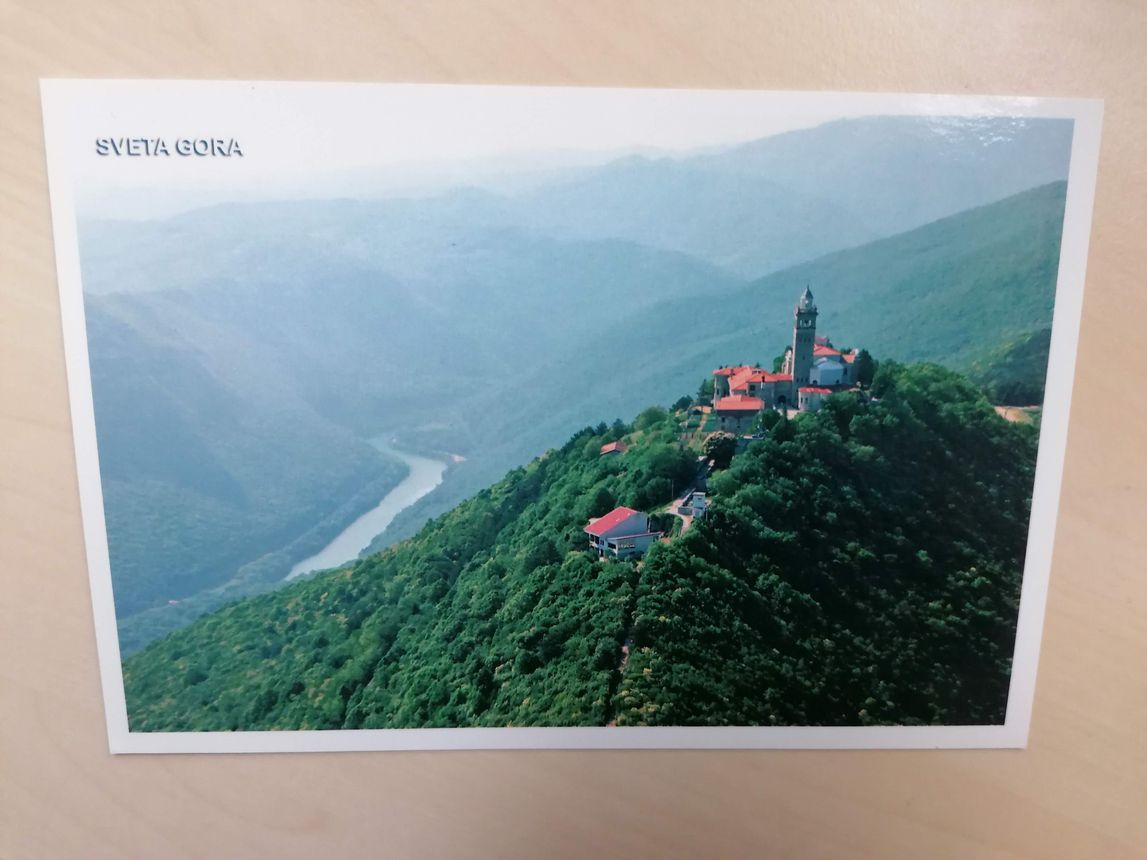
Sveta Gora (also known as Skalnica, 682 m) rises above the Soča River and Solkan, opposite Sabotin hill. The legend of Sveta Gora dates back to 1539, when the Virgin Mary is said to have appeared to Uršula Ferligoj, a shepherdess from the nearby village of Grgar, instructing her to build a church on the mountain. Soon after, people began to make pilgrimages to the hill. In 1565, the Franciscans took over the care of the pilgrimage site.
In 1717, the painting of Our Lady of Sveta Gora was crowned on Travnik Square in Gorizia, becoming only the second crowned Marian image outside Italy (after the one in Trsat near Rijeka). This further boosted pilgrimage activity, and Sveta Gora became one of the most important pilgrimage destinations in the wider region. Despite its popularity, Emperor Joseph II abolished the monastery; the Franciscans returned in 1793, and Sveta Gora came back to life.
During the First World War, the church and monastery were reduced to ruins. The Italian state later rebuilt the church as a monumental three-nave basilica, modeled on the church in Aquileia. The summit can also be reached via a scenic and adventurous route through trenches and caverns constructed for warfare on the Isonzo Front. Hiring a guide is recommended.
Avtor: Blaž Kosovel

Tags
