


Rafut Park and Laščak Villa
The villa of the architect who built palaces for Egypt’s elite
At the end of the 19th century, economic migration occurred in the opposite direction to what is seen today. After the opening of the Suez Canal, Egypt became a promised land for many people from this area, as a direct shipping route had been established between Trieste and Alexandria.
Many young women from the Goriška region left to work as nannies and domestic helpers in Alexandria and other Egyptian cities, leaving their children and families behind. These women are known today as the Aleksandrinke (Alexandrian women).
Another local who made his way to wealthy North Africa was an architect whose clients included the Egyptian elite, among whom many Alexandrian women lived. Anton Laščak (1856–1946), also known as Antonio Lasciac, was born in Gorizia in 1856. After studying in Vienna and working briefly in Gorizia, he moved to North Africa in 1882.
There, he quickly made a name for himself designing opulent palaces for the wealthy bourgeoisie, as well as churches, banks, insurance companies, and public institutions. His work embraced the eclectic architectural styles of the time, ranging from Neo-Baroque and Neo-Renaissance to Art Nouveau.
Following a short period in Italy, he returned to Cairo, where he became the personal architect of Prince Said Halim. His clients were now nobles rather than bourgeois families, until in 1907 the king himself appointed him court architect and granted him the title of beg.
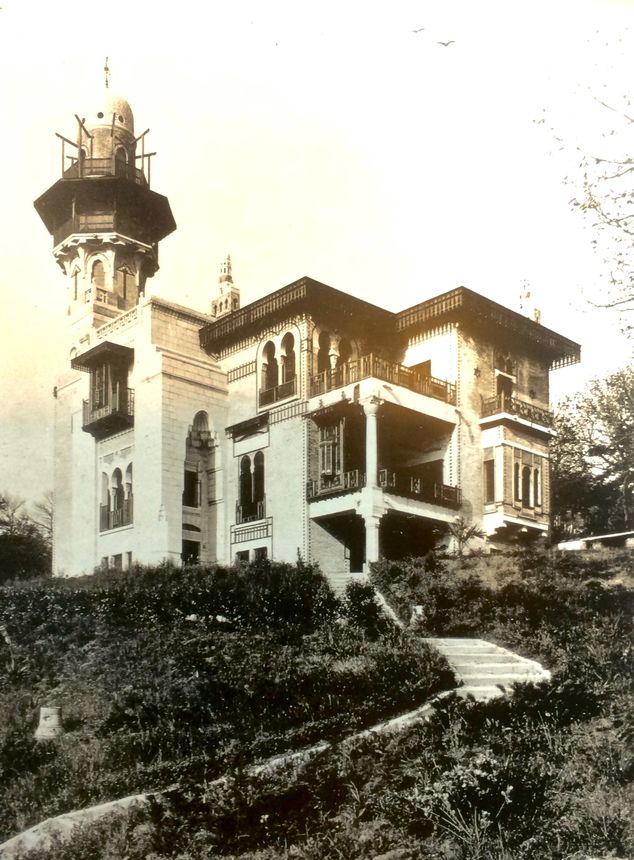
At first, Laščak built large, imposing palaces in the Neo-Baroque style, but he soon turned towards developing a distinctive "Egyptian style" with which the local population could identify. At the time, there was a strong push to modernise the capital in the style of Paris, but Laščak persuaded the elite not to simply imitate Europe but to create their own style. The result was a unique blend of traditional Mamluk architecture, Art Nouveau, and modern construction techniques — a neo-Islamic style.
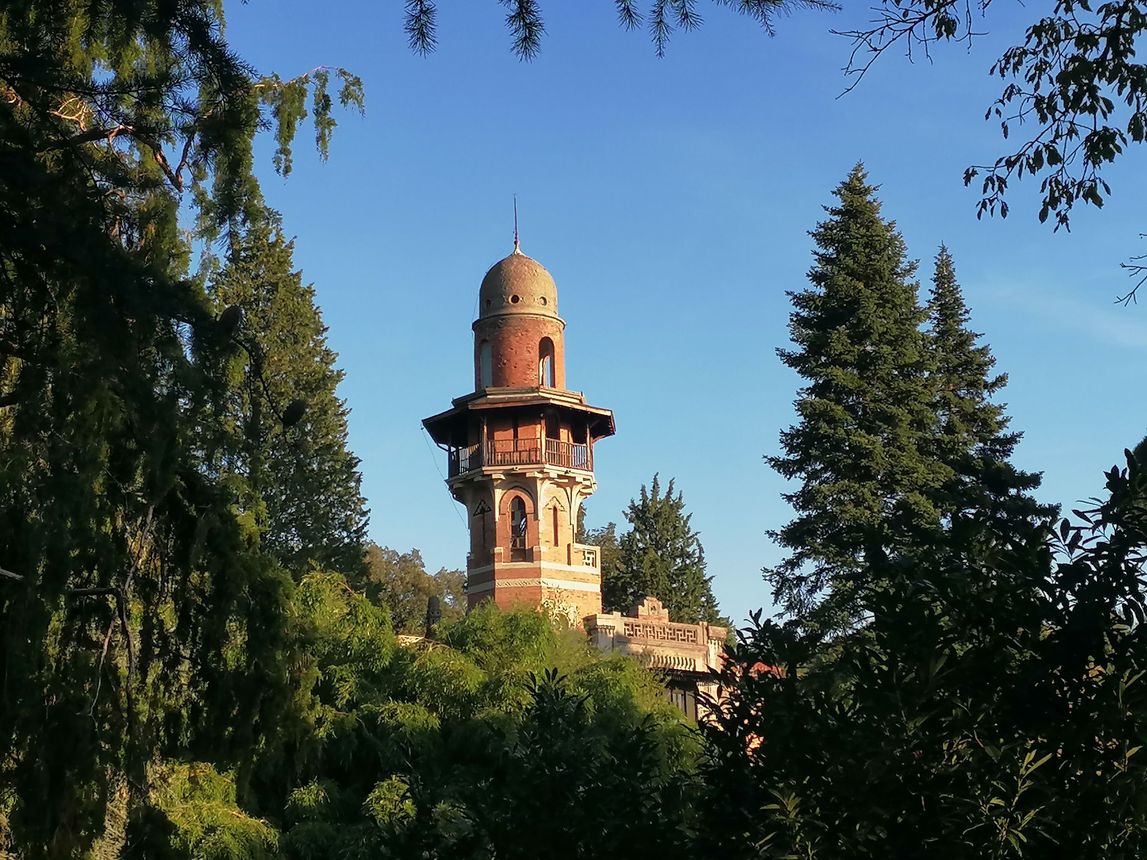
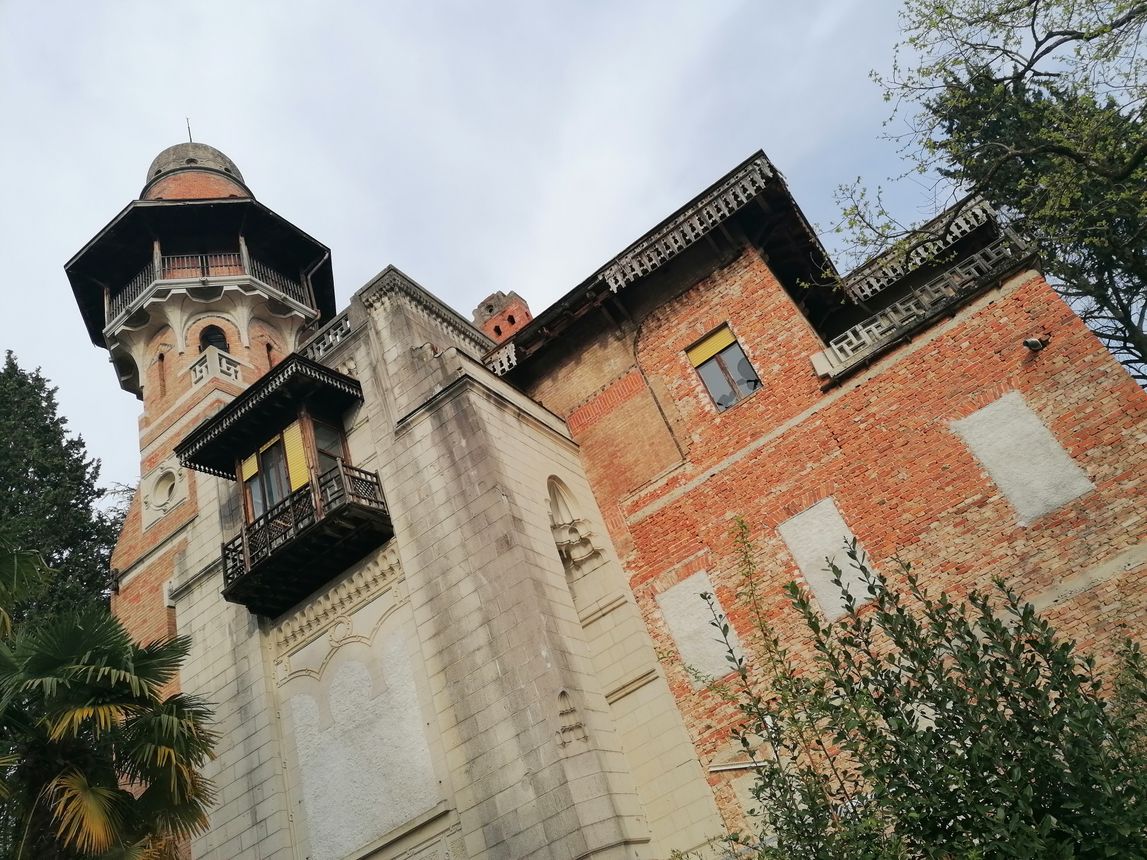
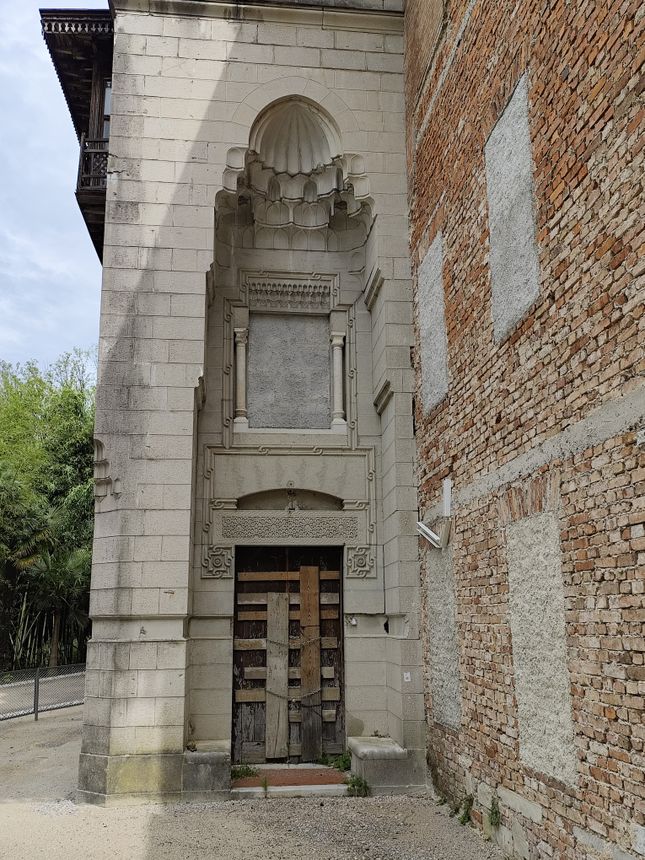
In 1914, he completed his own private residence in this style on Rafut Hill near his native Gorizia. Yet he never lived there long: it was damaged shortly after the outbreak of the First World War, and even after later restoration, he resided there only briefly. The villa remains unique in Slovenia and the wider region.
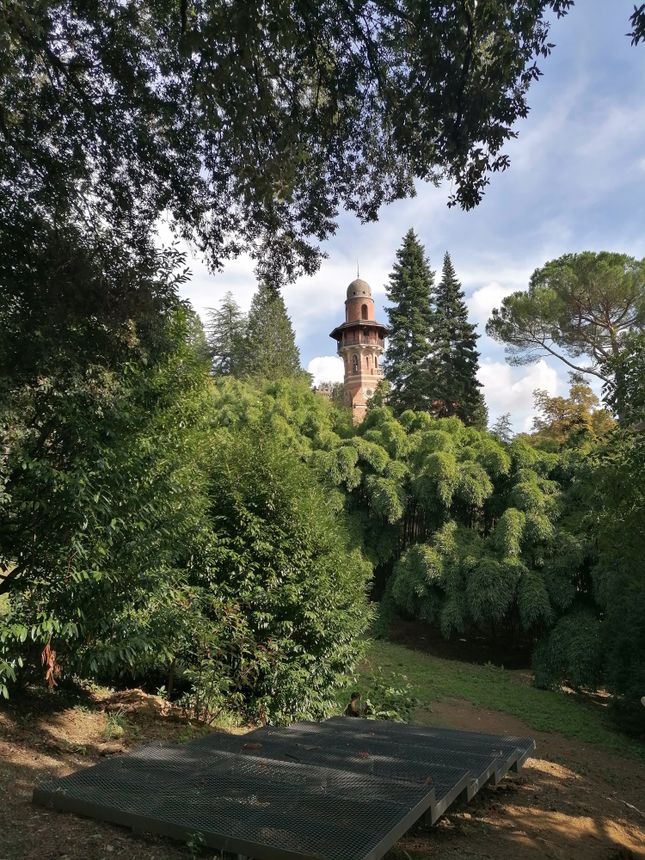
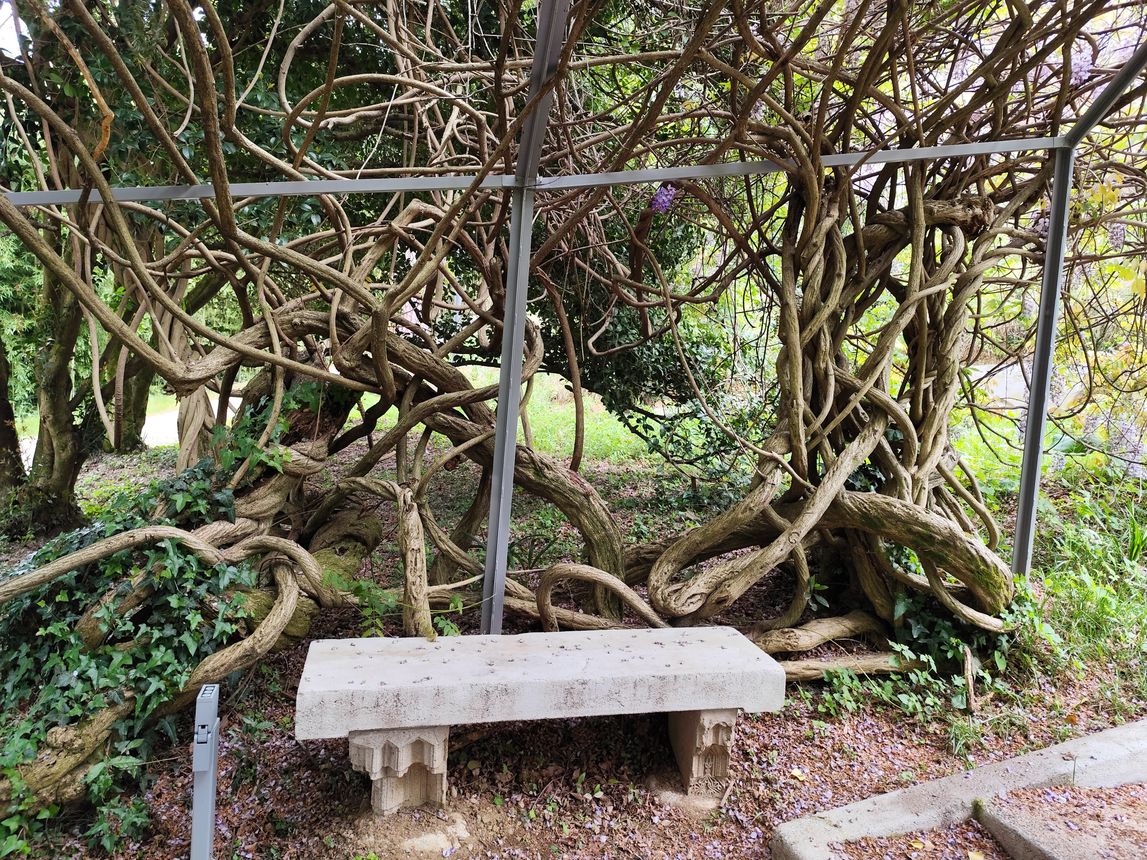
Laščak designed an exceptionally well-planned park around the villa. A road winds through it, with a footpath running straight across the centre. The park functioned as a botanical garden and once contained 500 species of trees and shrubs from 114 different genera.
After the Second World War, the regional branch of the Institute for Health Protection (now the National Institute of Public Health, NIJZ) relocated to the villa and adapted it to its own needs, compromising the original architecture.
However, the institute carefully maintained the park. In 1954, the park was designated a national natural monument due to its unique features.
The institute remained there until 2003, after which both the villa and park were left to decay. In 2023, the park underwent a renovation and reopened, allowing visitors to once again walk its paths and admire its diverse tree species.
Avtor: Blaž Kosovel