


Parish of Nova Gorica – Chapel
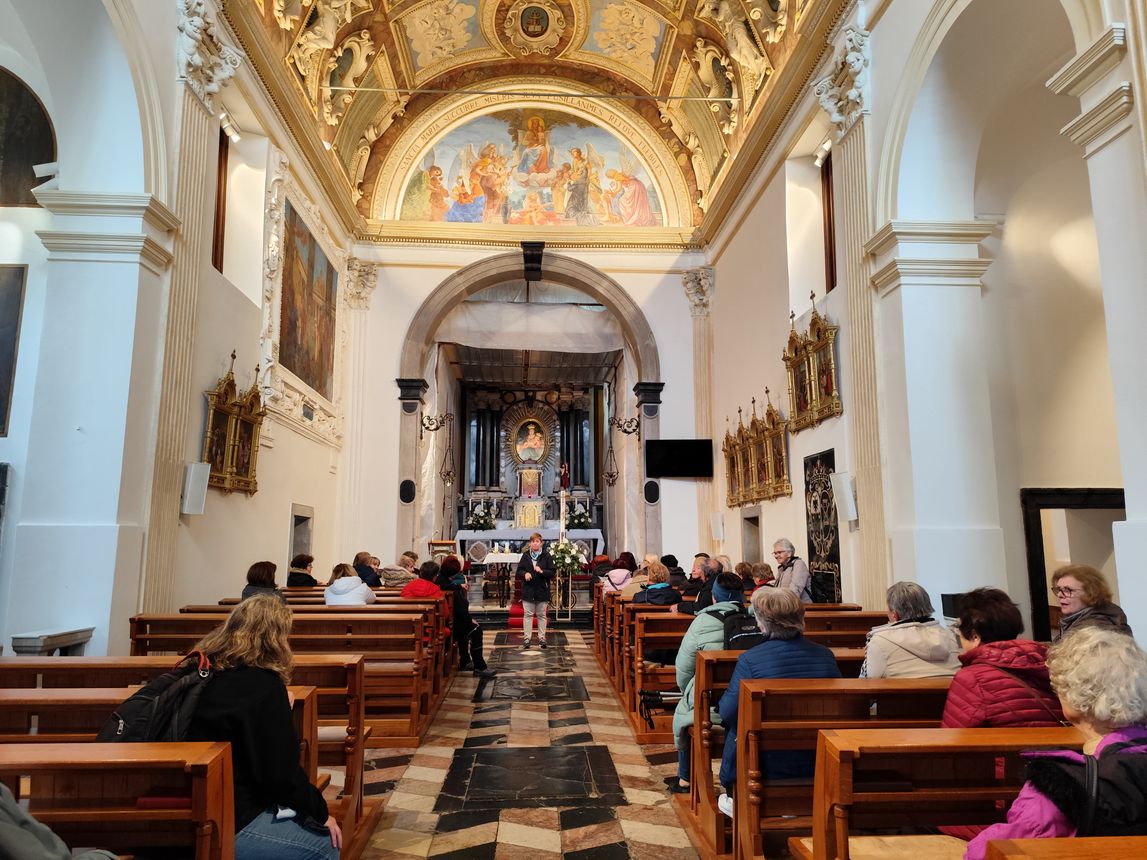
Interior of the church, where local guide Mirjam Brecelj presents the history and points of interest of the monastery to visitors. ©Photo: Blaž Kosovel
1 / 6
©Photo: Blaž Kosovel
2 / 6
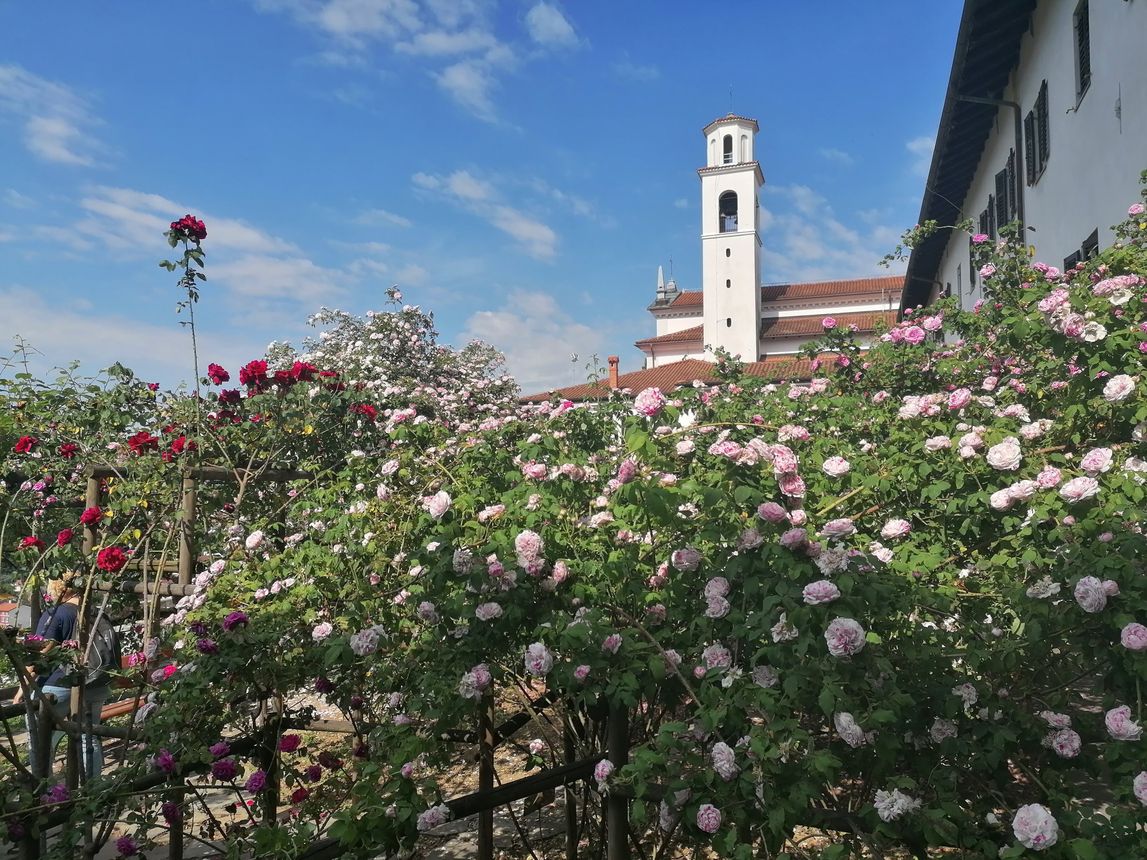
Garden of Bourbon roses in full bloom. ©Photo: Blaž Kosovel
3 / 6
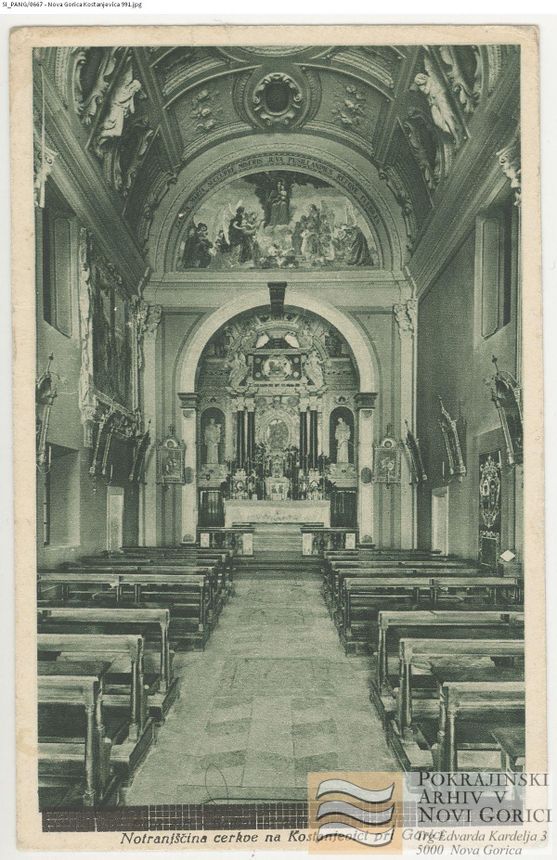
Interior of the church on a postcard sent in 1955, likely published during the interwar period of Italy. ©Postcard from the collection of Regional Archive in Nova Gorica - PANG 667 Zbirke razglednic krajev - Nova Gorica Kostanjevica No. 991
4 / 6
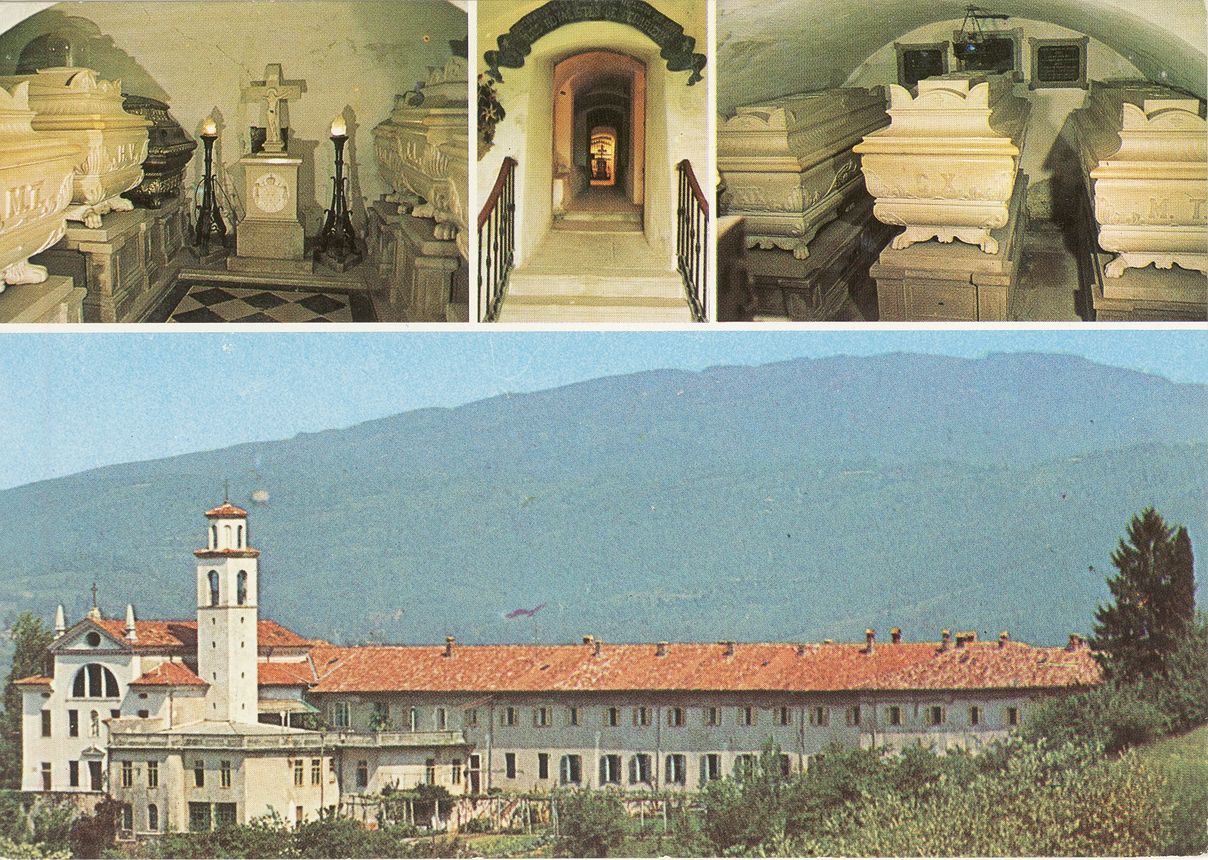
5 / 6
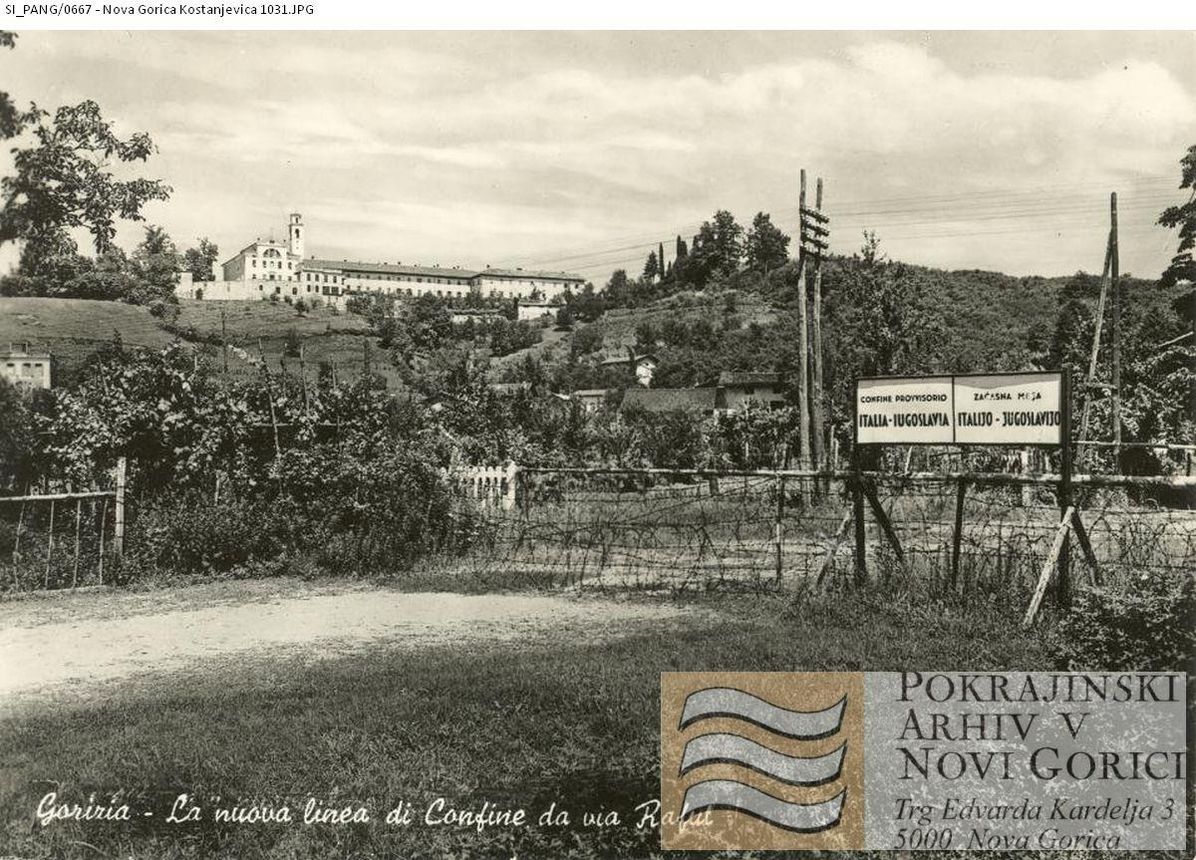
The new border between Yugoslavia and Italy, with the Kostanjevica Monastery in the background. Photograph taken before 1956. ©Postcard from the collection of Regional Archive in Nova Gorica (Pokrajinski arhiv v Novi Gorici) - PANG 667 Zbirke razglednic krajev Nova Gorica Kostanjevica No. 1301
6 / 6
The Franciscan monastery and the Church of the Annunciation represented an important spiritual refuge for the faithful inhabitants of Nova Gorica. In 1953, the Parish of Nova Gorica – Chapel was also established.
“Kapela,” as locals call the site, has witnessed many joyful and painful events throughout its history, deeply marking the place. In the recent past, it was also shaped by the new state border, as both the inhabitants of Gorizia and those of the neighbouring Yugoslav settlements (Rafut, Pristava, Rožna Dolina, Grčna) were closely connected to it.
Father Otmar Vostner, who arrived at Kostanjevica on 19 October 1945 and began keeping a chronicle, wrote:
“On Sunday, 14 September [1947], many Slovenians came to bid farewell to Kostanjevica. With heavy hearts, after five litanies of Loreto, the devotees of Kostanjevica returned across the already established demarcation line to Gorizia” (Bastjančič 2008: 14).
On 16 September 1947, the apostolic administrator established an independent vicariate at Kostanjevica, and Father Vostner was appointed vicar. From that moment on, one can speak of a true parish life. On 16 November 1953, it became an independent parish.
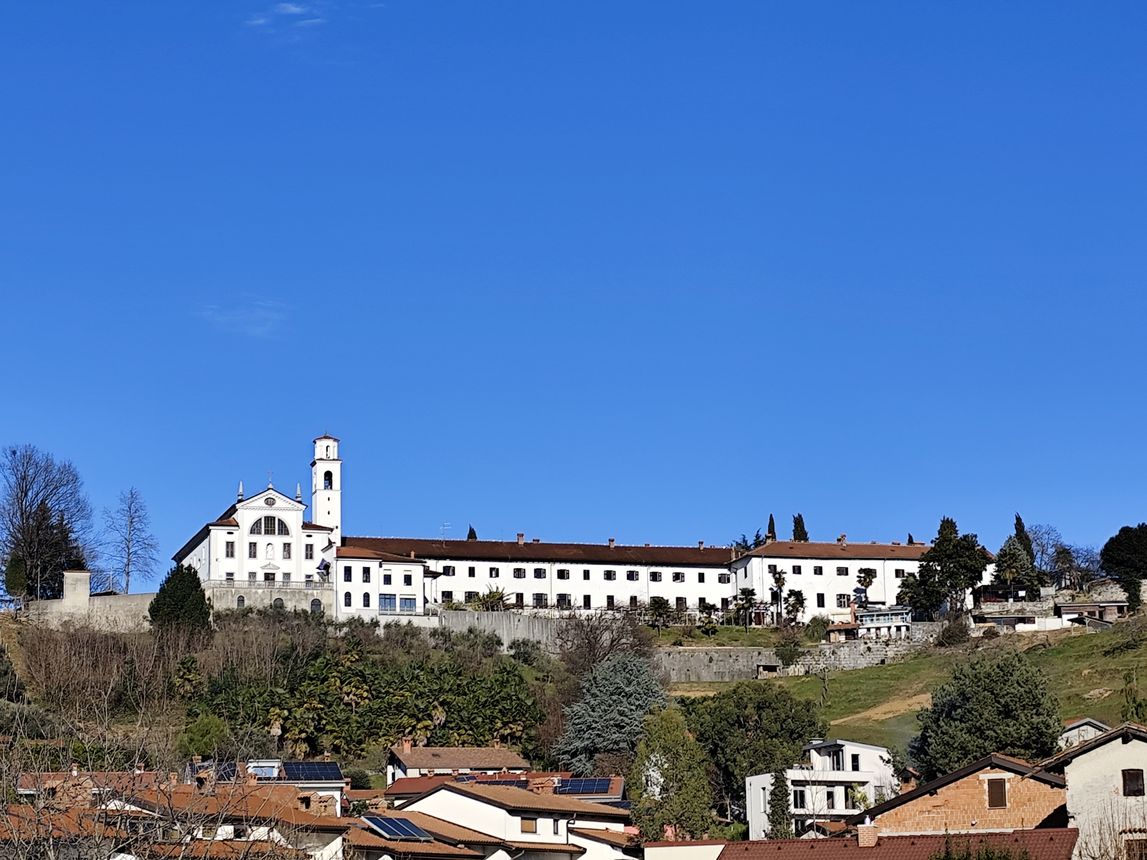
The origins of the pilgrimage church, however, reach much further back. Several legends persist, all centred around the miraculous appearance of an image of the Virgin Mary. Historical sources state that the church was built in 1623 by Count Matija Thurn. Due to its small size, it was called a chapel. A monastery was later built alongside it, entrusted to the Carmelites in 1649. The church was expanded over time with additional chapels, corridors and the present-day presbytery, and connected to the monastery. In 1785, the Carmelites were expelled during the reforms of Emperor Joseph II, and the church was closed. It was reopened in 1796 under the priest Filip Poli. In 1811, the Franciscans from Gorizia took over and enriched monastic life with new activities. In 1821, a philosophical school (monastic gymnasium) was established. The church, destroyed during the First World War, was restored between 1924 and 1929, at a time when it was administered by Italian Franciscans after Slovene friars had been expelled. On 16 September 1947, it was returned to Slovene administration.
In the first years of Yugoslavia, life at Kostanjevica was strongly shaped by the proximity of the border and the hostile attitude of the authorities toward the Church. Father Otmar was repeatedly fined for collecting donations without permission. Special rules also applied to processions and bell ringing — he had to request permission from the local authorities even to ring the bells before midnight mass or on New Year’s Eve.
Memories recorded in the parish commemorative book reveal the hardship of those years:
“From almost the very beginning, animals were kept at Kapela — a bull, two cows and a pig. The friars suffered great deprivation. Only a few locals dared to help, as others feared losing their jobs. They helped in the fields and vineyards, and my mother cooked for them.”
“Times were hard; the regime severely restricted religious life. Women and families who dared to help the Franciscans played a crucial role, cooking, cleaning and supporting the monastery despite social pressure.”
“A path to Kostanjevica passed by our house… There was a woman who stood at the window every Sunday, noting who went to mass.”
(Bastjančič 2008: 224).
In 1994, part of the monastery was transformed into the Community Srečanje, a rehabilitation centre for young men overcoming drug addiction. Based on the programme of the Italian priest Pierino Gelmini, it focuses on mutual support, discipline, and work, with residents also maintaining the monastery grounds and producing much of their own food.
In 2024, the church and monastery were declared a cultural monument of national importance. Among the key artistic features are the large marble altar with a depiction of Mary and Child in a radiant golden frame, rich wall paintings and reliefs, and a ceiling fresco of the Coronation of Mary by the Friulian painter Giovanni Moro (1877–1949). The church also contains numerous tombstones of noble families.
Kostanjevica’s historical significance is further marked by the tomb of the last descendants of the Bourbon royal family and the monastic library, named after the linguist Stanislav Škrabec, who lived there for over forty years. The library holds around 10,000 volumes, including approximately 30 incunabula and rich collections from the 16th to the 19th century.
Avtor: Jasna Fakin Bajec
Vir:
- Bastjančič, Mira (ur.). 2008. Spominska knjiga: da spomini ostanejo živi in ne utonejo v pozabo … Ljubljana: Brat Frančišek.
