


“For me, making coffee was a kind of miracle. In Ljubljana, we never made coffee.”
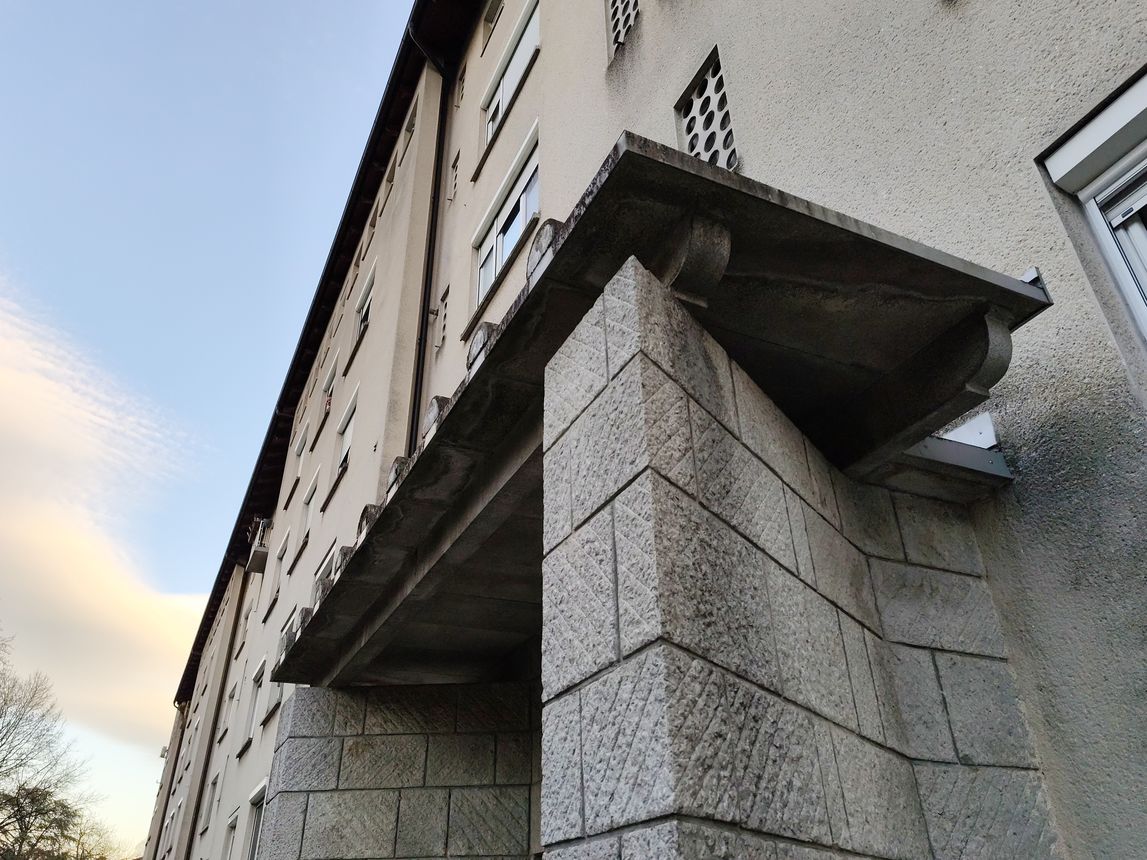
Memories of a woman (b. 1935) who moved from Ljubljana to Nova Gorica in 1954
“I wasn’t used to these customs, these Primorska customs. What customs? Making coffee. For me, making coffee was a kind of miracle. In Ljubljana, we never made it. Coffee in a coffeepot?”
“I came to Nova Gorica in 1954 or 1955. I’m from Ljubljana, though our roots are in Dolenjska. My mother was from Dolenjska, my father from Primorska. I came because my husband found work here. For a while he lived alone in the ‘Russian blocks’, and then we got a small room below Školj [in a house where a room was rented out – ed.]. The room had no toilet — it was outside — and there was no running water. I was faced with a big difficulty. There was a bucket, a stick, and they said they ‘drew’ water. You had to catch it somehow, which for me was terribly awkward. I didn’t know how. But the people who saw that I didn’t manage took me in as their own. They helped me. I became pregnant with my second daughter, and they took care of me as if I were theirs. They taught me everything.
We went shopping to Solkan. On the way down we wore simple shoes for walking, and we had a bush where we hid them and changed before entering town. I slowly adapted to this rural life. It was pleasant, because for the first time I felt that kind of humanity among people. Later, when I gave birth, the room became too small, and the municipality arranged for us to move to Ščednje, near the veterinary station. We got a slightly larger room, and that’s where my second daughter was born, in 1957. There came another trial. I wasn’t used to these customs — these Primorska customs. Making coffee. For me it was a miracle. In Ljubljana we didn’t know real coffee at all. We didn’t use it. That’s an Italian influence.
The evening before the birth we even went to the cinema. I’m lively by nature. With my first child I had a difficult birth, so I said — labour takes time — and I was dancing around with my big belly. I liked eating natural food, dandelion. That evening I picked dandelion and made it with beans for dinner. At two in the morning I felt cramps and said — well, that’s the dandelion and beans. But that ‘bloating’ was labour. My husband saw something was wrong and ran to fetch the midwife in Ščednje — a woman called Pepca. She came quickly, saw the situation, and they called an ambulance. But it wasn’t like the first time — the baby wanted out. They had to stop in Vipava, where I gave birth, and then they took me to Postojna. Later the midwife came to check on me, and I asked the neighbour what to do. She said: make her coffee. How? Seven beans, she said. My husband brought me coffee, and I boiled seven beans — of course nothing came out of it. I had no one. I didn’t know any grandparents. I was truly inexperienced.
Because I had two children, they arranged housing for us near the railway station, by the racetrack. An old house. Again no toilet, no water — later they installed water, but the toilet was outside. Downstairs, where the bedroom was, there were wooden boards, and I could see salamanders in the cellar below. A disaster. Still, we lived there until a block of flats was built on Prešeren Street. Before that, it was all cornfields. Then we moved there. Until the children went to kindergarten, I couldn’t work. After that, I got a job at the municipality.”
Avtor: Jasna Fakin Bajec
Vir:
Ethnographic workshop at the Retirement Home Nova Gorica, November 2022.
