


Entertainment life in the town, 1950s–1970s
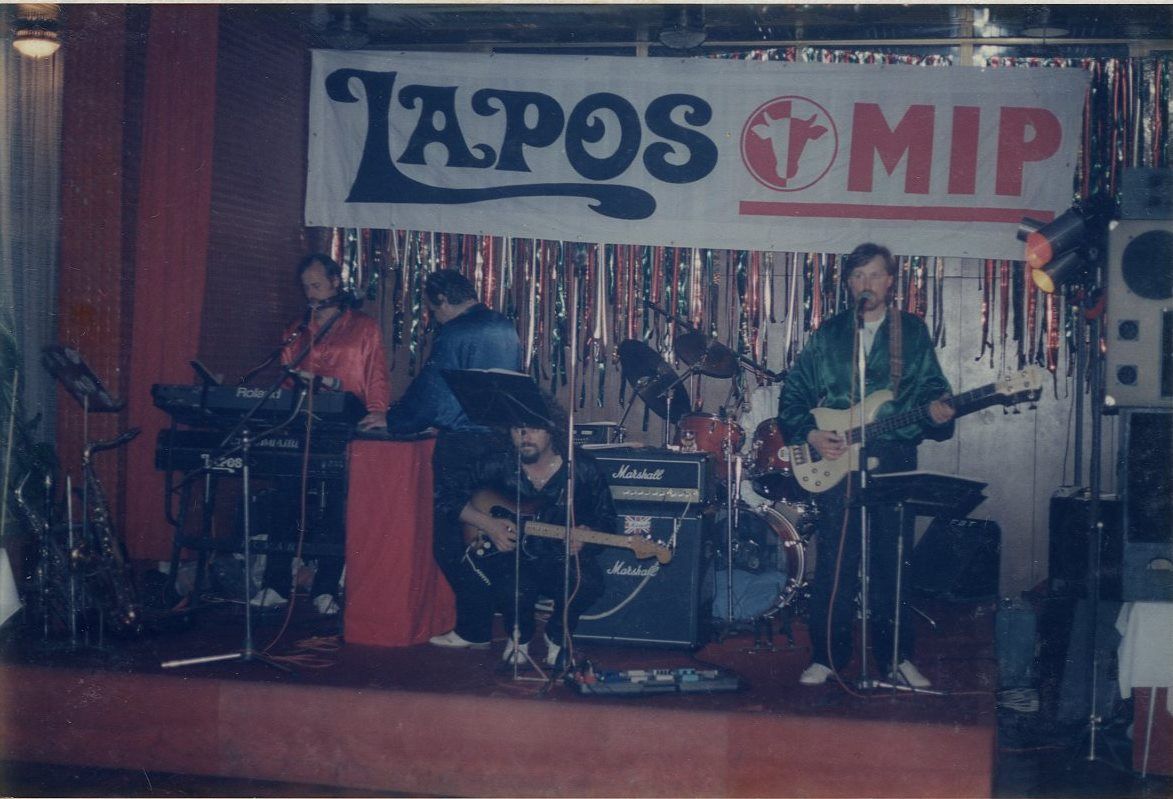
Lapos music group. ©Žarko Stanič, Lapos
1 / 6
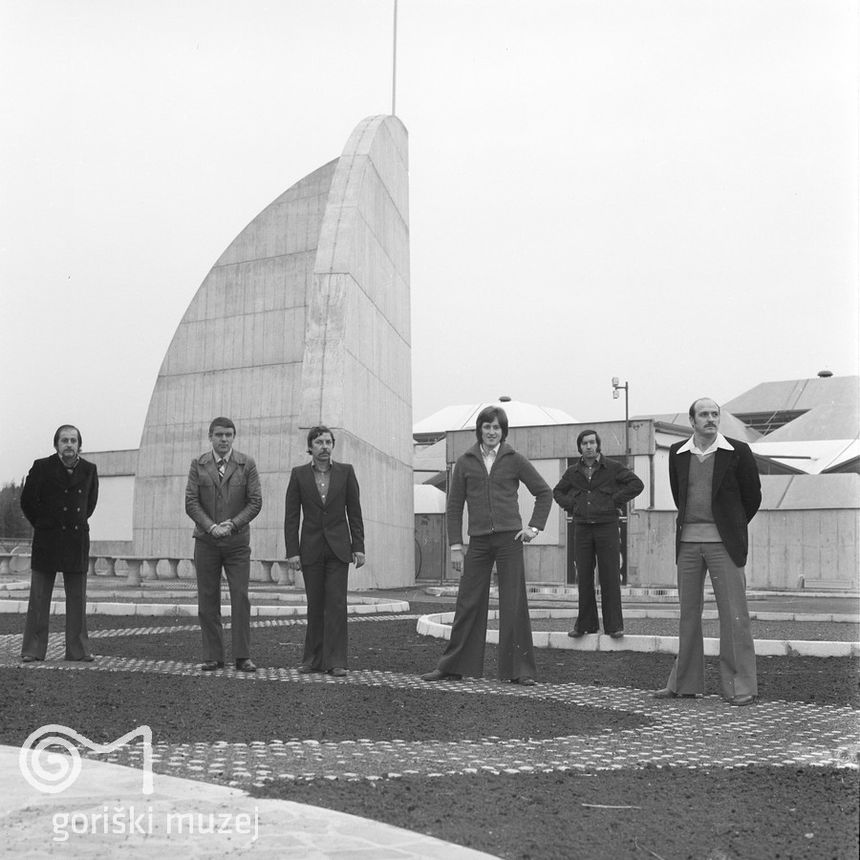
The Nova Gorica music group Lapos in front of the 15-metre concrete sundial, removed in 1999 due to the construction of a new hall in the Perla casino. ©Photo Pavšič, kept by the Goriški muzej Kromberk - Nova Gorica.
2 / 6
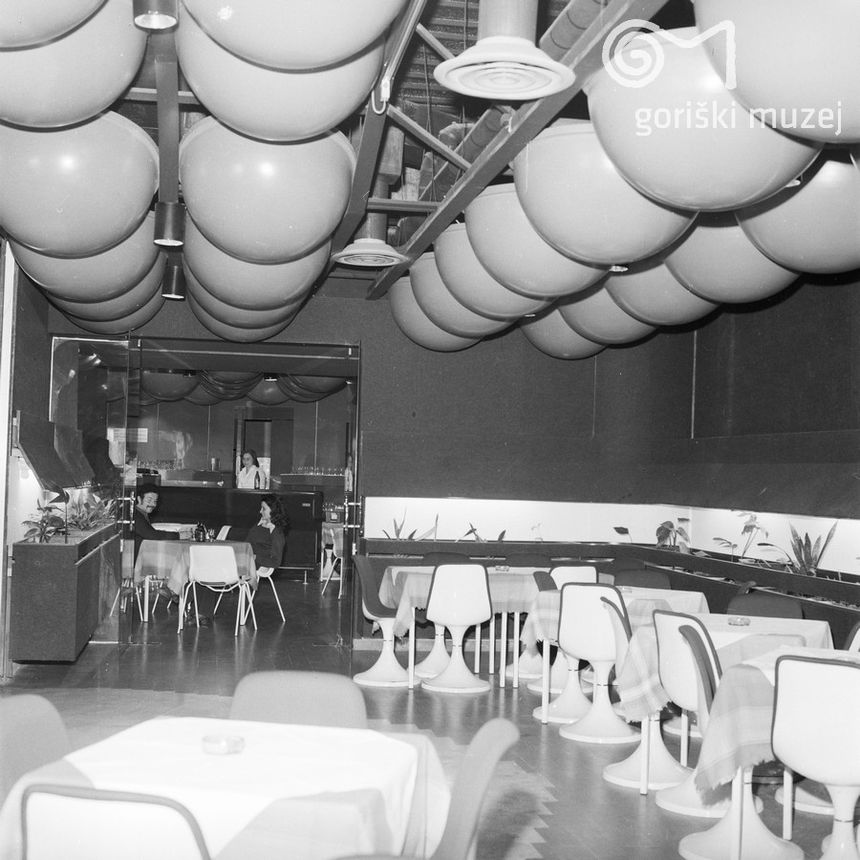
Bar interior of the Argonavti complex, late 1970s. ©Photo Pavšič, kept by the Goriški muzej Kromberk - Nova Gorica.
3 / 6
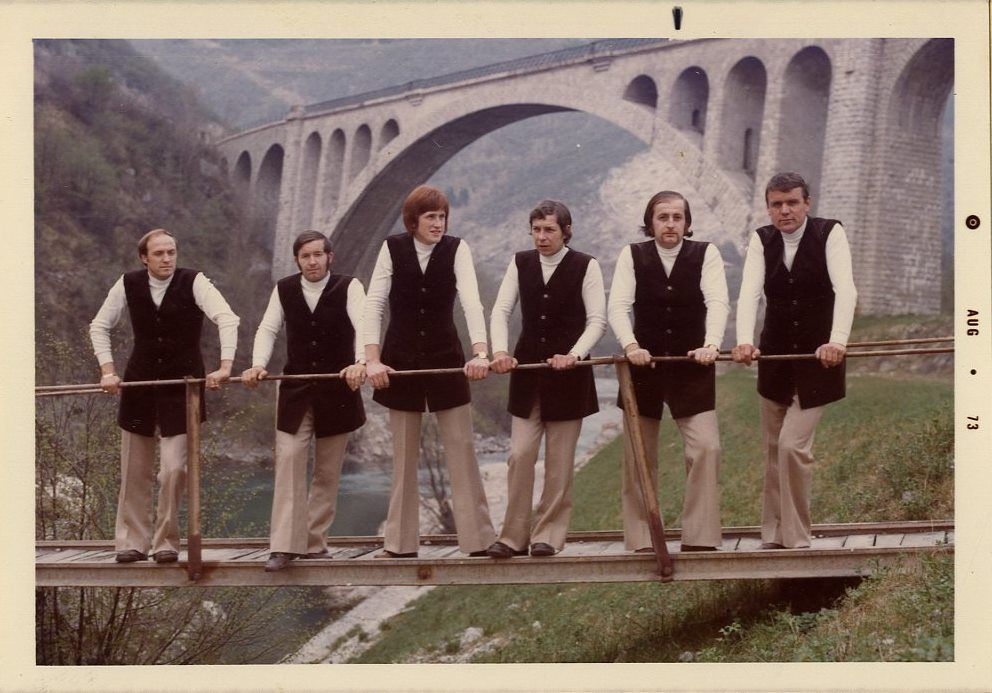
Lapos music group. ©Žarko Stanič, Lapos
4 / 6
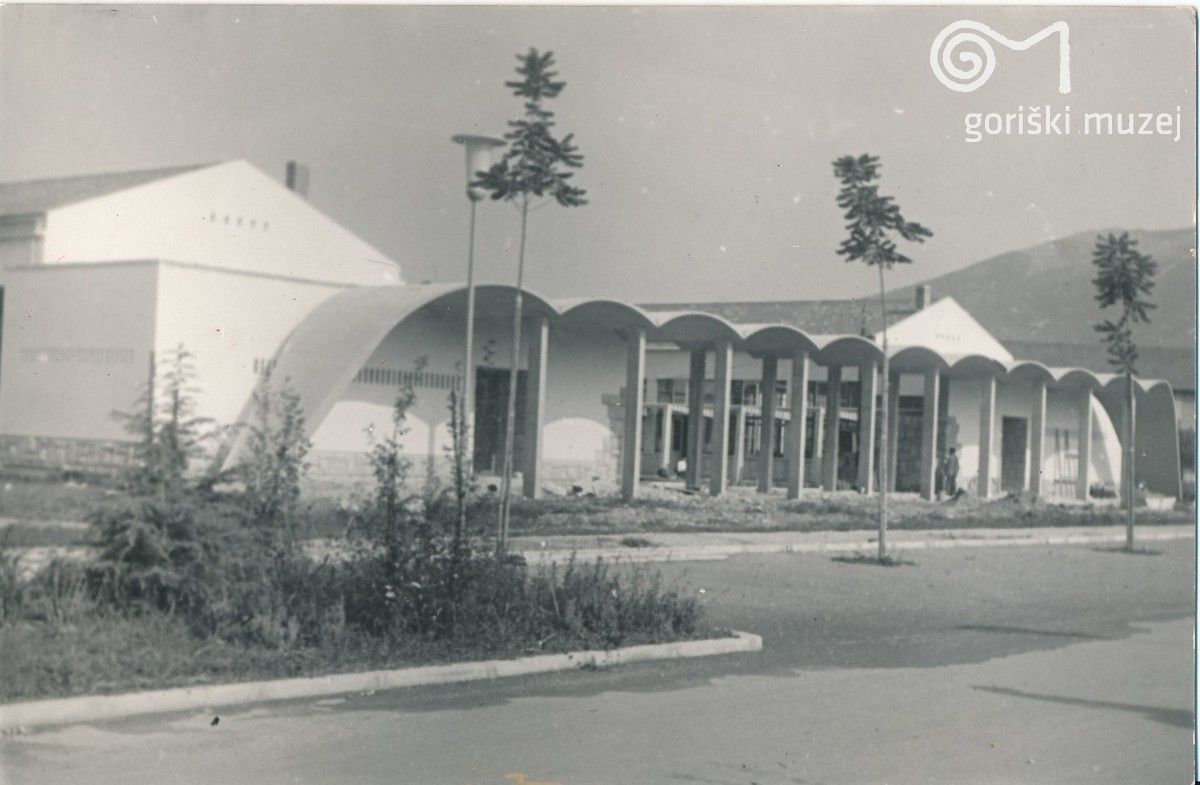
Original design of the café and restaurant. ©Photo from the collection of the Goriški muzej Kromberk - Nova Gorica.
5 / 6
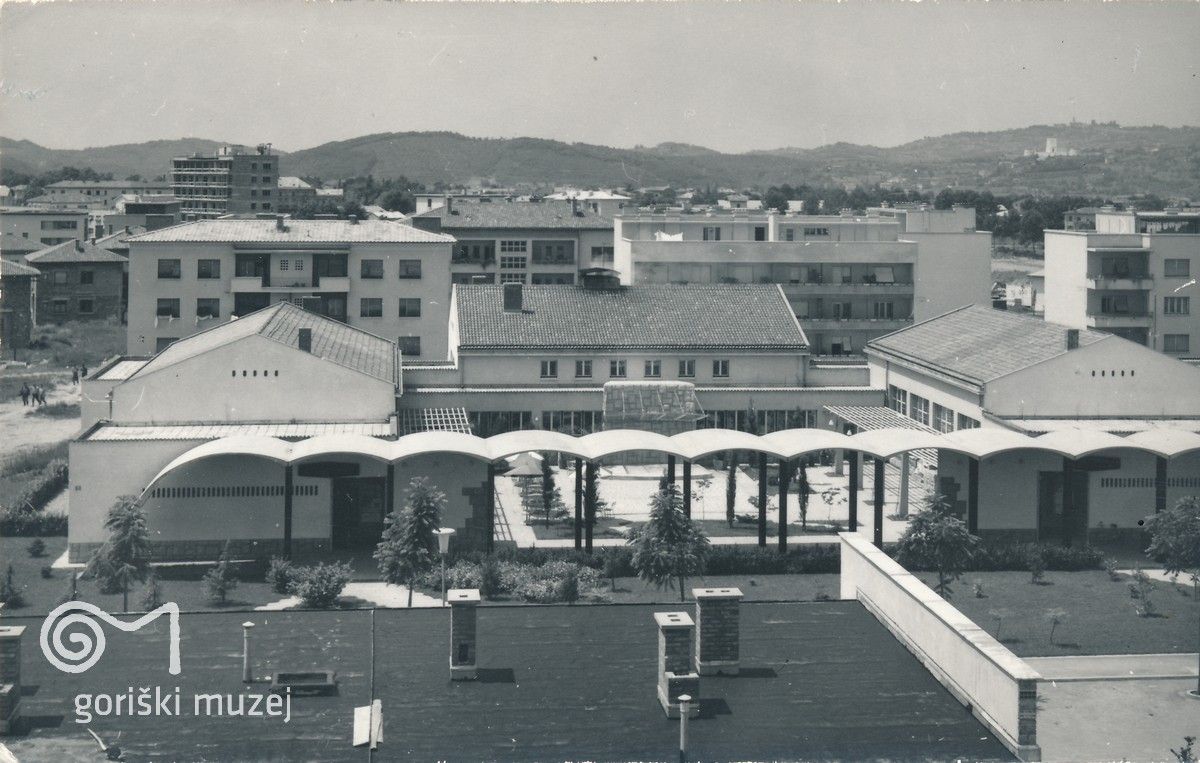
Hotel Park. ©From the collection of the Goriški muzej Kromberk - Nova Gorica (Goriška museum).
6 / 6
Nova Gorica is a young town, yet from the 1950s onwards it was already marked by a vibrant music scene that greatly enlivened weekends and summer evenings. Where did people dance and socialise?
In an interview for a special supplement of Primorske novice, the well-known Nova Gorica musician Marko Vuksanovič, who co-founded the band Avtomobili with his brother Mirko, emphasised: “The culture of popular music in the Gorizia region is very long and practically dates back to the very founding of the new town” (Marussig 2017: 52).
Social life began as early as the 1950s with academic balls that lasted until five in the morning. These were graduation dances held in the restaurant of the newly built Hotel Park. According to the memories of Nadja Koglot Puppis, these dances:
“got the whole of Nova Gorica on its feet and turned upside down all the companies from which we sought financial support. It was certainly the biggest social event in Nova Gorica, the first public dance, with proper dresses and a cloakroom – like in a film. Everyone came, invited and uninvited, buying like crazy everything we offered them – flowers, little wire deer, old postcards and items from the pre-war Gorizia archive /…/ clearly the residents of Nova Gorica also needed this, for us to awaken them from their winter slumber. We all needed life, music and dance even more than bread, which at that time was already available everywhere” (Koglot Puppis 2008: 66–67).
Young people also organised dances in the premises of the grammar school.
“The boys brought from home those first tape recorders, small ‘gelosote’ (cassettes – author’s note), onto which they had recorded all kinds of new, modern music from the radio — rock, blues, jazz. And then we danced, went wild, learned new steps and imitated the lives of those on the other side of the globe” (Koglot Puppis 2008: 65).
Over time, more dance venues and entertainment spaces opened across the region. Before the opening of Hotel Park, the wealthier residents frequented Hotel Solkan, while later the most famous dances took place in Hotel Park. On key dates in the calendar — New Year’s Eve, International Women’s Day, Carnival — events were also held in the hall of today’s municipal building. Local bands performed regularly, and in the 1970s the group Lapos stood out, playing popular music. At first, bands mostly performed foreign hits — especially from the Sanremo festival — while in the 1970s Croatian pop songs also became popular (Marussig 2017: 55).
“There was Sanremo, Elvis Presley, the miraculous twist dance was invented … and we woke up, admittedly only in the early sixties, but we did wake up! /…/ The doors of the border were opening more and more, and we were allowed to glimpse that world; some of it also came to us, without passports, simply through Italian television” (Koglot Puppis 2008: 64–65).
An interviewee (b. 1961) recalled that her parents, during the early years of Nova Gorica, went dancing to:
“Ajševica, there was apparently a larger house there. There were dances at the railway station too, at Hotel Sabotin, where there was live music. There were dances in Argonavti as well. There was a sundial, and downstairs they held dances too — but I’m talking about the late 1970s. They really loved going there to dance. Wherever there was live music, there was a lot of it until about 1985 or 1990. Then it disappeared. DJs and different music (discos) came in and it wasn’t the same anymore. We also had Italian canzonettas here, and Dalmatian songs that reminded you of the sea. In Argonavti they played records downstairs, it was a disco, but that didn’t last long. It was called bowling back then” (interview, October 2022).
Other interviewees also emphasised that in the 1970s Nova Gorica was most strongly defined by the band Lapos and the Argonavti complex.
“In Nova Gorica, the legendary Lapos performed, and Argonavti became the main venue in the town, where young people could find everything — from pizza and beer to Italian lire, which they used to buy novelties in the West and ‘smuggle’ them back into Yugoslavia” (source: Kamra).
Avtor: Jasna Fakin Bajec
Vir:
- Marussig, Mitja. 2017. Ustvarjalnost je prinesel rock. V: Skupnih 70 – Posebna revialna izdaja in priloga ob 70-letnici mesta in 70-letnici priključitve Primorske matični domovini. Ljubljana: Tiskarsko središče Dela, str. 54-57.
- https://www.kamra.si/digitalne-zbirke/drugo-mesto/
