


Cherries on the Solkan Plain
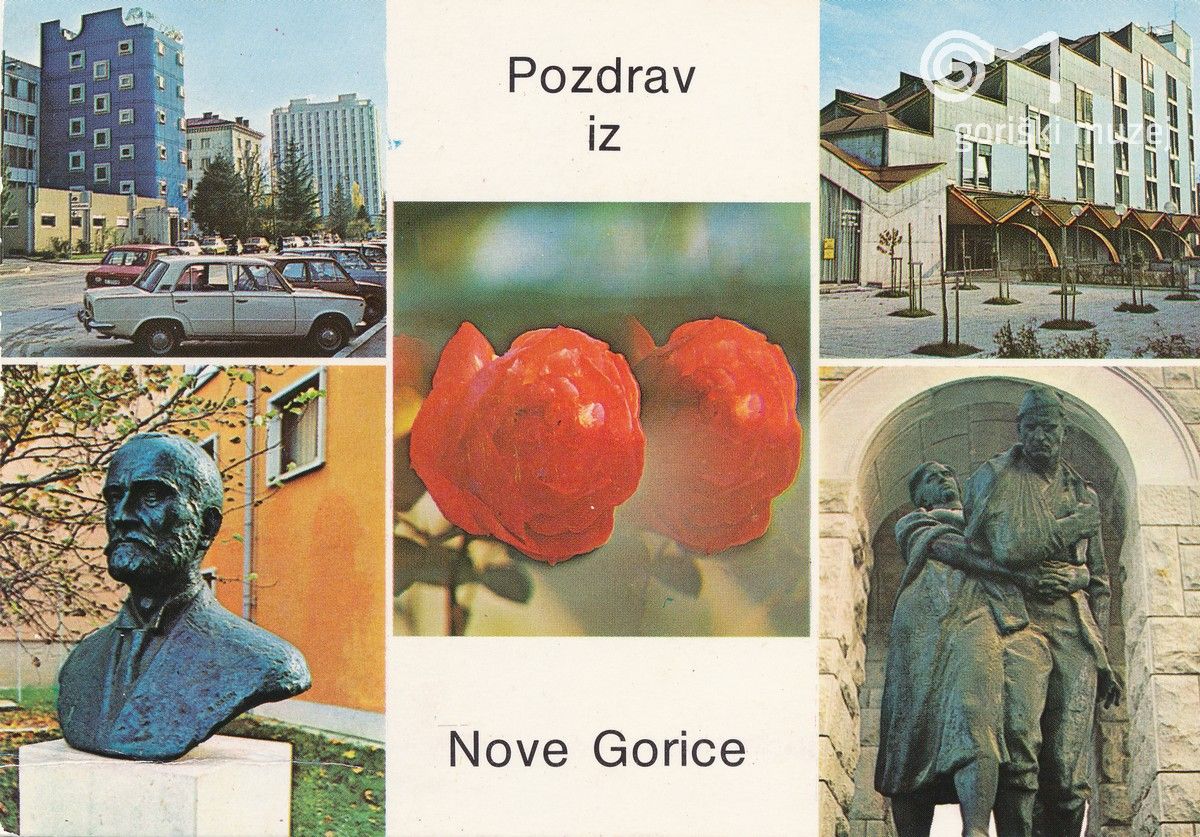
Before the construction of Nova Gorica, the Solkan plain was covered with fields, vineyards, and farms. Rows of fruit trees also grew among the fields and vines, with cherry trees being the most common. People still remember how children loved to “rob” (steal) the cherries.
Historian Metka Nusdorfer Vuksanović writes in her article When the Solkan Plain Was Still Ploughed (2002):
“Nova Gorica was in its early years built on clayey land unsuitable for cultivation, where a brickyard and an abandoned cemetery once stood. The town initially expanded towards Koren and Panovec, where there were fewer fields and more grassy areas. Over time, however, space for construction in this less fertile zone became increasingly limited. New houses and apartment blocks began to rise even on the most fertile land, in the area of Ledine, north of the city centre” (Nusdorfer Vuksanović 2002: 226).
The article also notes that there were few isolated farms on the Solkan plain. Larger clusters of houses with outbuildings were located along the edges of the plain, in what are today Prvomajska and Partizanska streets. Along Erjavčeva Street, fields predominated, while meadows stretched near the cemetery. Near the Koren stream, grassy areas extended into woodland. The slope between Kostanjevica and Pristava was mostly forested, with many sweet chestnut trees growing there—hence the name Kostanjevica (ibid.: 227).
Around the monastery and church, vineyards and orchards mixed with fields and gardens. Between the cemetery and the Koren riverbed, meadows prevailed, gradually giving way to cultivated land—fields and vineyards—near Grčna. Close to houses were orchards. On the other side of Grčna (today’s Qlandia shopping centre area), meadows along the Koren transitioned into fields. On the slope of Mali klanec (later the site of the Ideal textile factory), fields alternated with grassland.
Fields covered most of the land. Rows of vines were usually planted between them, and at the ends farmers often planted olive trees. Among the fields and vines, fruit trees grew in rows—mainly cherries, but also apples, apricots, pears, peaches, figs, and quinces (ibid.: 229).
To this day, many stories survive of children admiring—and sometimes stealing—cherries on their way to school.
“In its own way, the path across the fields was romantic, especially when it wasn’t muddy. Cherry trees were in bloom, then ripening, and I would look at them longingly, though I never picked any. Before construction began on the second row of blocks along Cankarjeva Street and later the high-rises on Gradnik Brigade Street, there was even a vegetable garden opposite our building for a few years, probably until 1976. There were never many gardens—they soon disappeared as the land was prepared for new housing blocks.”
“We were children and we all played outside. There were so many of us. There were fields everywhere. Later we moved to Ledine 2. Where Cankarjeva Street stands today, there was nothing—just fields, farmland, meadows… We climbed trees and stole cherries… It was just like living in the countryside. Then they started building apartment blocks, and our playground disappeared.”
Avtor: Jasna Fakin Bajec