


Argonavti - in detail
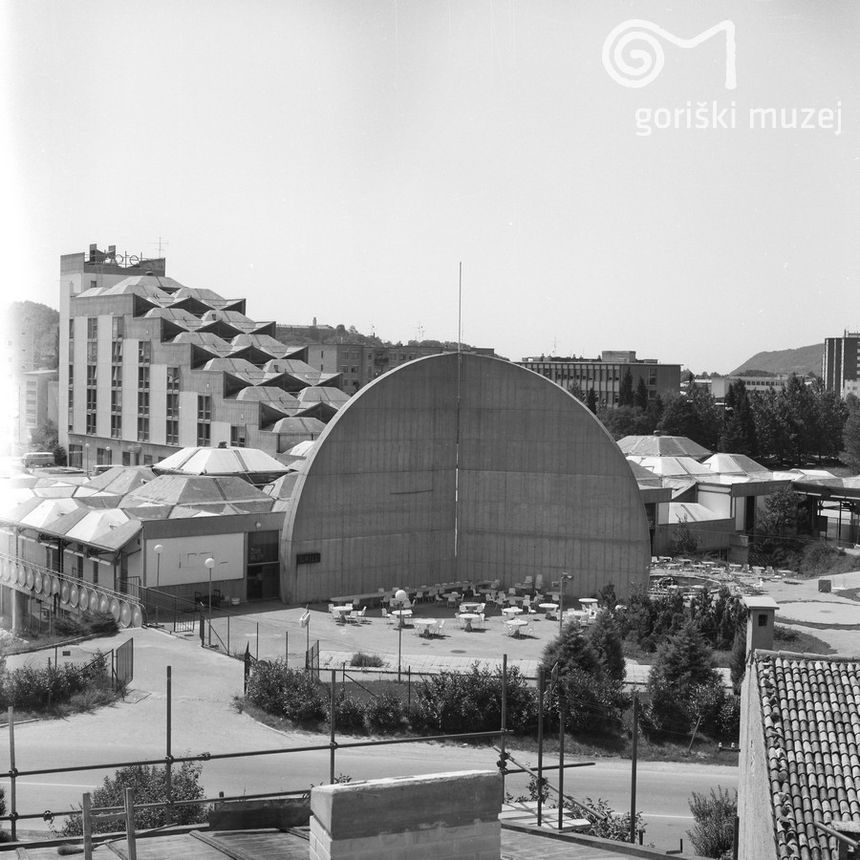
Hotel, recreational and entertainment complex Argonavti with a 15-metre sundial in the foreground (demolished in 1999), late 1970s. ©Photo Pavšič from the collection of Goriški muzej Kromberk - Nova Gorica.
1 / 9
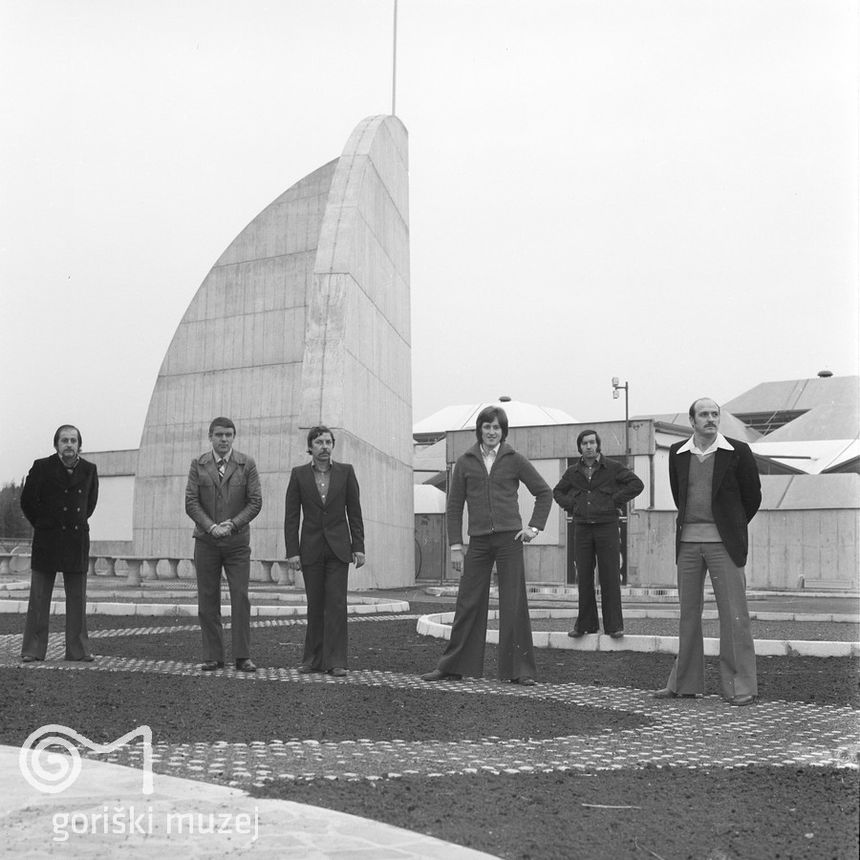
The Nova Gorica music group Lapos in front of the 15-metre concrete sundial, removed in 1999 due to the construction of a new hall in the Perla casino. ©Photo Pavšič, kept by the Goriški muzej Kromberk - Nova Gorica.
2 / 9
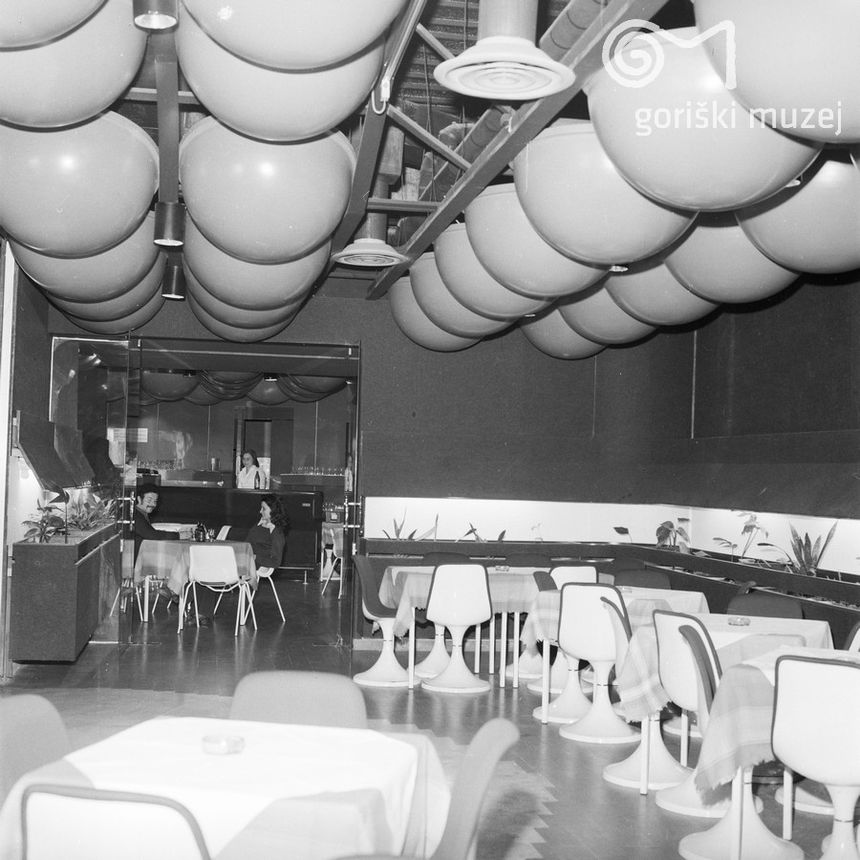
Bar interior of the Argonavti complex, late 1970s. ©Photo Pavšič, kept by the Goriški muzej Kromberk - Nova Gorica.
3 / 9
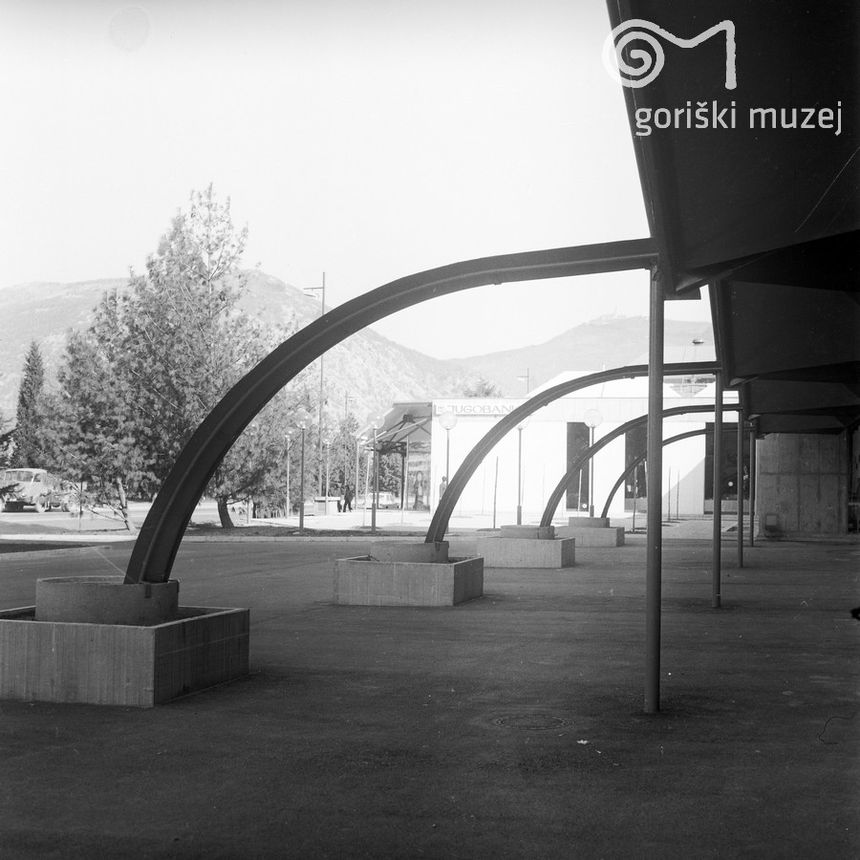
Canopy support structure in front of the Argonavti hotel, late 1970s. Sabotin and Sveta gora in the background. ©Photo Pavšič, kept by the Goriški muzej Kromberk - Nova Gorica.
4 / 9
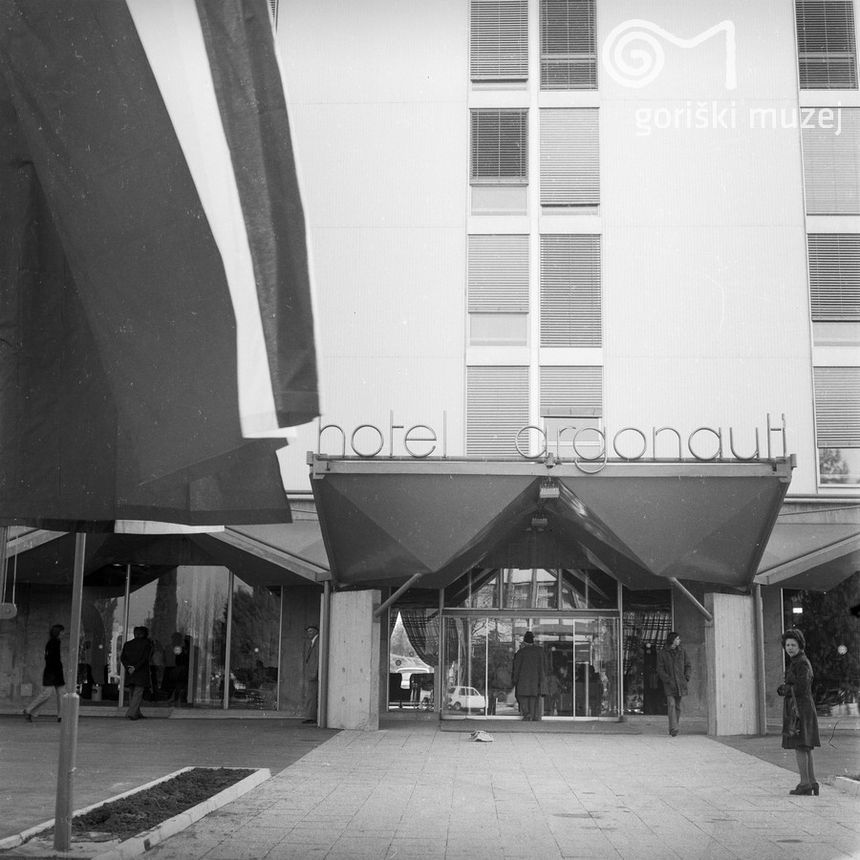
©Photo Pavšič, kept by the Goriški muzej Kromberk - Nova Gorica.
5 / 9
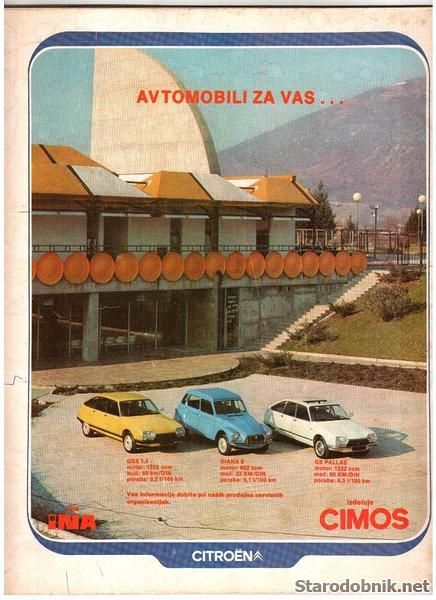
Argonavti as the backdrop for an advertisement for Citroën cars produced at the Cimos factory in Koper, late 70s.
6 / 9
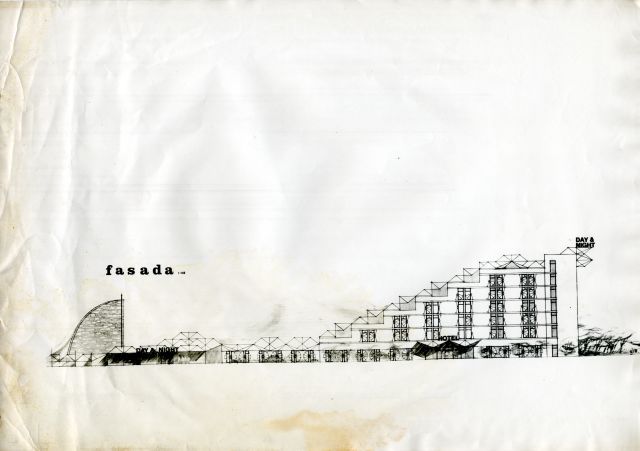
7 / 9
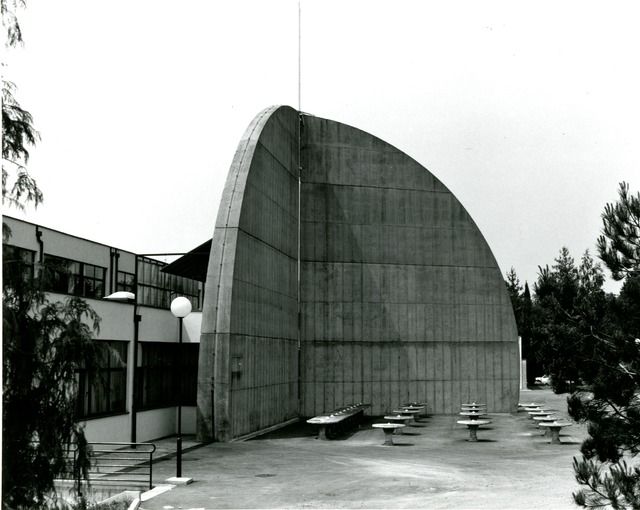
Former 15-metre sundial of the Argonavti complex, demolished in 1999 due to the construction of a new hall for the Perla Casino.
8 / 9
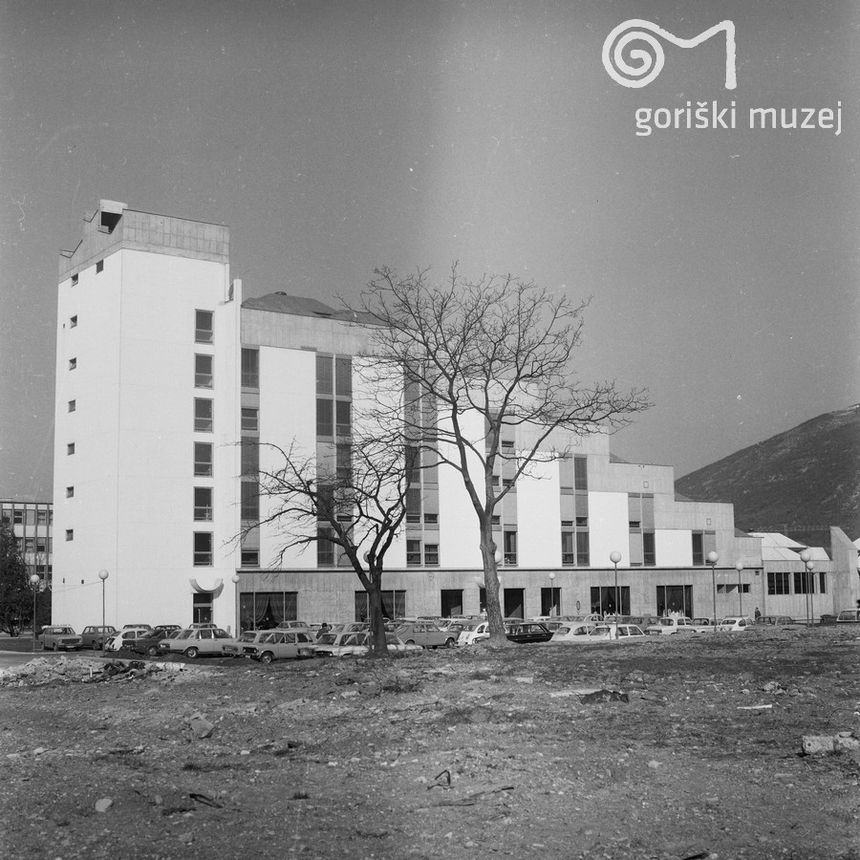
Hotel, recreational and entertainment complex Argonavti, late 1970s. ©Photo Pavšič, kept by the Goriški muzej Kromberk - Nova Gorica.
9 / 9
Argonavti were the heart of Nova Gorica’s nightlife in the 1970s – the first swimming pool, the first pizzas, dances and the legendary beer hall. At the same time, they represented one of the boldest architectural experiments of their time, placing Nova Gorica on the map of original modernist and postmodern creations.
“Do you remember Argonavti? It was so beautiful there, luxurious. We used to go to the swimming pool. The beer hall was something special, with beer and everything. They had one-litre mugs. And the first pizza. We also went dancing. It was like a centre of entertainment. Every day after work we went for cream cakes. There was also a black-and-white sundial. I still don’t understand how they could fail. If only that sundial had remained”
(Ethnographic workshop with pensioners from Nova Gorica, November 2024).
The history and art-historical characteristics of the building were researched by Klavdija Figelj. Below are the main features of the complex, as presented in the article Lehrmann’s Argonavti: the desire for originality at any cost (2019) and on the digital portal Novagoricaart.si.
The building stood along the main magistrale, where architect Edvard Ravnikar had already planned the key public buildings and urban functions. After six years of construction, it was officially opened on 5 March 1976. The media described it as the most modern and largest hotel, catering and tourist-recreational complex. It was expected not only to provide entertainment and relaxation, but also to act as a driver of tourism development. At the opening it was reported that the complex included “11,000 square metres of space, 80 rooms and 4 apartments with 140 beds, a restaurant, several buffets, a café, a beer hall, a disco club with a record shop, a night bar, a grill club, an eight-lane bowling alley, a mini casino, an indoor swimming pool with gym and sauna, as well as a hair salon, souvenir shop, florist, bank and travel agency. Director Jože Franko emphasised that the complex was intended more for recreation and mass tourism services than for accommodation” (Šprogar 1976: 19, cf. Figelj 2019: 33). Particular importance was given to entertainment, including art exhibitions, concerts, theatre performances and cabaret.
The architectural design was created by Niko Lehrmann (1939–1998), who was encouraged to adopt bold and extravagant solutions. He collaborated with the conceptual group OHO, developing the idea of architecture as a temporal container with an energetic and mental dimension.
The building was constructed by Alpe-Adria from Ljubljana, a company focused on workers’ tourism and leisure. It emerged in a period of economic growth, expanding free time and avant-garde experimentation. Initially planned as a beer hall, it soon developed into a hotel intended for recreation and workers’ holidays. Early plans included a wide range of facilities: entertainment venues, swimming pool, shops, outdoor kitchen, bowling green, dance floor, passageway, sundial, fountain, pond, rock garden, children’s playground, sun park, rose garden and more.
The name derives from the Greek myth of the Argonauts. The stepped form of the hotel referenced Mayan pyramids; the night bar evoked the serpent of paradise, while the garden with the sundial referenced megalithic culture. The concrete sundial, 15 metres high, was the dominant feature of the complex and one of the largest sculptures in Slovenia. The project was presented at the Paris Biennale of Young Artists in 1971. The solar sculpture was later destroyed during the operation of the Perla casino.
Financial difficulties led to several changes. The complex consisted of three parts: the hotel building, the recreational facilities and the landscaped park. The façade combined exposed concrete, white bands and yellow plastic elements, while the interior followed a nautical theme with modernist geometric forms and furniture produced by the Meblo factory.
The roof was made of polyester and polyurethane, with a bold undulating form inspired by origami.
However, as a former waiter recalls:
“The roof leaked, the sundial was missing a part and never showed the correct time… But the centre worked very well. Crowds filled the restaurants, beer hall, pastry shop and grill club… We served hundreds of meals daily… Some guests went to the night bar, later a disco, mostly Italians and wealthier visitors… There were also sheikhs among the guests… and the swimming pool and bowling alley were widely used” (Sardoč 2017).
After six years of unprofitable operation, the complex went bankrupt. In 1984 it was taken over by Iskra-Delta, which converted it into a computer education centre and removed the characteristic yellow roof. The building was later further altered by the company Hit.
At the time, professional criticism was largely negative, pointing to expensive materials and irrational construction. Later generations, however, recognised its originality, experimental character and even iconic value.
Avtor: Jasna Fakin Bajec
Kraj: Nova Gorica
Vir:
- Figelj, Klavdija 2019. Lehrmanovi Argonavti, želja po izvirnosti za vsako ceno. Izvestje 16, https://ojs.zrc-sazu.si/izvestje/article/view/8727/8753 (17. 9. 2024).
- Figelj, Klavdija. 20202. Hotel Argonavti, projekt modmaping, https://www.novagoricaart.si/spomenik/hotel-argonavti/ (ogled 30. 10. 2024).
- Sardoč, Ambrož. 2017. Pilo se je koktajle, prihajali so šejki. Primorske novice, 70. let Nove Gorice. https://primorske.svet24.si/plus/70-let-nove-gorice/pilo-se-je-koktajle-prihajali-so-sejki (ogled: 30. 10. 2024).

Tags
Povezani članki
Casino Perla, former Argonavti and Iskra Delta