


A Short History of the Goriška Region

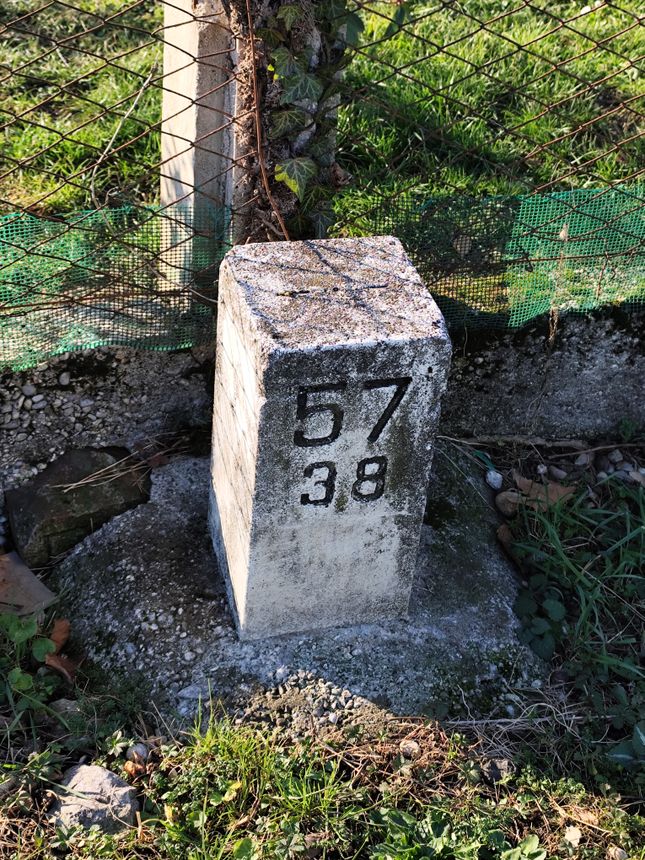
The area was first settled in prehistoric times by Celts and Veneti, but historical memory begins with ancient Rome. The military campaigns of Julius Caesar in the region are still reflected today in the names of the Julian Alps and the land of Friuli.
Today's Cividale was originally called Forum Iulii, from which the name Friuli derives. During the reign of Emperor Augustus (7 AD), the area became part of Regio X Venetia et Histria, with Aquileia serving as its capital. Aquileia later became a major Christian centre, from which Christianity spread eastwards as far as the Drava River.
The Vipava Valley was the site of the Battle of the Frigidus (394 AD), in which Emperor Theodosius I of the Eastern Roman Empire defeated the Western Roman ruler Eugenius and cemented Christianity as the dominant religion of the Roman Empire.
Not far away, in today’s Cividale, the Lombards – a Germanic people – settled in the 6th century when they invaded Italy from the north. Their presence was so strong and lasting that the Italian region of Lombardy is still named after them.
Later, Slavs also settled in the area, as evidenced by the name Gorizia. In its first recorded mention in 1001, it was noted that the village was called Gorica in the Slavic language.
A century later, in 1125, the Counts of Gorizia were first mentioned, a German aristocratic family, the Meinhardiners, who held estates in what is today northern Italy, southern Austria, and much of Slovenia. The family became one of the most powerful in the region and ruled until 1500, when their line came to an end. By prior agreement, the entire Goriška then fell to the Habsburgs.
This remained the case until the First World War, with two short interruptions. In 1508, neighbouring Venetians conquered Gorizia for 13 months. From 1809 to 1814, during Napoleon's campaigns, the area was part of the Illyrian Provinces – a buffer zone between Austria and the Ottoman Empire, with Ljubljana as its centre.
For centuries, the region was the southwesternmost part of the Austrian Empire. Due to its mild climate, Gorizia gained recognition in the 19th century as the "Austrian Nice." This attracted many people from the interior of the Empire, who built villas for holidays and retirement.
At the start of the First World War, Italy remained neutral. Soon, however, the Entente powers sought to open a new front to weaken Austria-Hungary. In 1915, the Italian king was persuaded by the secret London Treaty to enter the war on the side of the Entente in exchange for extensive territories from Austria-Hungary, including parts of present-day Slovenia and Croatia.
Thus began the Isonzo Front (1915–1917), where twelve battles were fought in rugged mountain terrain, resulting in approximately 350,000 casualties on both sides. The Italians achieved their greatest success with the capture of Gorizia in August 1916, but soon lost it again.
The front ended with the Twelfth Battle of the Isonzo in autumn 1917, when Austria-Hungary sought German help. Instead of a long war of attrition, the Germans proposed a concentrated assault at a single point. The breakthrough was made at Kobarid. This new tactic later became known as blitzkrieg. Caporetto – the Italian name for Kobarid – entered Italian culture as a synonym for disaster. It was also the most significant mountain battle in history. With the breakthrough, Austro-Hungarian and German forces drove the Italian army back to the Piave River near Venice.
A year later, the Austro-Hungarian Empire rapidly disintegrated, and in autumn 1918, Italy declared victory at Vittorio Veneto. By the Rapallo Treaty of autumn 1920, Italy gained its promised territories: in addition to South Tyrol, also the lands up to Triglav and Postojna in present-day Slovenia, as well as Istria, the Kvarner islands, and Zadar in Dalmatia.
For the local population of the Goriška, the war meant evacuation, then conscription into the Austro-Hungarian army, and after the war, intense Italianization.
Assimilation pressures on Slovenes in Italy began with the Italian occupation and intensified when the Fascist movement, led by Benito Mussolini, took power in 1922. In line with the ideology of Italian racial superiority, efforts were made to Italianize the Slavic population in the newly acquired territories.
The school reform of Giovanni Gentile in 1923 abolished Slovene schools, introduced exclusive instruction in Italian, and used schools to spread fascist ideology. Systematic denationalisation was based on the suppression of the Slovene language and culture, eliminating all forms of social life of the Slovene community.
In response to mounting pressures, the first organised anti-fascist movement in the world was formed in 1927 – TIGR, named after the towns considered Slovene and Croat: Trieste, Istria, Gorizia, and Rijeka. Members carried out resistance actions, which in 1930 resulted in the deaths of the first four victims, now known as the Basovizza martyrs. These were the result of the first Fascist political trial, where anti-fascists were sentenced to death, making them the first judicial victims of the regime. Resistance groups formed throughout the region, with many Slovene priests also opposing Fascism and defending Slovene identity against erasure.
With the outbreak of the Second World War, a more organised partisan movement emerged, which gradually became part of the wider Yugoslav resistance under Josip Broz Tito.
In September 1943, Italy surrendered, and the German army took control of the Goriška region. The partisans, united in the IX Corps, carried out raids and guerrilla operations against the occupiers from the Trnovo Plateau and its surroundings. Brutal German operations were led by Odilo Globočnik (1904–1945), a Trieste-born Nazi of Slovene descent, who had previously overseen extermination camps in occupied Poland, where vast numbers of Jews, Slavs, and anti-Nazi fighters were killed.
On 1 May 1945, Slovenian partisans, supported by other Yugoslav forces, liberated the entire area, including Gorizia and Trieste. Reprisals against ideological opponents soon followed, costing many lives. Although Tito’s army was recognised by the Allies, they rejected the annexation of Trieste to Yugoslavia, which would have granted the Soviet Union access to the Mediterranean. The Allies, therefore, issued an ultimatum ordering Tito to withdraw from both cities.
Two years later, in 1947, the Paris Peace Treaty formally ended hostilities and established a provisional border. Under its terms, Gorizia remained in Italy, while Yugoslavia retained two-thirds of the Goriška region, inhabited mainly by Slovenes. Yet many Slovenes found themselves on the other side of the border. The border between Yugoslavia and Italy was not definitively settled until the Osimo Agreements of 1975.
The long 20th century first divided the once-unified Goriška region with the Isonzo Front, and after the war, the entire region fell under Italian control. After the Second World War, the Goriška was divided by a state border between Italy and Yugoslavia, leaving most of the region without its natural centre. The border and the loss of Gorizia led to the creation of Nova Gorica, the first newly planned town in socialist Yugoslavia, built as a socialist showcase facing the west.
In his famous 1946 speech, Winston Churchill declared that an Iron Curtain had descended across Europe, "from Stettin on the Baltic Sea to Trieste on the Adriatic." Yet, in the Goriška, this Cold War border lasted only until June 1948, when Yugoslavia was expelled from the Eastern Bloc by the Cominform resolution. The Iron Curtain thus shifted from Yugoslavia's western to its eastern border.
This is also the main reason why Nova Gorica never received all the promised financial support and was not built according to Edvard Ravnikar's ambitious plan. There was simply no longer a need for such an ideological project.
Relations between the two states remained tense until 1953. Gradual normalisation led in 1955 to the introduction of local border traffic with special passes and border crossings reserved for residents of the frontier zone. In this way, the area between the two towns gradually became known as "the most open border in Europe."
Italian Gorizia soon became the most militarised part of Italy, as NATO strategists believed it to be the most likely entry point for a Soviet invasion from the east. Military presence also ensured a steady stream of funding. Another major source of income came from Yugoslav consumers crossing the border.
Nova Gorica, on the other hand, focused on industry – furniture (Meblo), meat processing (MIP), automotive electrics (Iskra Avtoelektrika), mechanical engineering (Gostol), and more. In the 1980s, the town experienced another boom with the opening of its first Las Vegas–style casino, which boosted gambling tourism and brought in foreign currency.
In 1991, Slovenia declared independence and seceded from Yugoslavia. The Yugoslav army sent tanks to the borders. At the nearby international crossing of Rožna Dolina, fighting broke out, with casualties. The war lasted only eleven days, but it was a prelude to much bloodier conflicts in other parts of Yugoslavia.
The central goal of independent Slovenia was accession to the EU and NATO. In 2004, together with nine other Central and Eastern European countries (Cyprus, Malta, the Czech Republic, Slovakia, Hungary, Poland, Estonia, Latvia, and Lithuania), Slovenia joined both. Then European Commission President Romano Prodi, an Italian, celebrated this largest enlargement of the EU right on the square between Nova Gorica and Gorizia – between an old and a new member state.
In 2007, Slovenia adopted the euro, and later that year, it further upgraded its EU membership by joining the Schengen Area, thereby abolishing border controls with Italy. The border remained open until 2020, when movement was again restricted during the COVID-19 pandemic and remained closed to most people for several months.
Nova Gorica has been designated European Capital of Culture for 2025. In its candidacy, it included Gorizia across the border, making it the first cross-border twin town to hold the title. It is also the first newly built town ever to receive the designation.
Avtor: Blaž Kosovel