


Zaklonišče prepeva (The Shelter Sings)
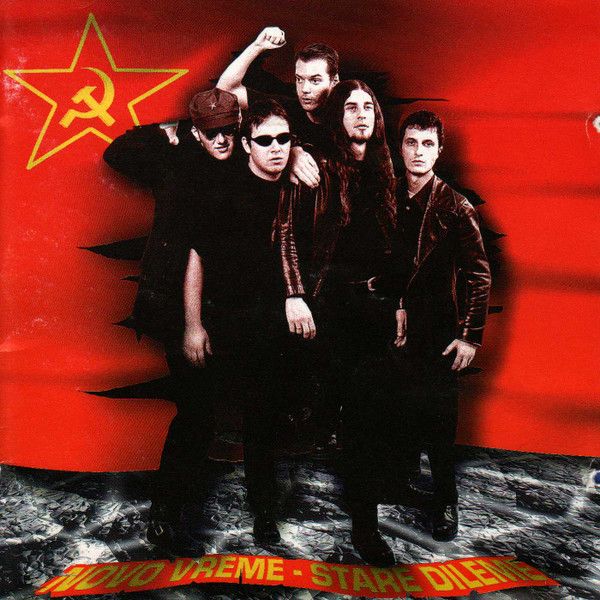
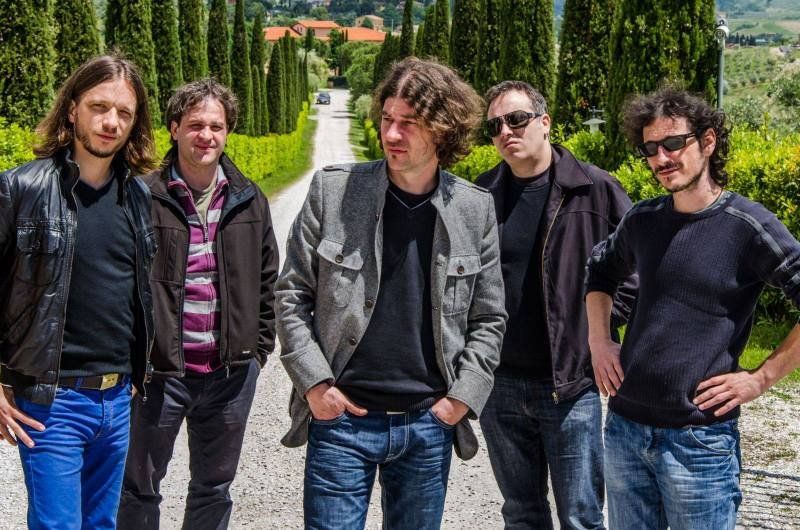
Playful, high-spirited and socially engaged, the Nova Gorica rock/reggae/ska formation Zaklonišče prepeva has held a distinctive place on the local rock scene since its debut in 1994 at the traditional Vičstock festival of the Gimnazija Vič. Their jugonostalgic imaginary — spanning lyrics, imagery and political references — has stirred considerable debate over the past three decades. Seen from a distance, in the context of a transitional period marked by toxic nationalism, this is hardly surprising. Yet for Zaklonišče prepeva, it was never about anything more than an innocent evocation of “simpler times” and a reminder of values that were forcibly erased from collective memory in the turbo-capitalist 1990s.
Their discography includes six albums. The first, Nešto kao Džimi Hendrix, was released in 1996, and the last, Samo da prođe demokratija, in 2014. The band reached its peak popularity in the early 2000s, particularly after the release of Odoh majko u rokere in 2001. They entered the pop-cultural consciousness of Slovenia and the former Yugoslavia with songs such as Računajte na nas (a cover of Đorđe Balašević), Odoh majko u rokere, Prokleta je duša slovenska, Sellam alejkum, Hasan iz azila and Žitije Miće Muriquija. As kids, we regularly watched the music videos for the latter two on the TV show Videospotnice — one telling the story of Hasan from Iran travelling through Slovenia to Brazil, the other referencing pre-war brotherhood and unity and the idea of a Kosovo republic.
From the outset, Zaklonišče prepeva functioned as a band of idealists — too provocative for some, entirely harmless nostalgics for others — using slogans of brotherhood and unity to disrupt the emerging democratic political discourse of the post-independence years. Above all, their work points to the fact that socialist history also contains values and ideas worth revisiting within a new social system. Their lyrics addressed topics such as NATO, the Socialist Federal Republic of Yugoslavia, the Russian soul, Allah, the Kosovo question, and other controversial themes. As a band, they carried the torch of so-called ex-YU rock into the 21st century.
It is true that some of their songs have not aged as well as others — for instance their reggae experiments in “Rastafarian English” — yet their music remains an important pop-cultural phenomenon that marked the Slovenian transition. Its essence and ideology were inseparable from the socio-political reality in which it emerged. Since 2019, Zaklonišče prepeva has been on an indefinite hiatus due to family and professional commitments.
Avtor: Jaša Bužinel
