


Solkan caprenters
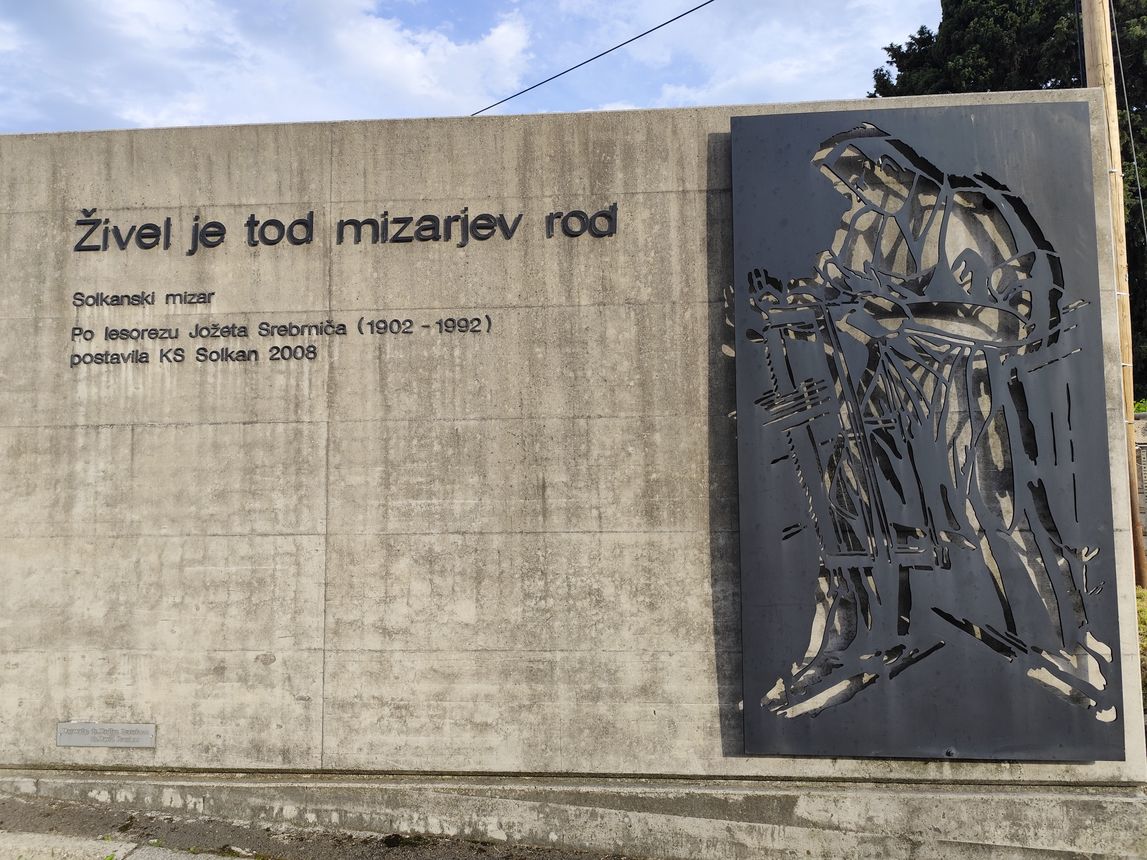
The work of carpenters in Solkan, where carpentry was the central craft in the 19th century and at least until the middle of the 20th century, continued after the Second World War in the furniture factory in Kromberk (later named Meblo). The craft itself, however, gradually declined.
The development of carpentry in Solkan dates back to the 19th century; from 1850 to 1900 we can speak of its flourishing. At that time as many as 350 carpenters worked in around 100 carpentry workshops. This flourishing was closely connected to the industrial development of Gorizia. According to records of the then president of the Carving, Inlay and Restoration Association of Solkan, they produced beds, bunk beds, tables, chairs and later entire furniture sets, bedrooms, living rooms and kitchens. Their work was known in Gorizia, Trieste, Dalmatia and Egypt. During the peak of artisanal production everything was made by hand, and some workshops employed ten or more workers.
In addition to producing furniture and interior equipment, Solkan carpenters developed carving of details, various polishing techniques, marquetry, burning techniques and other decorative methods (Bogataj 1989: 141). Carpentry workshops were usually specialised and focused on particular types of production. Each master – or locally called tišler – did not produce all types of furniture and equipment but specialised in particular products. Some carpenters specialised in furniture, others in doors and windows, while others repaired wine containers (barrels, worn, brent). Some were specialised in making coffins (locally called mrliške truge). Wood for coffins was often kept on the farm for a long time and was brought to the carpenter after a person's death.
The necessary wood was obtained from the Trnovo Forest Plateau, and carpenters mainly worked with maple, elm, oak and walnut, woods suitable for higher-quality products.
After 1900 carpenters began to organise themselves into cooperatives; after the Second World War they united in the cooperative ZMO (Association of Carpentry Craftsmen). However, after the war the work of carpenters gradually began to disappear because the closure of the border caused them to lose the important market in Gorizia. Some carpenters remained in the cooperative, while others after 1948 began building a new factory that was first called Furniture Factory Nova Gorica;
1950: Furniture Factory Edvard Kardelj Nova Gorica;
1953: Furniture Factory Nova Gorica;
1963: Meblo Furniture Factory Nova Gorica.
However, as Solkan carpenters themselves say:
“there is quite a big difference between a craftsman and an industrial worker. In industry you need many people who do only one task, while for a Solkan carpenter, who artisanally mastered the entire process, this was humiliating. When they started building apartment blocks and later high-rise buildings, wardrobes had to be modular and furniture had to be assembled from standard elements, so that several different pieces could be produced from one model. Those Solkan carpenters who decided to work in Meblo were sometimes more of an obstacle than an advantage, because after the machines had precisely produced their parts they still wanted to ‘round off’ some details by hand… These people therefore often became foremen, department heads or were responsible for repairs…”
(Novak 2017: 35).
The factory soon built an industrial school, and workers received their apartments in the first Russian blocks. The Meblo factory and Nova Gorica grew together, while traditional carpentry gradually disappeared. Young people did not see their future in craft workshops and instead of continuing the tradition of their fathers or grandfathers preferred employment in the factory.
Today there are no carpenters left in Solkan. Nevertheless, the village can boast a small museum presenting the work of Solkan carpenters and an association dedicated to this heritage. The exhibition displays characteristic tools and other equipment used by Solkan woodcraft masters. Visitors can also walk along Carpenters’ Street, see the Monument to the Carpenters, and follow plaques marking the houses where carpenters once worked. In Nova Gorica there is also a secondary woodworking school. Unfortunately, the Meblo furniture factory no longer exists.
Avtor: Jasna Fakin Bajec
Kraj: Solkan
Vir:
- Novak, Nace. 2017. Ko mizar danes potrebuje pohištvo, gre v Ikeo. Skupnih 70: posebna revijalna izdaja in priloga ob 70-letnici mesta Nova Gorica in 70-letnici priključitve Primorske matični domovini, 8. september 2017, str. 34-35.